
Buyer guide · How to test

Handloom or Powerloom, How to Tell in Thirty Seconds

Most sarees sold as handloom in India are not. That is not a moral complaint, it is simply the market, and it means every buyer needs two minutes of knowledge before spending real money. These are the tests we run at the counter, and we are happy for you to run them on us.

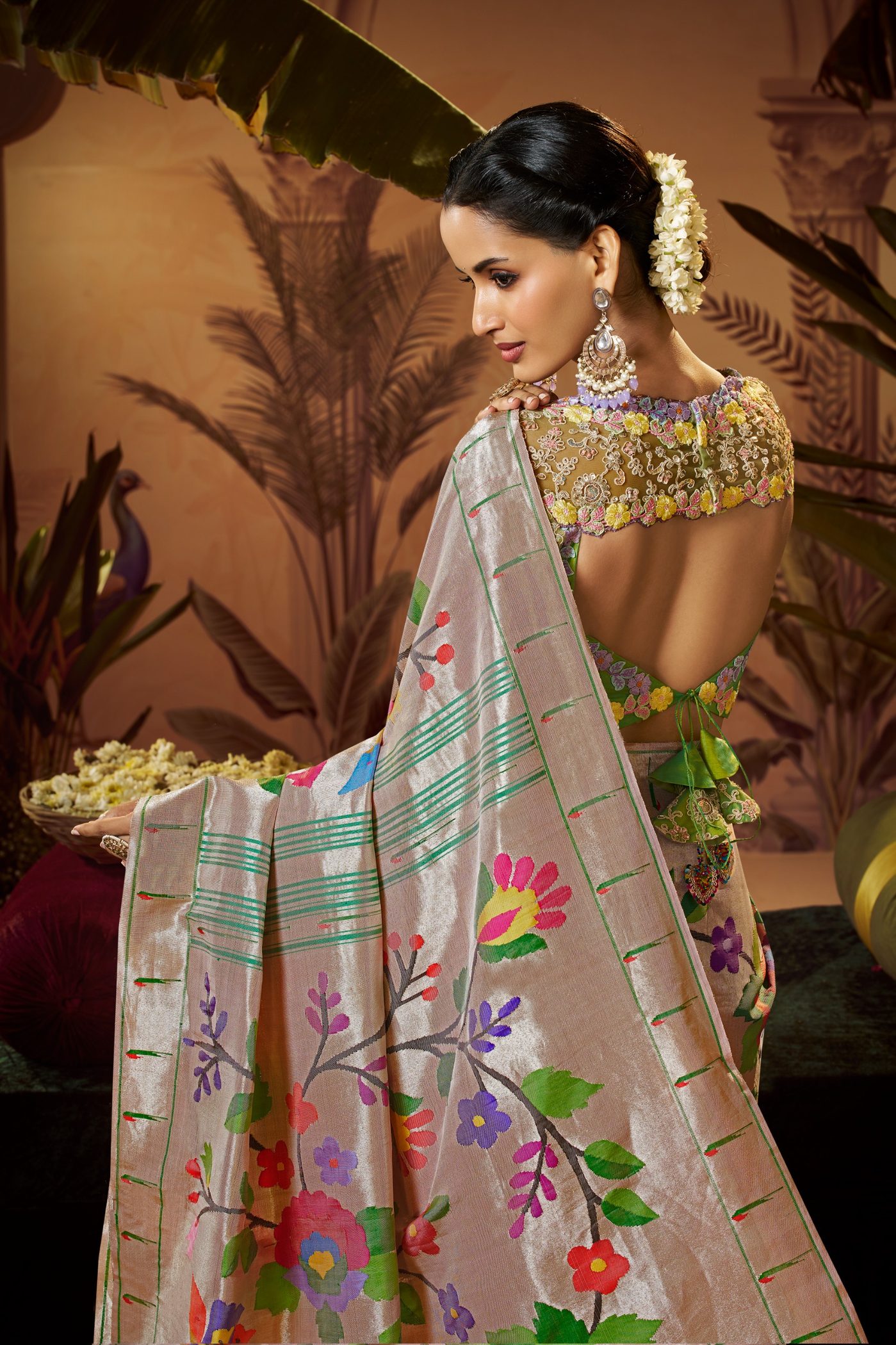
The reverse of a silver Paithani pallu showing neatly interlocked handwoven threads at Trisha Silks Hyderabad

Test one, turn it over

The reverse of a handloom saree is honest. You will see thread ends where a weaver changed colour, small knots where a broken warp was tied back, and motifs whose backs are interlocked rather than floating. A powerloom saree is machine tidy on both faces, with long floating threads carried across the back or a fused finish where the extra weft has been cut and heat sealed.

Test two, pull one zari thread

Ask to unspool a single zari thread from the selvedge. Real zari has a red or orange silk core wrapped in silver and then gilded, so when you unwind it you find coloured thread inside. Tested zari, which is copper based, shows a copper core and will darken within a few years. Plastic film zari shows no core at all and crackles. We do this in front of patrons on request, and any shop confident in its stock will do the same.

Test three, look for imperfection

Handloom cloth breathes. Count the buttas along one border and you will find tiny variations in spacing, a motif slightly larger than its neighbour, a border that shifts by a thread near the pallu. Machine weaving repeats identically because it cannot do otherwise. Perfect repetition across six and a half metres is the clearest single sign that no human hand set the shuttle.

Test four, the selvedge and the pallu join

On a genuine Kanjivaram the contrast border is interlocked into the body with the korvai technique and the pallu is joined at a visible pitni line. On a powerloom copy the border is woven continuously in one pass and there is no join to find. Run your thumb along the border edge, and if the transition is completely invisible on a contrast border saree, be suspicious rather than impressed.

Test five, weight, hand and sound

Pure mulberry silk is warm to the hand and heavy for its volume, and it makes a soft rustle rather than a papery crackle. Polyester and blended silk feels cool, springs back too readily and creases sharply. Crush a corner in your fist for five seconds. Silk relaxes into soft creases. A blend holds a hard line.

Test six, ask for the tags and the price logic

A Silk Mark hologram confirms pure silk, a Handloom Mark confirms hand weaving, and a GI tag confirms the cluster, whether Kanchipuram, Banaras, Paithan, Patan, Pochampally, Gadwal or Narayanpet. Then apply price logic. A saree carrying five hundred grams of real silver and gold zari cannot cost twelve thousand rupees, because the raw material alone costs more. When the arithmetic does not work, the label is wrong.

Handloom and powerloom, side by side

PointHandloomPowerloom
Reverse sideThread ends, small knots, interlocked motifsMachine tidy, floating or cut and sealed threads
RepetitionSlight variation in butta spacing and sizeIdentical repeat across the full length
ZariSilk core wrapped in silver, then gildedCopper core or plastic film, no core
Border joinKorvai interlock, visible pitni line at the palluWoven continuously, no join to find
HandWarm, heavy for its volume, soft creasesCool, springy, holds sharp creases
TagsSilk Mark, Handloom Mark, GI tag for the clusterUsually none, or Silk Mark only
LifeSixty years and beyond with correct storageEight to fifteen years before the zari dulls
Honest priceReflects loom hours and real zariPriced like fabric, because it is

A powerloom saree is not a scandal when it is sold as one. The problem is only ever the label and the price. Everything on our floor is described by what it is, and we will run any of these six tests with you before you buy.

Visit Us

Trisha Silks · Jubilee Hills

Plot No. 795, Road No. 36, Jubilee Hills, Hyderabad, Telangana 500033. Open daily 10:30 AM, 9:30 PM. Appointments preferred for bridal trousseau viewings.

Frequently asked

Questions from our Hyderabad patrons

How can I tell if a saree is handloom or powerloom?

Turn it over. Handloom weaving leaves thread ends, small tied knots and interlocked motif backs, and the butta spacing varies slightly along the border. Powerloom cloth repeats identically and is machine tidy on both faces, often with floating threads carried across the back.

How do I test whether the zari is real?

Unspool one thread from the selvedge. Real zari has a red or orange silk core wrapped in silver and gilded. Tested zari shows a copper core and dulls within a few years. Film zari has no core and crackles when you press it.

Is powerloom silk still pure silk?

It can be. Powerloom describes how the cloth was woven, not what it was woven from, so a powerloom saree may still carry a Silk Mark. What it cannot carry is a Handloom Mark, and it should never be priced as handloom.

What do the Silk Mark, Handloom Mark and GI tag each prove?

Silk Mark confirms the fibre is pure silk. Handloom Mark confirms the cloth was woven by hand. A GI tag confirms the weave came from its protected cluster, such as Kanchipuram, Banaras, Paithan, Patan, Pochampally, Gadwal or Narayanpet.

Will you run these tests with me at the atelier?

Yes, and we prefer it. Ask us to turn the pallu over, pull a zari thread, show you the korvai join and put the piece on the weighing scale. Patrons who ask those four things almost never regret what they carry home.

Begin the conversation

Bring a saree in and we will test it with you.

Whether you bought it from us or not, walk into Jubilee Hills and we will run the reverse check, the zari pull and the weight on your own piece, with no obligation at all.

Read next

Guides for the Hyderabad bride