
Buyer guide · Hyderabad

Kanjivaram or Banarasi for a Hyderabad Wedding

This is the question we are asked most often, usually across the counter with both sarees already open. The honest answer is that they solve different problems. A Kanjivaram is built for weight, for a muhurtham, for a photograph that has to look the same in fifty years. A Banarasi is built for surface, for a reception under lights, for movement. Here is how we help patrons choose between them.

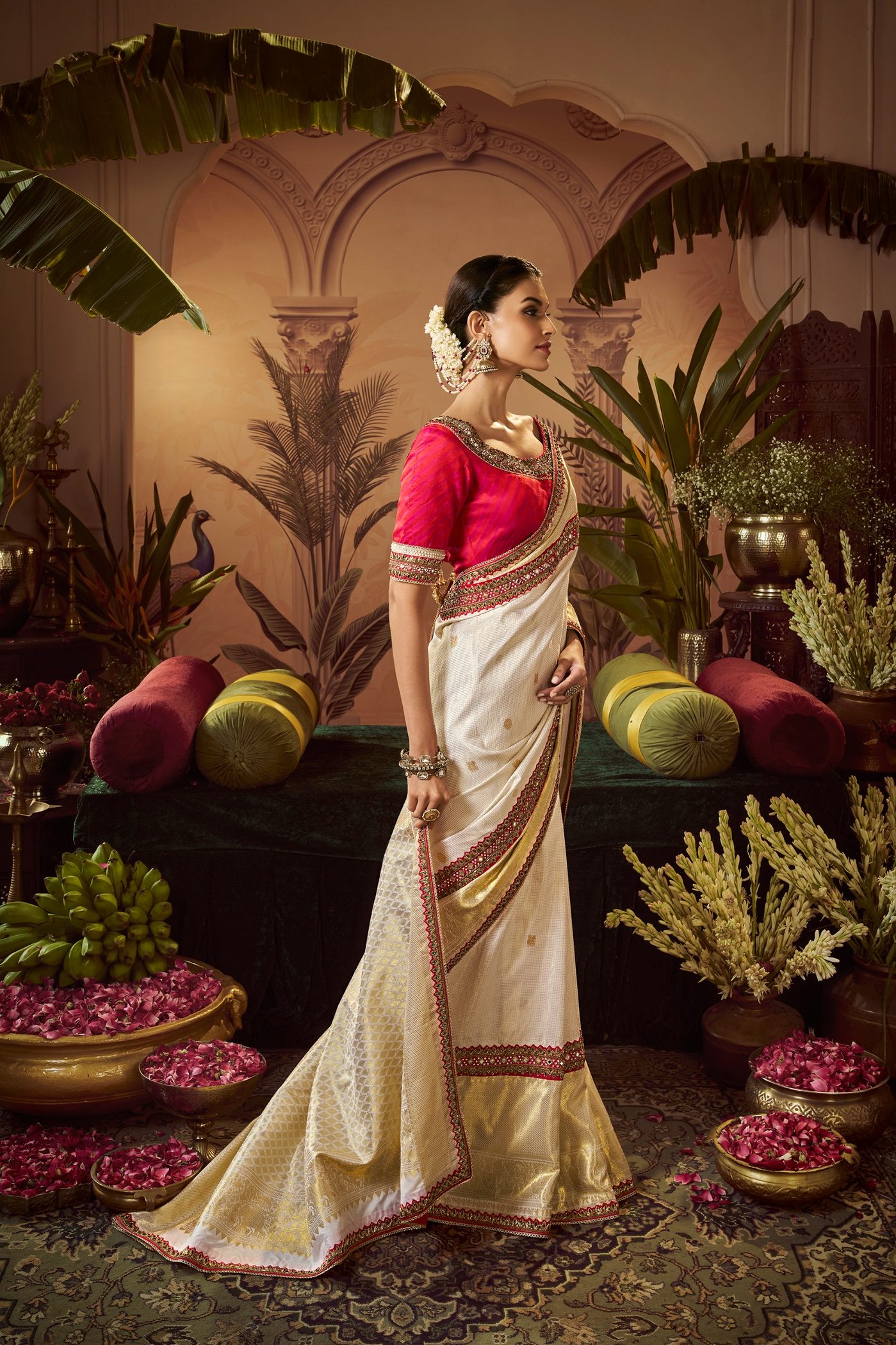
A cream tissue Kanjivaram saree with a deep red korvai border beside gold zari work at Trisha Silks Hyderabad

What each one actually is

A Kanjivaram comes from Kanchipuram in Tamil Nadu, woven in heavy mulberry silk with the border and pallu often woven separately and interlocked into the body. That join is called korvai and it is why the contrast border on a good Kanjivaram never looks stuck on. A Banarasi comes from Varanasi, woven in finer silk with brocade work carried across the body in gold and silver zari, and its beauty sits in the density of the pattern rather than in the weight of the cloth.

Which function each suits in a Hyderabad wedding

For the muhurtham, the pelli koduku and pellikuthuru rituals, and any daytime temple ceremony, we send brides to Kanjivaram. It holds pleats through a long morning and it photographs well in natural light. For the reception, the sangeet and the cocktail evening, we send them to Banarasi, particularly katan silk or a georgette Banarasi, because it moves when you walk and the zari lifts under artificial light where a heavy silk can go flat.

The comfort question nobody asks until the fitting

A bridal Kanjivaram can weigh close to a kilo once the pallu carries full zari. If your ceremony runs from six in the morning to noon, that weight is a real consideration, and it is why we always drape the actual piece on you rather than on a mannequin. A Banarasi in katan or organza sits far lighter on the shoulder, and for a bride who is nervous about carrying weight through a long function, that alone often settles the decision.

Price, and where the money goes

In both weaves the price follows the zari and the labour, not the brand. At the atelier a pure handloom Kanjivaram begins around thirty five thousand rupees and a bridal piece with full pure zari reaches three and a half to five lakh. A handloom Banarasi begins around twenty eight thousand and a heavy kadhwa or jangla bridal piece reaches two and a half to four lakh. If a price looks impossibly low for either weave, the zari is tested zari rather than silver and gold, and you should ask to see the pull test.

How to decide in one appointment

Bring the function, the month and the jewellery you already own. Temple jewellery and a heavy Kanjivaram belong together. Polki, diamond and uncut sets usually look better against a Banarasi. Then hold both pallus over your shoulder in front of a window rather than under a shop light. Most patrons know within a minute, and the one that keeps pulling your eye back is the right one.

Kanjivaram and Banarasi, side by side

PointKanjivaramBanarasi
OriginKanchipuram, Tamil Nadu, GI taggedVaranasi, Uttar Pradesh, GI tagged
SilkHeavy mulberry silk, warm to the handFiner katan, organza or georgette silk
SignatureKorvai contrast border, temple and mango motifsBrocade jangla, kadhwa and jaal patterns
Weight700 grams to just over a kilo in bridal weights450 to 800 grams depending on base
DrapeHolds pleats stiffly, sculpturalFalls softly, moves as you walk
Best forMuhurtham, temple mornings, heirloom giftingReception, sangeet, cocktail, travel
JewelleryTemple gold, kasu malai, jadauPolki, uncut diamond, pearl
Atelier range₹35,000 to ₹5 lakh₹28,000 to ₹4 lakh

Both weaves are handloom at the atelier and both carry a Silk Mark. Where a GI tag exists for the cluster, the piece carries it, and we will show you the tag before you buy rather than after.

Visit Us

Trisha Silks · Jubilee Hills

Plot No. 795, Road No. 36, Jubilee Hills, Hyderabad, Telangana 500033. Open daily 10:30 AM, 9:30 PM. Appointments preferred for bridal trousseau viewings.

Frequently asked

Questions from our Hyderabad patrons

Is Kanjivaram or Banarasi better for a bride?

Neither is better outright. A Kanjivaram suits the muhurtham and daytime rituals because its weight holds pleats and photographs beautifully in natural light. A Banarasi suits the reception and sangeet because it is lighter, moves as you walk, and its zari lifts under indoor lighting.

Which is more expensive, Kanjivaram or Banarasi?

At comparable quality they sit close. A pure handloom Kanjivaram at our atelier begins around ₹35,000 and a bridal piece reaches ₹5 lakh. A handloom Banarasi begins around ₹28,000 and heavy kadhwa bridal work reaches ₹4 lakh. Price follows the zari and the loom hours in both.

Which saree is heavier to wear all day?

Kanjivaram. A bridal Kanjivaram with full pure zari can approach a kilo, while a katan or organza Banarasi usually sits between 450 and 800 grams. For a six hour morning ceremony, drape both before deciding.

Can I wear a Banarasi for the muhurtham in a South Indian wedding?

Yes, and many Hyderabad brides now do, particularly in a red or ivory katan Banarasi. If the family expects a traditional South Indian look, a Kanjivaram for the muhurtham and a Banarasi for the reception is the pairing we plan most often.

How do I tell a handloom Kanjivaram from a powerloom one?

Lift the border seam and look for the korvai interlock, check that the pallu is joined at a visible pitni line, and pull one zari thread to see the red silk core. A powerloom piece is uniform on the reverse with no join and no thread ends.

Begin the conversation

See both weaves open on the table before you decide.

Book a private viewing at the Jubilee Hills atelier and we will drape a Kanjivaram and a Banarasi on you back to back, or do the same over a video call from anywhere in the world.

Read next

Guides for the Hyderabad bride