Editorial guides to India's handloom silks, how to identify a true Banarasi, how to drape a bridal Kanjivaram, how to restyle your mother's saree, and how to keep pure silk for sixty years.
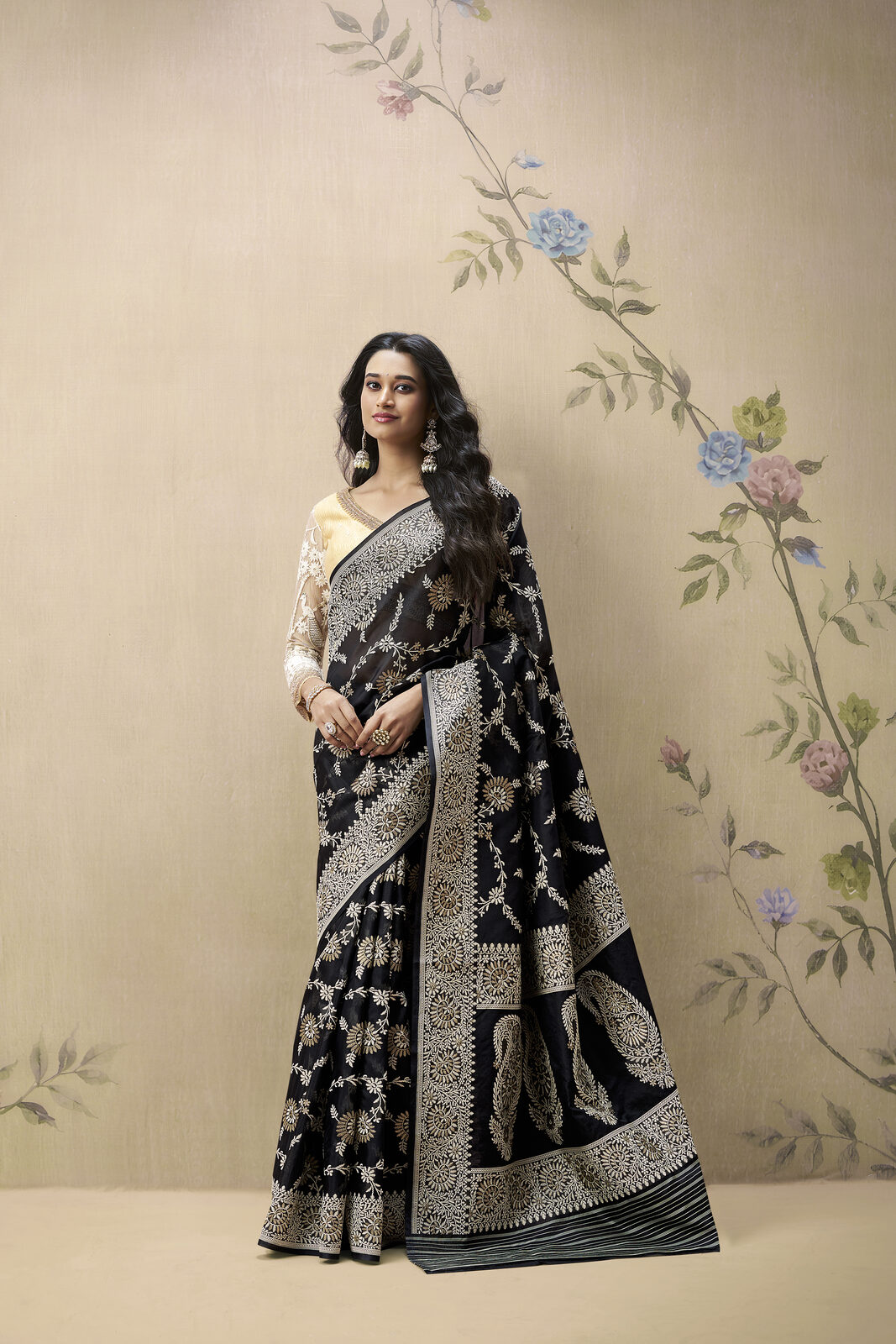
Six tells the karigars use to separate a true handloom Banarasi from a powerloom copy, in plain language.
A pure Kanjivaram has a contrast border woven separately and then joined, a tell no powerloom can fake. Here is the full test.
Single ikat or double ikat? The difference is six months on the loom and the only saree in the world that has no reverse side.
Both come from Madhya Pradesh. One is sheer and ethereal, the other dense and reversible. Here is how to choose.
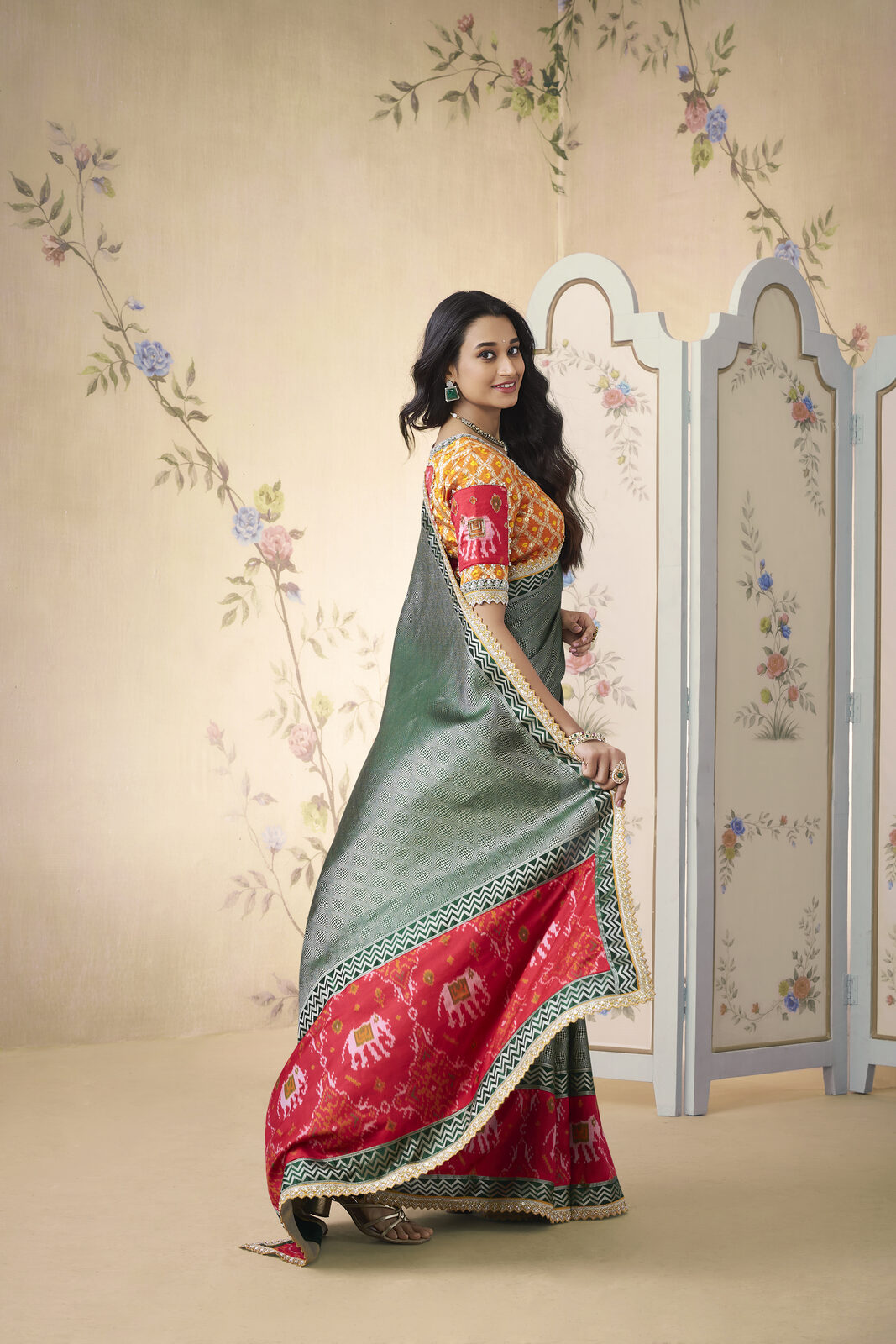
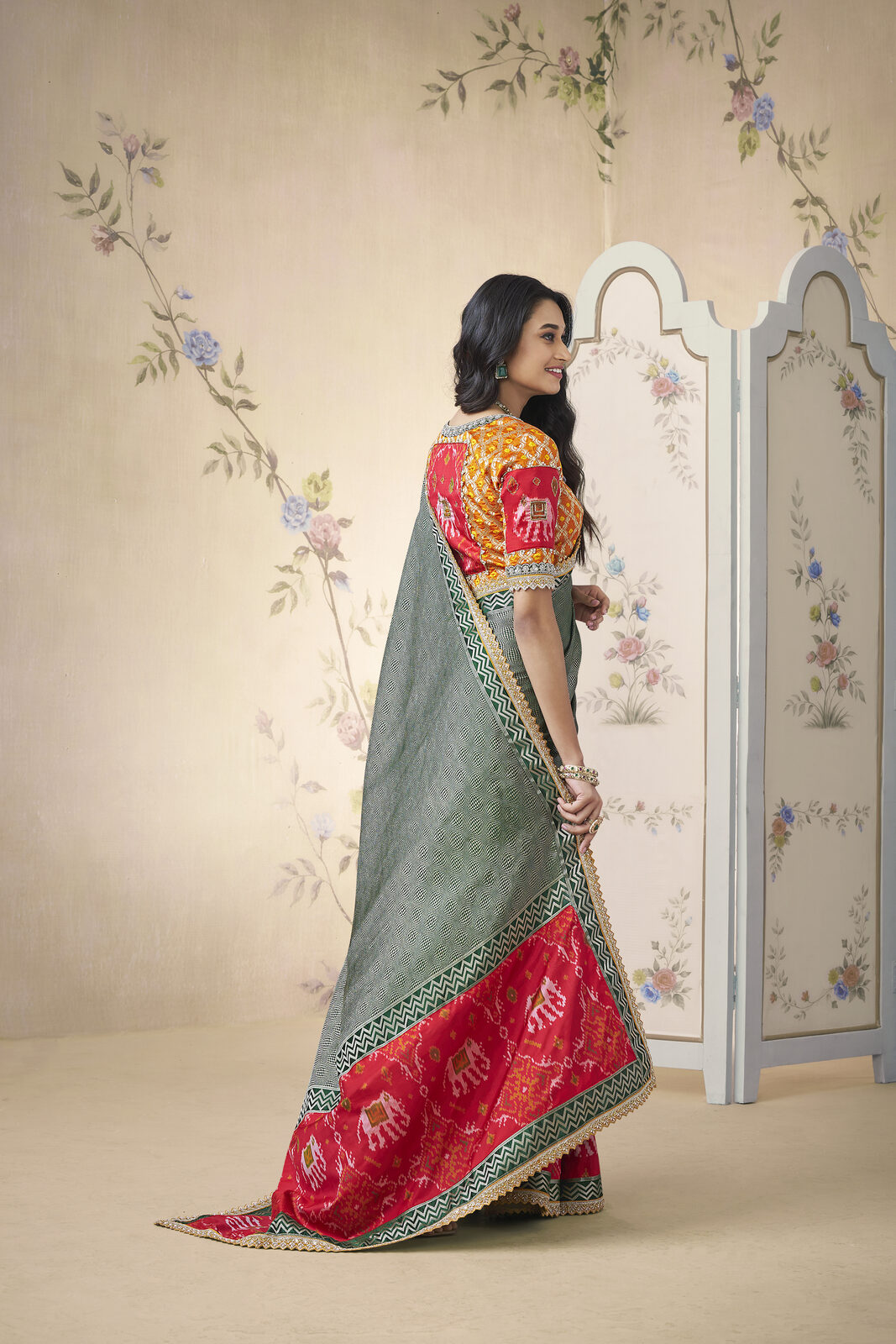
Three traditional ways to drape a bridal Kanjivaram, the Madisar, the South Indian classic, and the pleated pallu, taught by our drapers.
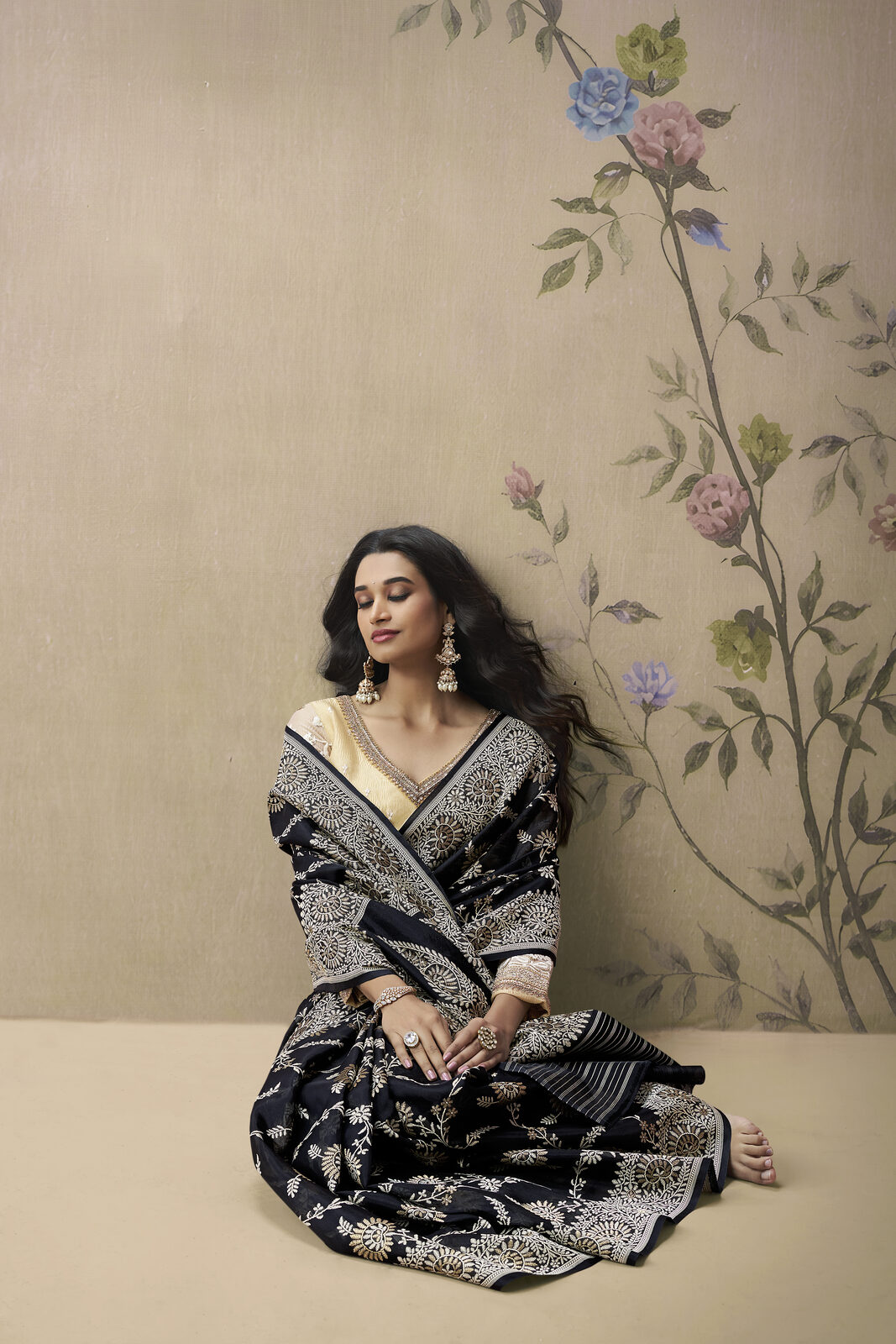
The Banarasi is too beautiful to drape only one way. Five contemporary drapes, including pant-style and lehenga drape, for sangeets, receptions, and brunch.
Three things kill a pure silk saree: humidity, light, and the wrong cleaner. Here is exactly how to make a Kanjivaram last 60 years.
Your mother's saree does not have to sit in the trunk. Seven atelier ways to give it a new life, without losing its soul.
How many sarees should a bridal trousseau actually have? The full atelier-tested checklist, by ceremony and by climate.
All three are light. All three are sheer. But only one drapes like water and only one holds its sculpture. Here is how to choose.
What separates a true bridal saree atelier from a 'designer showroom' in Hyderabad, and how to shop without being upsold.
A pure Kanjivaram in Hyderabad will pass five tests. Here is how to run them in any shop.
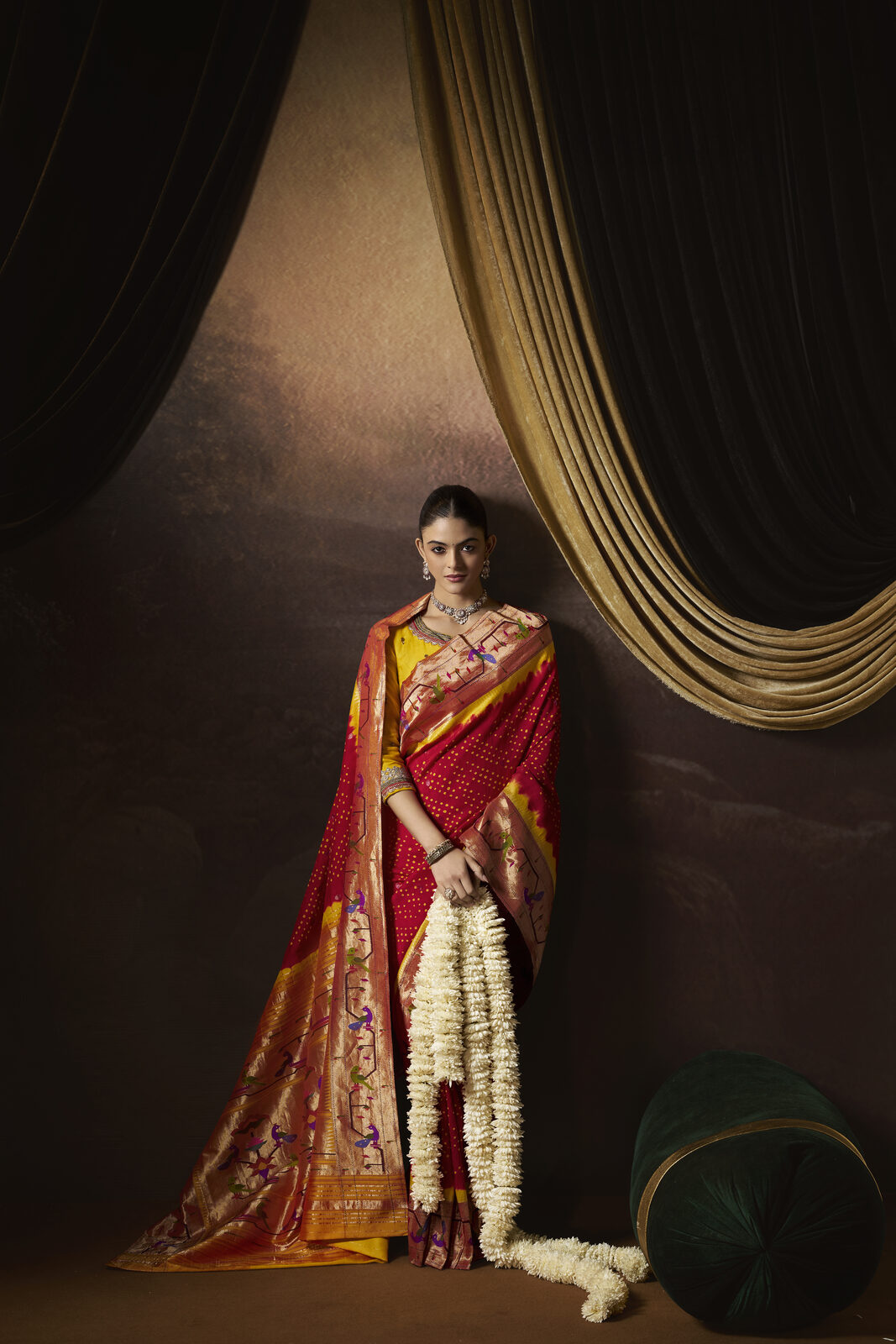
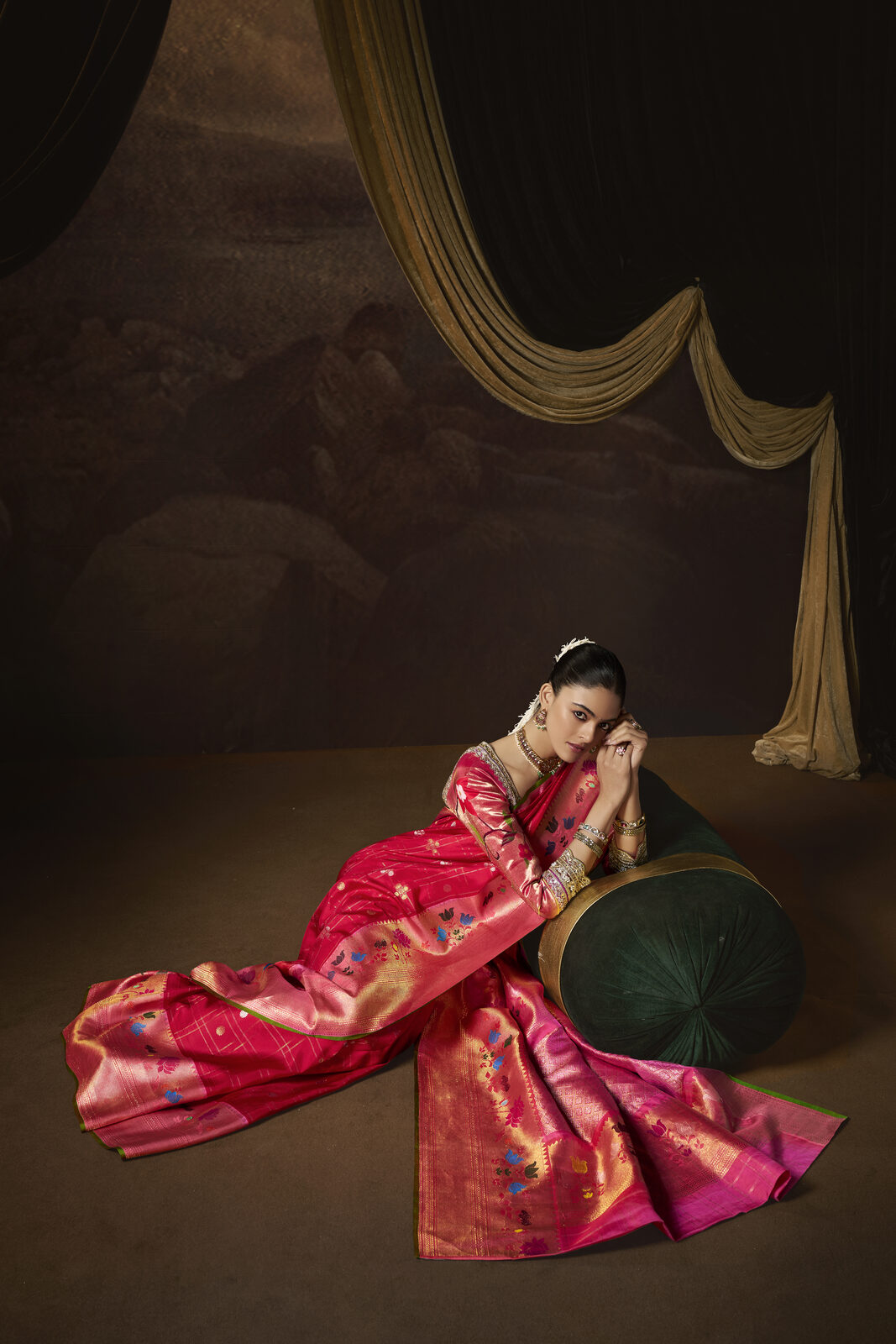
Red Banarasi is the most enduring bridal silk in India. Here is how to choose one that will be worn by your daughter decades from now.
You do not need to fly to India for a bridal trousseau. Here is the workflow that 400+ NRI brides have used.
What actually happens during a 45-minute private video viewing, minute by minute.
Three families. Four hundred days on the loom. A saree that costs as much as a small car. The truth about Patan Patola.
Two hundred grams of pure silk organza, hand-woven in Banaras, holding zari gold like a held breath.
Three shuttles, two karigars, one interlocking ridge of thread. The korvai border is the soul of a Kanjivaram.
Month one to month nine. The exact calendar 400+ NRI brides have used to assemble a heritage trousseau without flying to India.
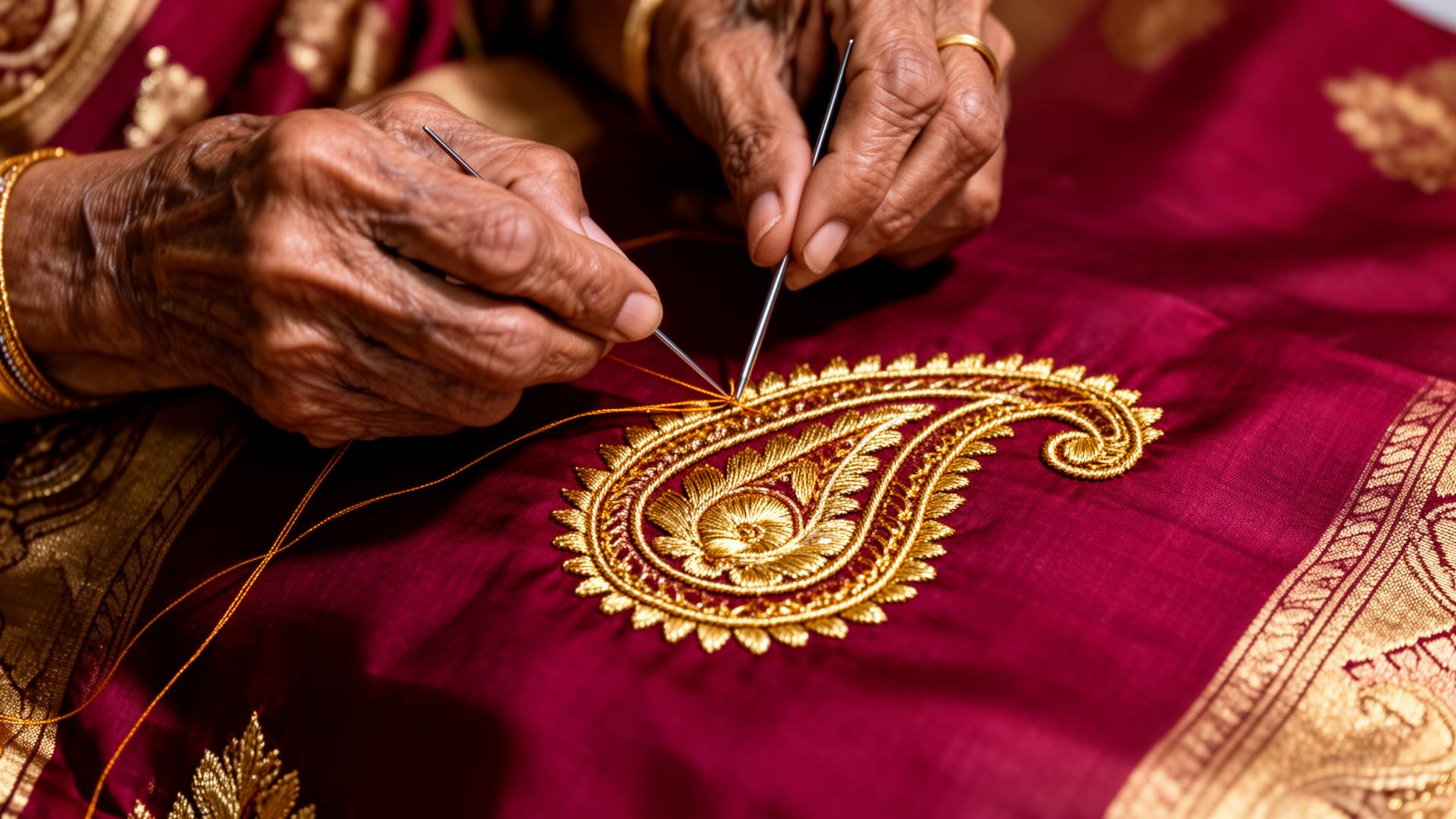
Real kundan is gold-foil set. Polki is uncut diamond. Crystal is glass. Zardozi is wire. Most stone-work sarees in the market mix all four and call it 'kundan polki'. Here is the truth.
A muhurtham ceremony lasts three to five hours. The wrong saree will cost you the day. Here is how the grandmothers chose.
A reception in Mumbai monsoon, Jaipur winter, Hyderabad spring or London autumn calls for four entirely different sarees.
Sixteen measurements, one reference blouse, one muslin trial. How heritage ateliers fit brides they will never meet in person.
Humidity is the silent killer of heritage silk. Six rules that have kept our patrons' bridal sarees pristine for decades.
Forty-five minutes. North-facing light. Two karigars. One senior consultant. No salesperson. Here is exactly what happens.
How to choose a bridal Kanjivaram you will actually wear, again. From a maison that has dressed fourteen years of brides.
Pochampally is Telangana's own. Here's how to read the dye lines, choose a colour that ages well, and why no Hyderabad trousseau is complete without one.
Hyderabad's June-to-September humidity sits between 75 and 90 percent. Here's exactly what we do, in nine steps, to keep our patrons' silks safe through it.
A friendly guide for guests and family, what to wear to the muhurtham, the reception, the sangeet and the haldi without overthinking it.
Most patrons ask us this within ten minutes of walking in. Here is the honest answer, weave by weave, occasion by occasion.
Brides ask us this all the time before booking. Here is the honest, unedited walkthrough of a private bridal viewing at the atelier.
If you live anywhere south of the Vindhyas, humidity is the quiet enemy of your silk wardrobe. The fix is small daily habits, not expensive interventions.
Every new weave that reaches the atelier gets draped, photographed and filmed at the courtyard set. Here is what each pairing solves for, and how to read the films.