
Choosing Your Bridal Kanjivaram: An Atelier's Guide
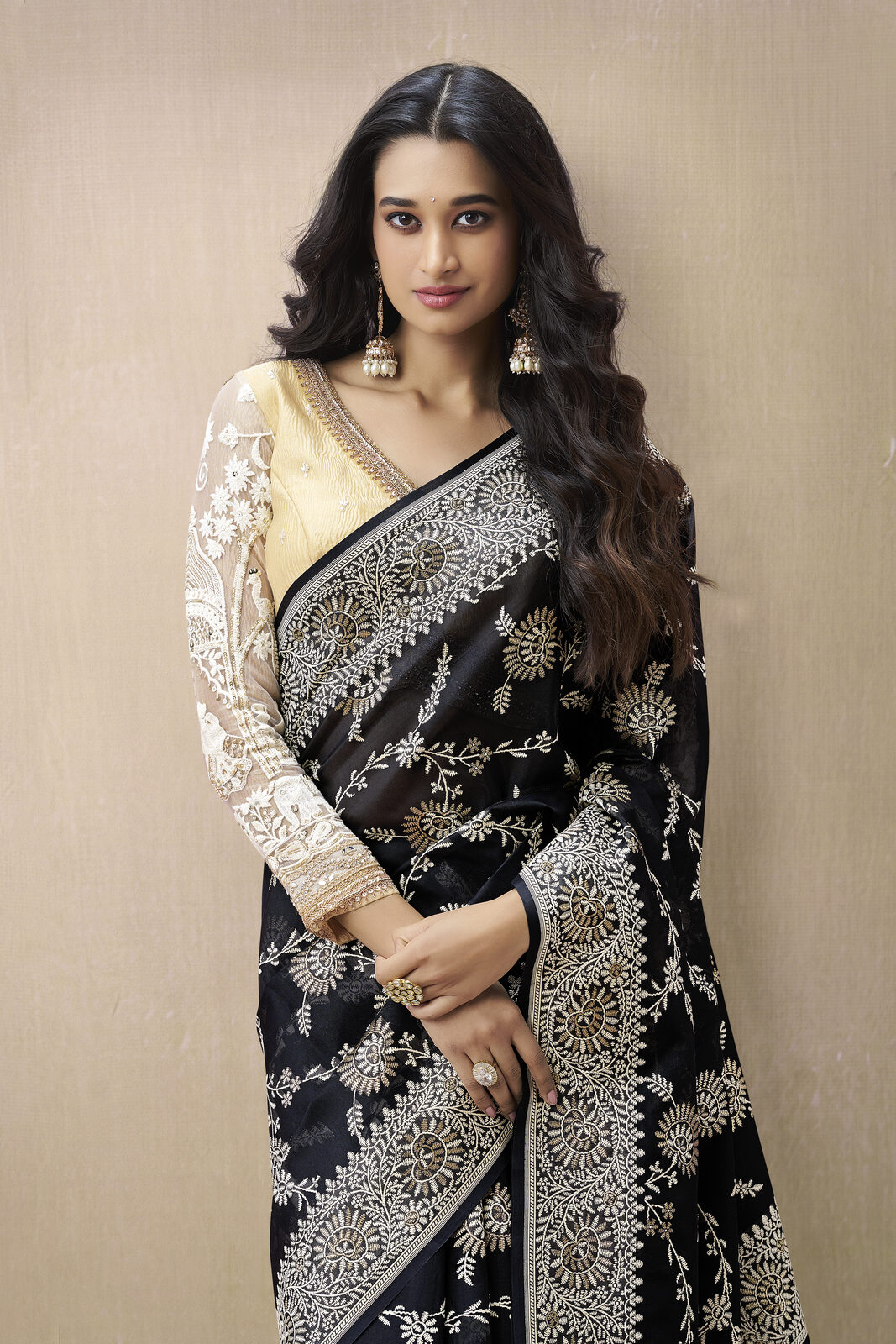
A bridal Kanjivaram is not a souvenir of your wedding day. It is the saree that will, if you choose it well, follow you into your fifties, get re-pleated by your daughter, and outlast almost everything else in your trousseau. Choosing it is less about the photograph and more about the quiet, slightly stubborn weight of the silk in your hand. This is how we, at Trisha Silks in Jubilee Hills, walk a bride through that decision.
We have been weaving the bridal Kanjivaram conversation in Hyderabad since 2011, with looms in Kanchipuram, Arani and the villages around Walajapet that we visit twice a year. Every Kanjivaram in the atelier is weighed on arrival, silk-marked, and signed on the reverse with the karigar's name. It is the only way we know to be accountable for a saree that will be worn for fifty years.
Why a Kanjivaram, when there are a hundred other weaves
Brides ask us this often, and the honest answer is: longevity. A Kanjivaram is built to carry weight, mulberry silk warp, mulberry silk weft, real zari, the korvai border interlocked thread by thread. Nothing in the saree is glued, printed or stamped. Which is why a Kanjivaram from 1962, the kind your grandmother folded into muslin and forgot in a steel almirah, still falls open today with its gold intact.
There is also the matter of how it sits on the body. Banarasi drapes light and almost weightless; a Kanjivaram has architecture. It holds the pleats, holds the pallu, and gives the bride something to lean into when the day gets long. For the muhurtham specifically, when you are sitting cross-legged through an hour of mantras, that weight is, surprisingly, a comfort.
Telling a real bridal Kanjivaram from a clever copy
Four tests, in order of how much they matter. We do all four on every saree that comes into the atelier, and we will do them with you on a video call if you ask.
First, the korvai. Open the border seam and look closely at where the contrast colour meets the body. On a true Kanjivaram you will see a tiny interlocking ridge, a row of threads from the border crossed into a row of threads from the body, woven on two looms by two weavers and joined live. A printed or single-loom imitation will have a flat seam, or worse, the border colour bleeding through to the reverse.
Second, the pitni. The pallu on a real bridal Kanjivaram is woven separately and joined to the body with a technique called pitni. From the front you barely see the join; from the reverse it shows as a darker, slightly raised line about nine yards down. No machine reproduces this cleanly.
Third, the zari. Pull one zari thread from a discreet corner of the pallu. Real Kanjivaram zari has a red silk core wrapped in silver and then dipped in gold. Pull it apart gently, you should see red. White core or no core at all means tested zari at best, polyester at worst.
Fourth, the Silk Mark. A small silver hologram from the Silk Mark Organisation of India, plus, ideally, the Geographical Indication tag for Kanchipuram. Neither tag is foolproof, but their absence on a saree priced above seventy thousand rupees is a question worth asking out loud.
Reading the motifs, and what they mean
Kanjivaram motifs are not decoration. They are inherited symbols, and the Devanga and Saliya weaver communities of Kanchipuram have been repeating them for somewhere close to four hundred years. Knowing what you are wearing changes how it sits on you.
The yali, a mythological lion-elephant, runs along most bridal borders. It is the protector motif, traditionally for new beginnings. Rudraksham is a tiny round bead pattern in the body, associated with Shiva and worn by brides whose families are devout. Mayil chakram, the peacock, is the dance motif, more common on reception sarees than muhurtham ones. The gopuram border, a stepped temple-tower silhouette, is the most architectural and arguably the most photogenic; it is what most brides eventually choose.
Amrita, our founder, will sometimes spend an hour just walking a bride through the motif vocabulary before any saree is opened. It is the single best filter she has found for narrowing forty pieces down to four.
Colour, ceremony by ceremony
For the muhurtham, the main ceremony, we still see most South Indian brides come back to the canonical pairings, maroon body with mustard pallu, arakku (deep oxblood red) with green, or the classic kumkum red with a contrast blue border. These colours are not fashion choices; they are temple palettes, and they will photograph the same way in twenty years as they do today.
For the reception, the rules loosen. Pastels have been a quiet revolution in the last five years, ivory with antique gold, oyster pink with a coral border, mint with old rose. They photograph beautifully under warm reception lighting, and they are far easier to re-wear afterwards for a wedding you attend rather than host.
For the sangeet or engagement, a contrast pallu is the modern choice, an emerald body with a fuchsia pallu, or a deep teal with a mustard border. These read more festive on camera and let the bride move (and dance) without the saree feeling ceremonial.
One genuine warning: if you are buying a single Kanjivaram for the muhurtham only, do not be talked into a pastel by a salesperson. Pastel Kanjivarams are wonderful, but they are second sarees, not first ones.
Weight, drape, and surviving a long wedding day
A traditional bridal Kanjivaram weighs anywhere from 800 grams to a little over two kilograms, depending on zari density. Most brides we dress today land between 850 and 1100 grams, heavy enough to feel like a bridal saree, light enough to wear for nine hours without your shoulder giving way.
If you are slim-framed or under five-foot-three, ask specifically for a lightweight bridal Kanjivaram, around 700 to 850 grams, woven with a slightly finer warp and slightly less border density. The weave is exactly as pure; the drape just sits more kindly on a smaller frame.
Pleating matters more than people realise. A heavy Kanjivaram needs a trained draper or a very good belt; the pleats should be set in starch the night before, and the pallu pinned at three points, not one. We send a draping note with every bridal saree that leaves the atelier, and our team will video-call your home draper on the morning of the wedding if needed. Most brides do not know this is included.
Caring for it, so your daughter inherits it
Never dry-clean a new Kanjivaram in the first year. The chemicals strip the natural silk gum that gives the saree its sheen. If it needs cleaning, send it to a silk specialist who hand-spots and air-finishes, never tumbles. Most cities have one; we maintain a short list for our patrons across India and abroad.
Fold the saree along a different crease every six months. Silk weakens along a permanent fold line, and a forty-year-old Kanjivaram that has been folded the same way the entire time will tear at the pallu before it tears anywhere else.
Store wrapped in unbleached muslin, never plastic, never tissue paper (which yellows). A small muslin pouch of cloves or dried neem keeps moths out without the perfume seeping into the silk. Open the saree once a year, in May or June, air it indoors out of direct sun for an hour, and put it back.
Do this, and the saree will sit, ready and beautiful, in a cupboard in Bandra or Boston or Sydney, waiting for the next bride in your family who decides she wants it.
See these weaves in person.
The Trisha Silks flagship at Jubilee Hills, Hyderabad welcomes private viewings. Patrons abroad, we host video viewings worldwide.
Frequently asked
How much should a real bridal Kanjivaram saree cost?+
A pure mulberry silk bridal Kanjivaram with real korvai border and tested zari starts around 45,000 rupees and rises to four or five lakh for heavy bridal pieces with dense zari work. Anything under 25,000 priced as a 'bridal Kanjivaram' is almost certainly a soft silk or art silk imitation.
What colour Kanjivaram should I choose for my muhurtham?+
The classic bridal Kanjivaram palette for the muhurtham is maroon with mustard pallu, arakku (deep oxblood) with green, or kumkum red with a contrast blue border. These temple palettes photograph the same way decades later and remain the most worn bridal Kanjivaram choices in South Indian weddings.
How heavy is a bridal Kanjivaram, and can I wear it all day?+
A traditional bridal Kanjivaram weighs 800 grams to 2 kilograms. Most modern brides choose a 850 to 1100 gram piece, heavy enough to drape with structure, light enough to wear for nine hours. Lightweight bridal Kanjivarams (700 to 850 grams) are equally pure and recommended for slimmer frames.
How do I check if a Kanjivaram is authentic before buying?+
Run four tests in order: examine the korvai border for an interlocked ridge between border and body, look for the pitni pallu join on the reverse, pull a zari thread to confirm the red silk core, and ask for the Silk Mark and Kanchipuram GI tag. A real bridal Kanjivaram passes all four.
Where can I buy an authentic bridal Kanjivaram in Hyderabad?+
Trisha Silks in Jubilee Hills sources every Kanjivaram directly from looms in Kanchipuram, Arani and Walajapet, weighs each piece on arrival, and silk-marks them before they enter the atelier. Private bridal viewings are by appointment, in person or over video for brides shopping from elsewhere in India or abroad.
From the Journal
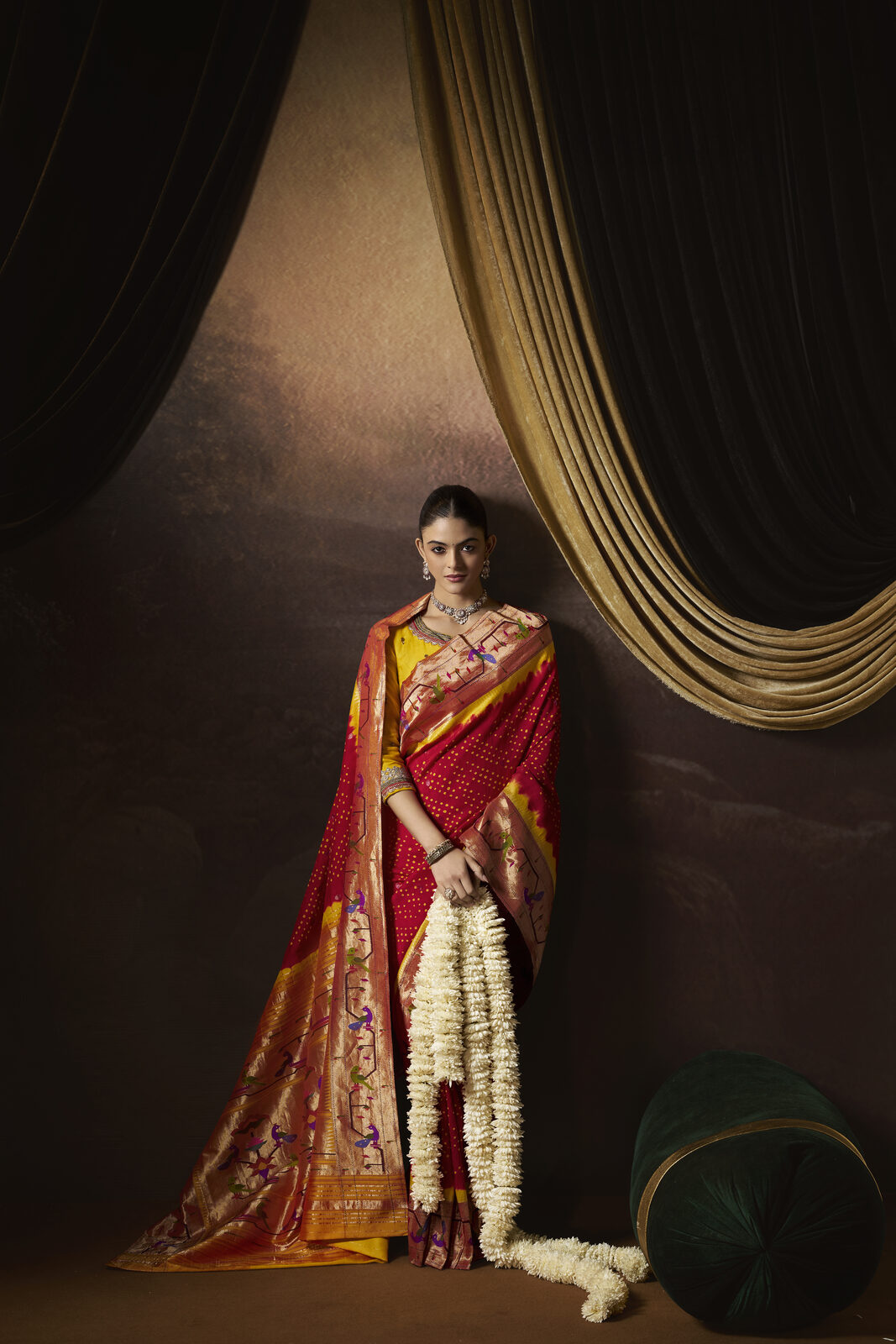
The Complete Bridal Trousseau Saree Checklist
How many sarees should a bridal trousseau actually have? The full atelier-tested checklist, by ceremony and by climate.
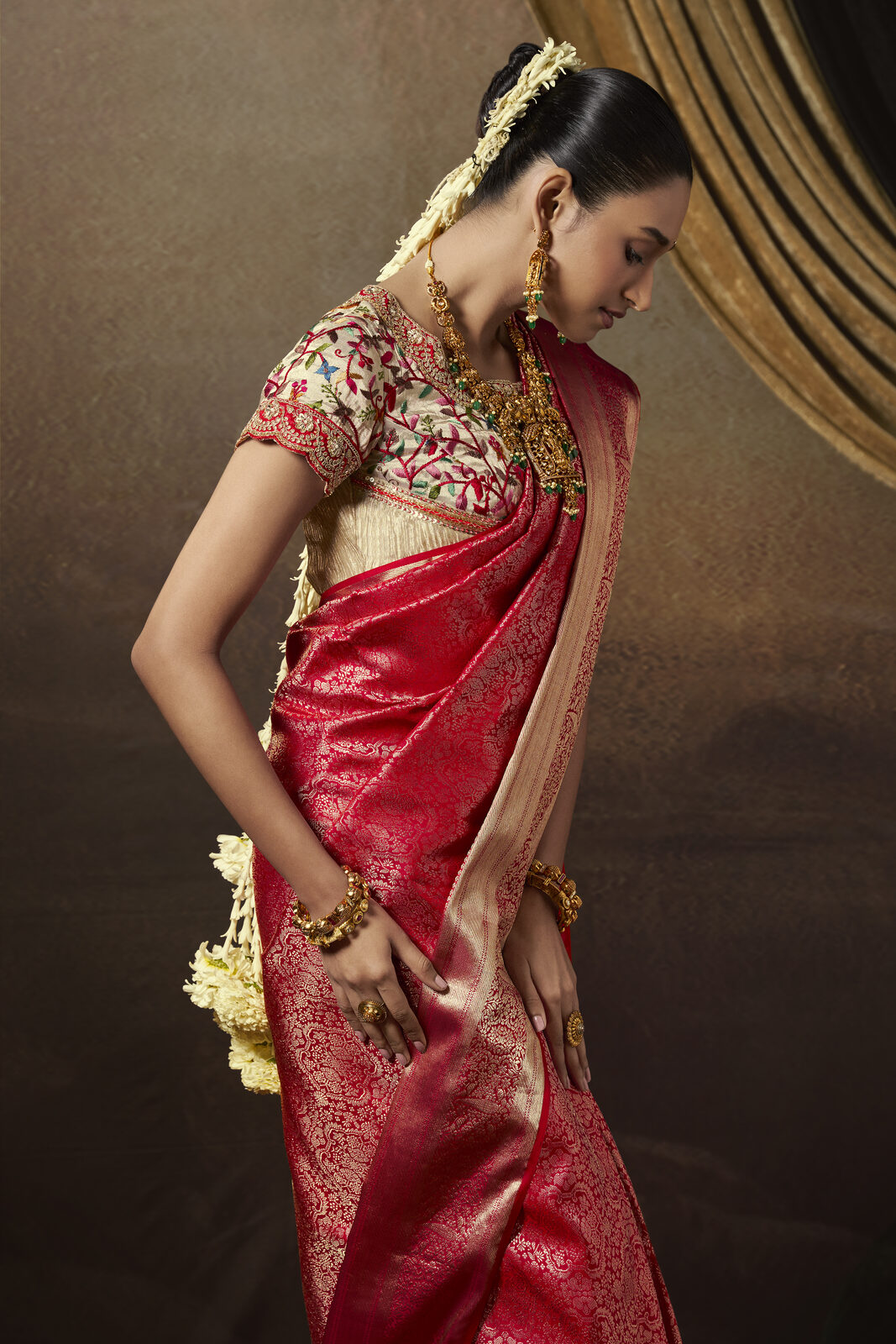
The Red Banarasi Bridal Saree, A Complete Guide
Red Banarasi is the most enduring bridal silk in India. Here is how to choose one that will be worn by your daughter decades from now.