
The Blouse Fit Bible, Sixteen Points, Two Methods
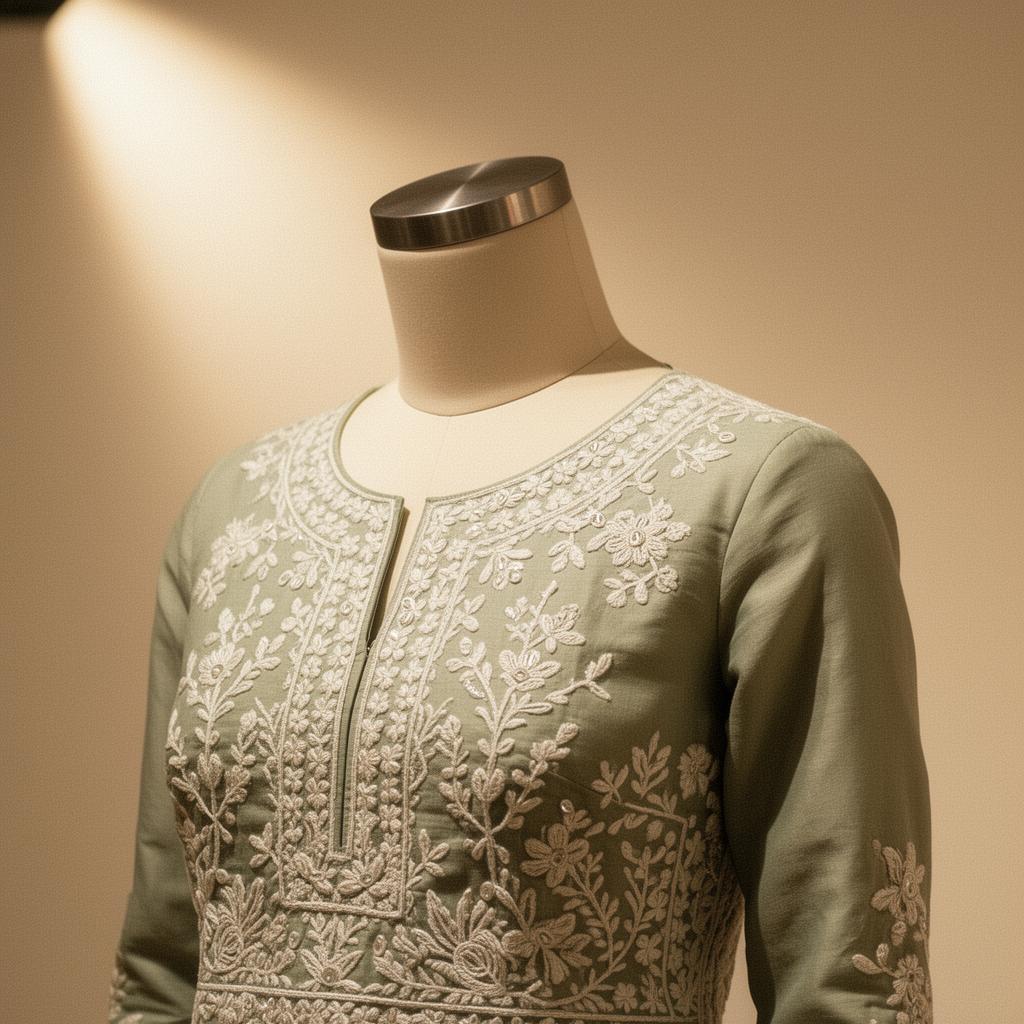
The most common reason a beautifully woven saree disappoints is a badly fitted blouse. The most common reason a blouse is badly fitted is that the atelier took only three or four measurements instead of the sixteen the human torso actually requires. Here is the chart we use and the methods that make remote fitting work.
Every blouse we cut for a remote client passes through a muslin trial before final embroidery begins. If the muslin needs adjustment, we re-cut at no charge.
The sixteen points
Bust (full, upper, under). Waist (natural, blouse hem). Hip (natural, not used in the blouse but needed for proportion). Shoulder width. Shoulder slope. Front neck depth. Back neck depth. Sleeve length. Sleeve round (at three points, armhole, mid-bicep, opening). Armhole depth. Apex point. Apex-to-apex. Back length (nape to blouse hem). Blouse length (front).
These are not interchangeable. A bride with a 36-inch bust and a 33-inch underbust needs an entirely different pattern from a bride with a 36-inch bust and a 31-inch underbust, even though the standard 'bust size' is identical.
Method A, the reference blouse
The fastest and most accurate method. You courier us a blouse you already own that fits you well, even if it is a casual cotton blouse, not a saree blouse. We unpick the seams (carefully), trace the pattern flat, photograph each piece, and return your blouse repaired (free, return-paid). We then cut every new blouse from that pattern, adjusting for the saree fabric's drape and the embroidery's stiffness.
Method B, the 16-point chart with a local tailor
If you cannot courier a reference, your local tailor takes the 16-point chart we send, clearly illustrated, with a video explainer. You email us the chart and three photographs (front, side, back, in a fitted t-shirt, no need for face). We pattern from these. Method B carries a slightly higher first-fit adjustment rate (8% vs 3% for Method A) but with the muslin trial below it always reaches a clean fit.
The muslin trial, non-negotiable for bridal
Before any bridal blouse is embroidered, we cut a muslin (unbleached cotton) version of the blouse and ship it to you by insured DHL, ten days door-to-door. You try it on, photograph and video yourself in it from front, side and back, and send to us. We adjust the pattern, re-cut the muslin if needed, and only begin embroidery on the final silk blouse once the muslin clears. This adds two weeks but eliminates fit risk entirely.
The fit guarantee
If a finished blouse arrives and does not fit perfectly, we re-cut at no charge and ship both ways insured. This is non-negotiable. With Method A plus muslin trial.
See these weaves in person.
The Trisha Silks flagship at Jubilee Hills, Hyderabad welcomes private viewings. Patrons abroad, we host video viewings worldwide.
Frequently asked
Can a heritage atelier fit a blouse without seeing the bride in person?+
Yes, through the 16-point body chart plus a muslin trial. Trisha Silks has fitted NRI bridal blouses remotely many times. The reference-blouse method is even more accurate.
How many measurements does a couture blouse actually need?+
Sixteen. Three for bust (full, upper, under), two for waist, one for hip proportion, shoulder width and slope, neck depths front and back, sleeve length and three sleeve rounds, armhole depth, apex point and apex-to-apex, plus back and front lengths.
Is the muslin trial really necessary?+
For a bridal blouse with hand zardozi or kundan embroidery, yes. Embroidery takes 4 to 8 weeks of hand work and stiffens the silhouette; you cannot re-cut after embroidery without destroying the work. The muslin trial adds two weeks but eliminates fit risk.
From the Journal
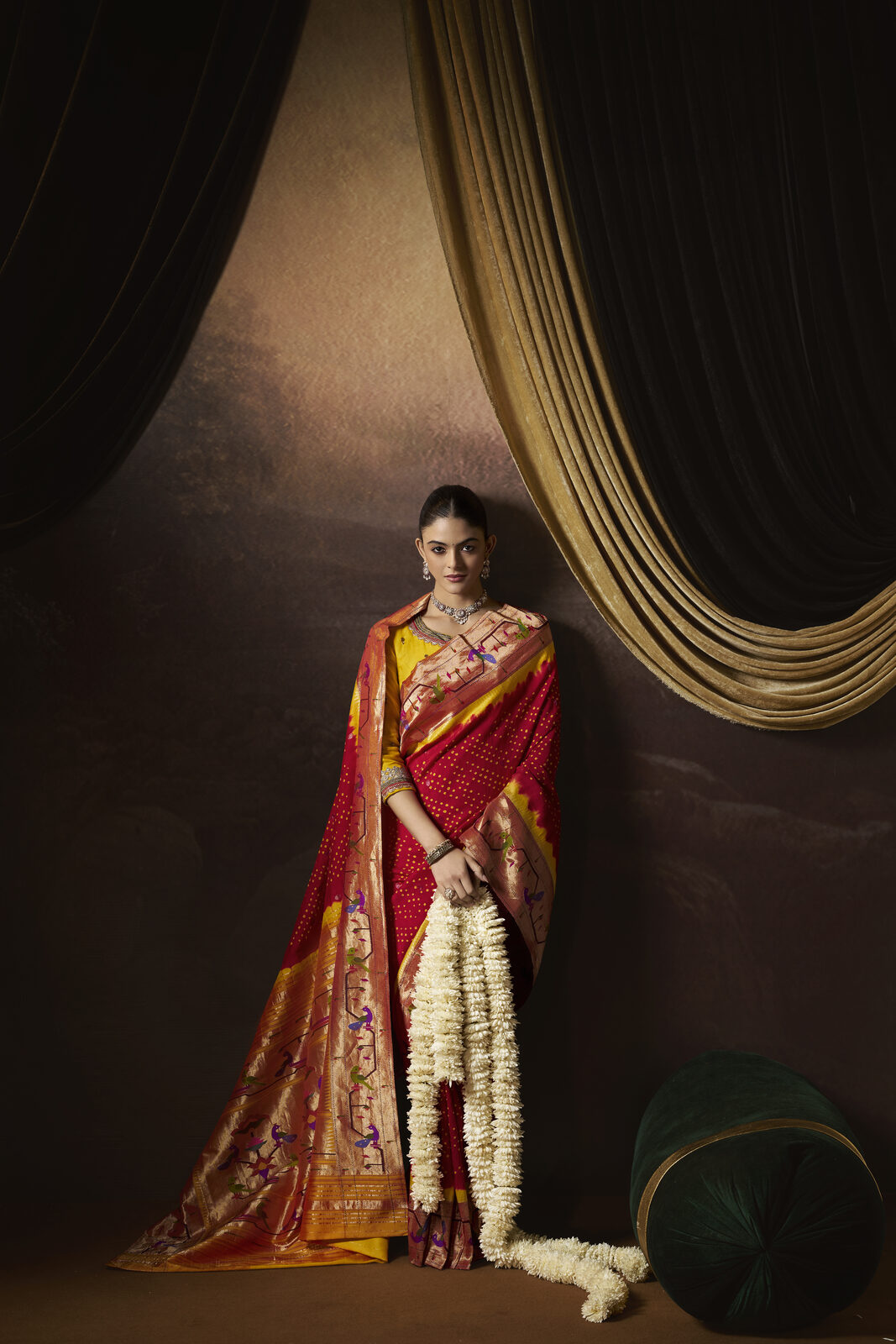
The Complete Bridal Trousseau Saree Checklist
How many sarees should a bridal trousseau actually have? The full atelier-tested checklist, by ceremony and by climate.
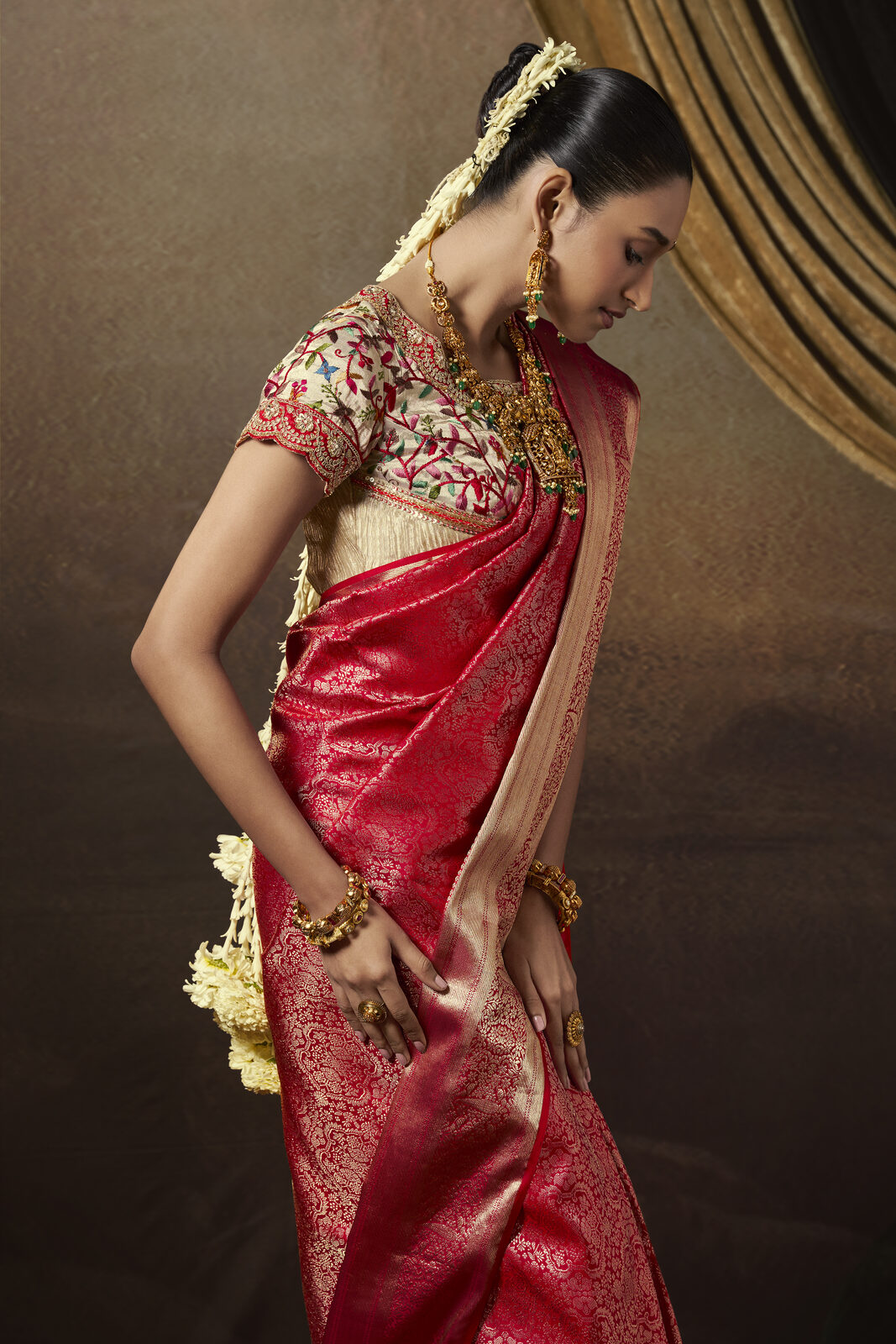
The Red Banarasi Bridal Saree, A Complete Guide
Red Banarasi is the most enduring bridal silk in India. Here is how to choose one that will be worn by your daughter decades from now.