
The Complete Bridal Trousseau Saree Checklist
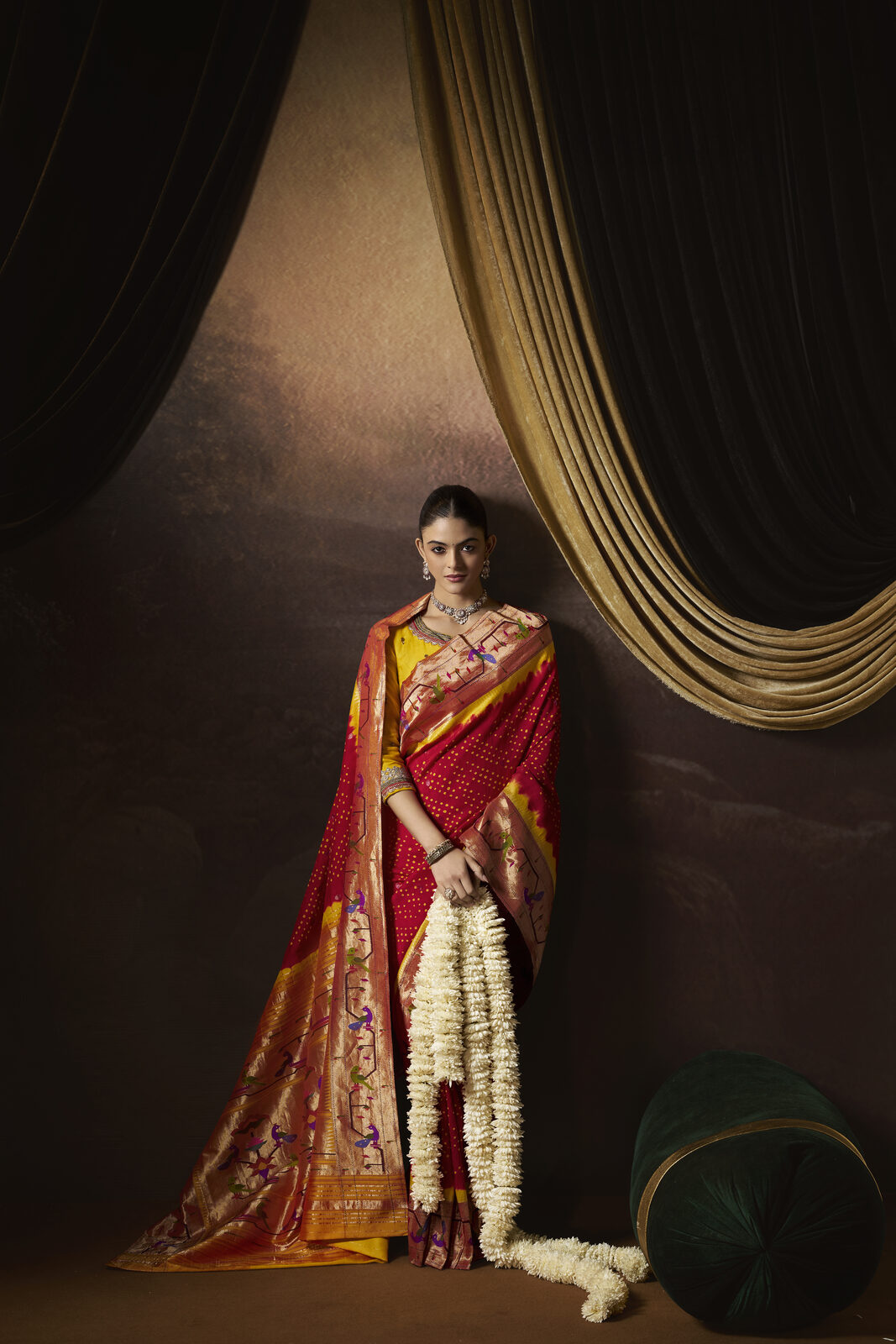
A complete Indian bridal trousseau today includes 8 to 12 sarees across six categories: the muhurtham saree, the reception, the mehendi/haldi, the sangeet, two post-wedding day-wear pieces, and two to four gifting sarees for the mother-in-law and immediate family. The exact number depends on region, climate, and how many ceremonies you are hosting.
We build trousseaus with our brides over three to four visits. The first conversation is never about silk, it is about how many ceremonies, in which cities, in which seasons.
The muhurtham saree (the wedding ceremony itself)
The heirloom piece. A bridal Kanjivaram, a Banarasi, or a Patola depending on tradition. Heavy zari, rich colour, woven for longevity. This is the saree your daughter may wear at her own wedding.
The reception saree
Distinct from the muhurtham, usually a lighter weight, more modern silhouette. A pastel Banarasi, an organza Banarasi, a tissue Kanjivaram, or a hand-embroidered designer saree. The reception is the bride's editorial moment.
Mehendi and haldi sarees
Light, summery, photogenic. Chanderi, organza, georgette Banarasi, or a yellow/green Patola for haldi. Keep these well under bridal weight, you will sit for hours.
Sangeet saree
The dance saree. Pant-style drapeable Banarasi or a structured lehenga-drape Patola. Avoid heavy zari, you will be moving.
Post-wedding day-wear (2 pieces)
Maheshwari, Chanderi, soft Kanjivaram, or a lightweight Banarasi. For the in-laws' first lunch, the temple visit, the satyanarayan puja.
Gifting sarees (2 to 4 pieces)
Traditionally for the mother-in-law, sisters-in-law, and close family. Mid-range pure silks, Kanjivaram, Banarasi, or regional handlooms from her hometown. Trisha Silks wraps each in muslin with a hand-written card.
See these weaves in person.
The Trisha Silks flagship at Jubilee Hills, Hyderabad welcomes private viewings. Patrons abroad, we host video viewings worldwide.
Frequently asked
How many sarees should be in a bridal trousseau?+
Eight to twelve sarees is the modern atelier standard, one muhurtham, one reception, two for mehendi/haldi, one sangeet, two day-wear, and two to four gifting pieces. South Indian brides often add 2 to 3 more for traditional ceremonies.
When should I start shopping for my bridal trousseau?+
Six to nine months before the wedding. A bridal Kanjivaram or Patan Patola can take three to six months to weave; an heirloom restyle takes twelve weeks at the atelier.
Do I need a different saree for every ceremony?+
Yes, different weights, different drapes, different palettes. Wearing one saree across ceremonies is uncomfortable (a 2 kg muhurtham Kanjivaram is not danceable) and limits photography.
From the Journal
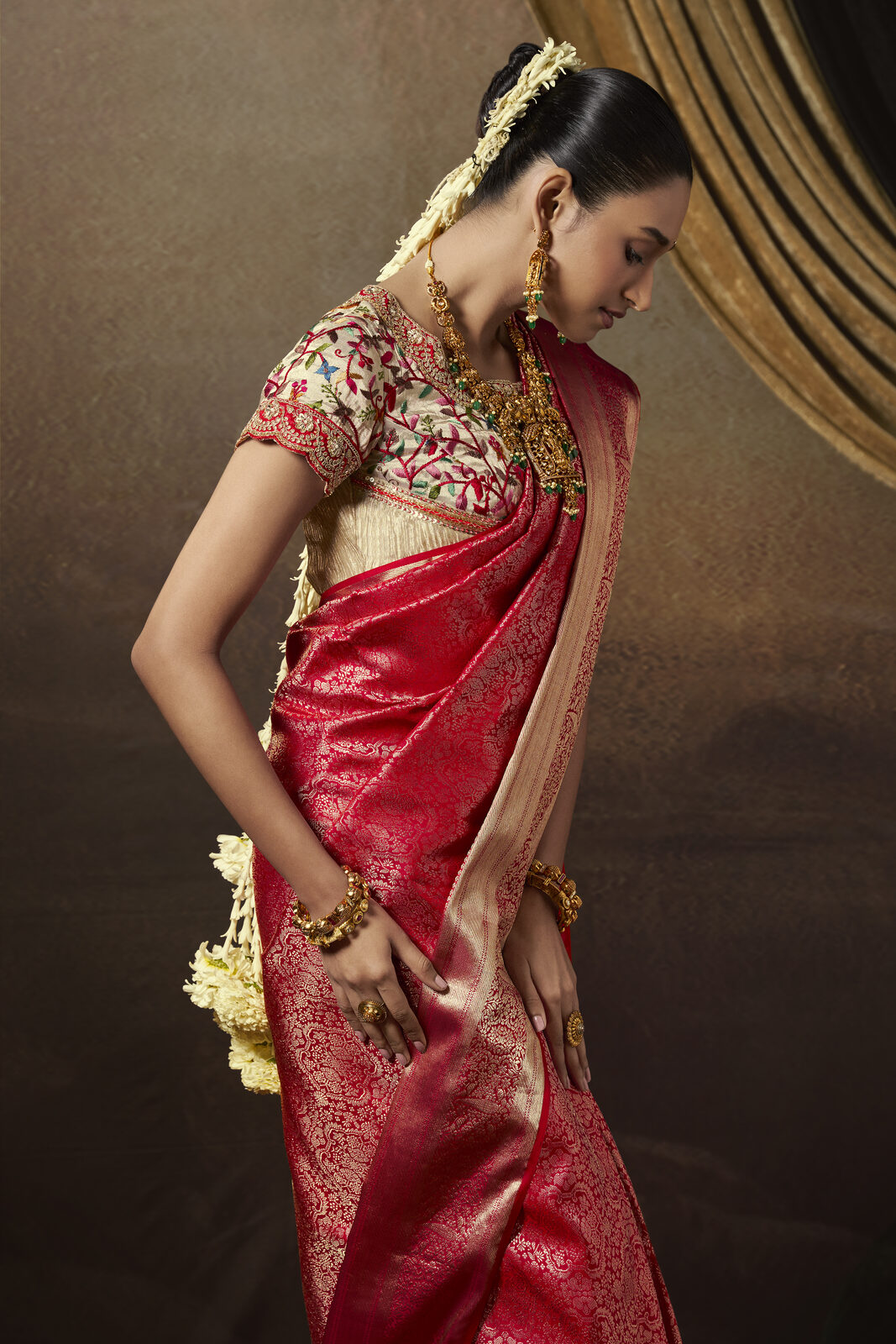
The Red Banarasi Bridal Saree, A Complete Guide
Red Banarasi is the most enduring bridal silk in India. Here is how to choose one that will be worn by your daughter decades from now.
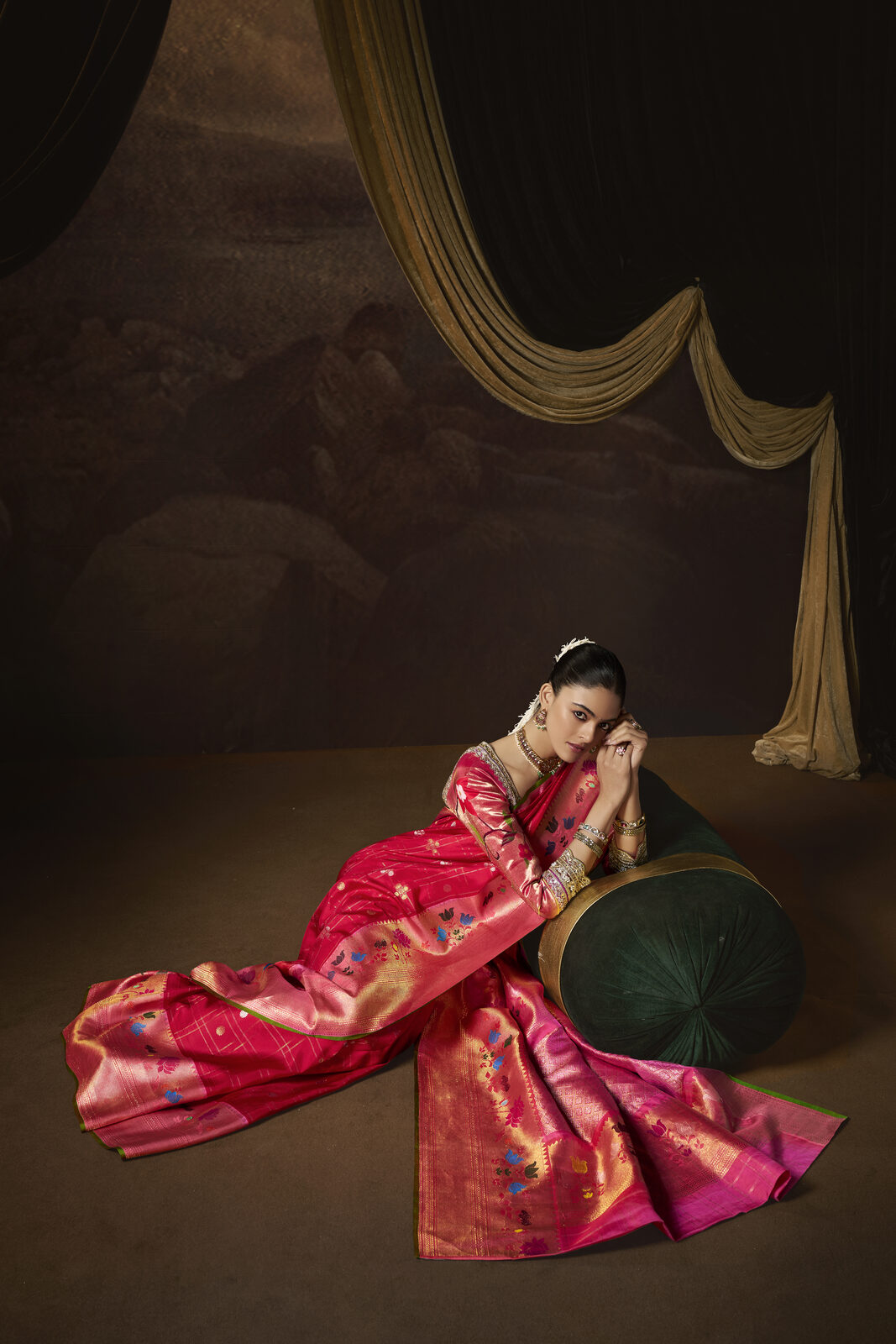
Stone Work, Honestly, Kundan, Polki, Crystal & Zardozi
Real kundan is gold-foil set. Polki is uncut diamond. Crystal is glass. Zardozi is wire. Most stone-work sarees in the market mix all four and call it 'kundan polki'. Here is the truth.