
Stone Work, Honestly, Kundan, Polki, Crystal & Zardozi
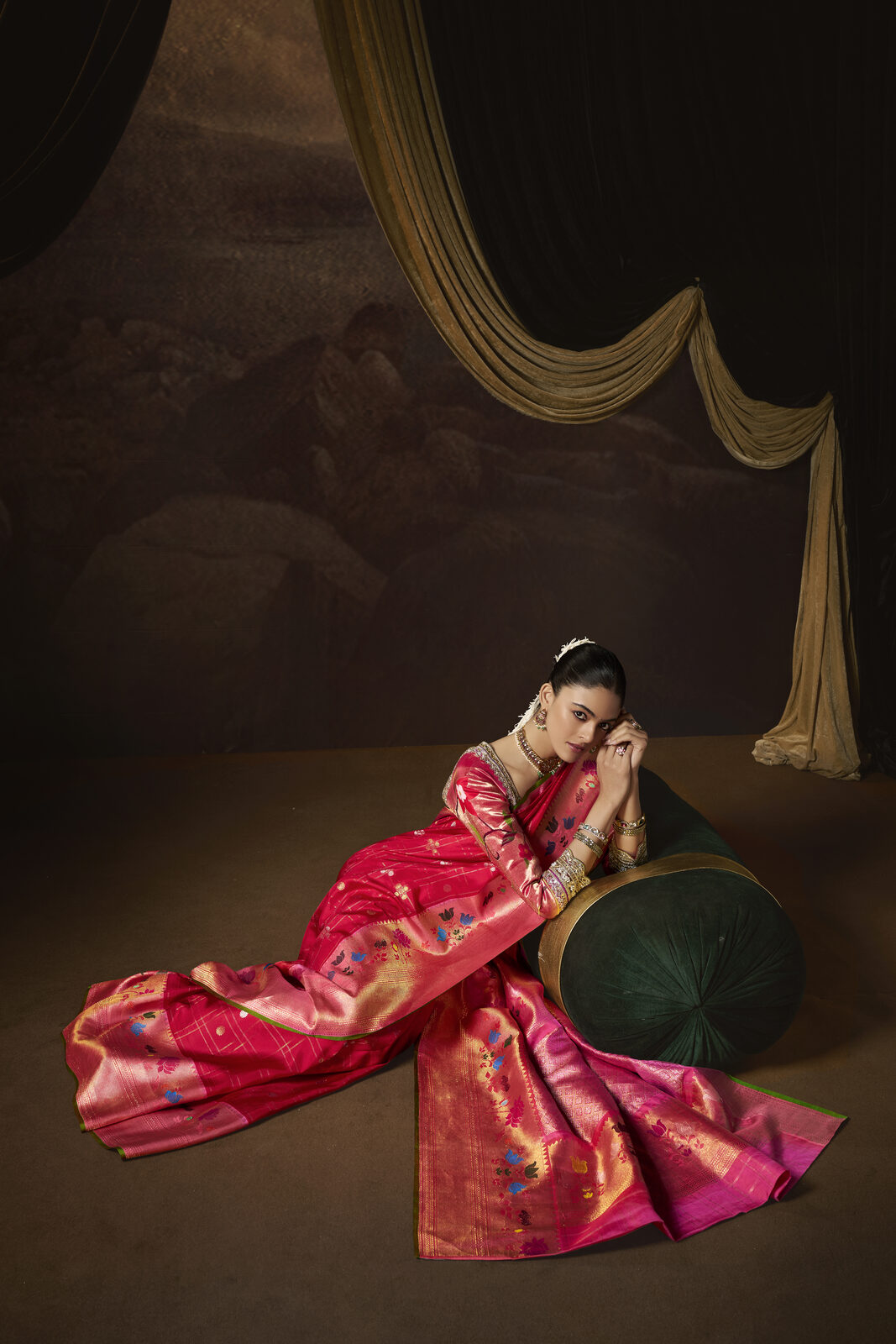
'Stone work saree' has become a category so loosely defined that the same piece can be marketed as 'kundan' in one shop and 'polki' in another at twice the price. They are not the same. None of them are the same. This is a clean, honest guide to what you are actually being sold.
We label every stone-work piece with its actual technique, kundan-foil, true polki, Swarovski crystal, cutdana, sequin, naqshi, zardozi, dabka. If a piece mixes techniques, we list each one and its percentage.
Kundan, gold foil setting
Traditional kundan is the technique of setting uncut stones into 24-karat gold foil, layered to hold the stone in place without glue or prongs. On a saree or blouse, true kundan work uses kundan-style faceted stones set into thin gold foil bezels stitched onto the fabric. It is heavy, it catches light beautifully, and it is genuinely valuable, a true kundan bridal blouse begins around ₹85,000.
Polki, uncut diamond and its imitations
True polki uses uncut natural diamonds set in gold foil. On bridal jewellery, this is real and verifiable. On sarees and blouses, 'polki' is almost always polki-style faceted glass or cubic zirconia set in gold-foil bezels, beautiful, lighter than true polki, and one-tenth the price. We will tell you which you are looking at.
Crystal, cutdana and sequin
Swarovski crystal is high-grade leaded glass, brilliant, surprisingly heavy, and the workhorse of modern reception sarees. Cutdana is faceted glass beads stitched in dense patterns. Sequin is flat metallic disc work. All three are honest, beautiful crafts in their own right, and a Swarovski-crystal reception saree from a serious atelier ranges ₹45,000 to ₹1.8 lakh. The problem is when they are sold as 'polki' or 'kundan'. They are not.
Zardozi, dabka and naqshi, the wire crafts
Zardozi is the embroidery of gold and silver metallic wire onto fabric, often layered over fabric padding to give relief. Dabka is the spring-coil version, naqshi is the flat-thread version, and tilla is the heavier gold thread. These are not stones at all, they are wire crafts, but they are often combined with stone work and bundled into the same conversation. A hand-zardozi bridal saree from a Hyderabad atelier ranges ₹65,000 to ₹3.5 lakh.
See these weaves in person.
The Trisha Silks flagship at Jubilee Hills, Hyderabad welcomes private viewings. Patrons abroad, we host video viewings worldwide.
Frequently asked
What is the difference between kundan and polki work on a saree?+
Kundan uses faceted stones set in 24-karat gold foil bezels. Polki uses uncut diamonds (or polki-style faceted glass) set the same way. True polki on a saree is rare; most 'polki sarees' use polki-style glass. A serious atelier will tell you which.
Is stone work saree the same as zardozi?+
No. Stone work uses stones, kundan, polki, crystal, cutdana. Zardozi uses metallic wire embroidered onto fabric, often over padding. They are often combined on the same piece, but they are different crafts and priced differently.
How much does a stone work bridal saree cost?+
A true kundan or hand-zardozi bridal saree ranges ₹85,000 to ₹3.5 lakh. A Swarovski crystal reception saree ranges ₹45,000 to ₹1.8 lakh. Cutdana and sequin work begins around ₹28,000. Beware of 'kundan-polki' pieces priced under ₹30,000 to they are usually crystal or glass.
From the Journal
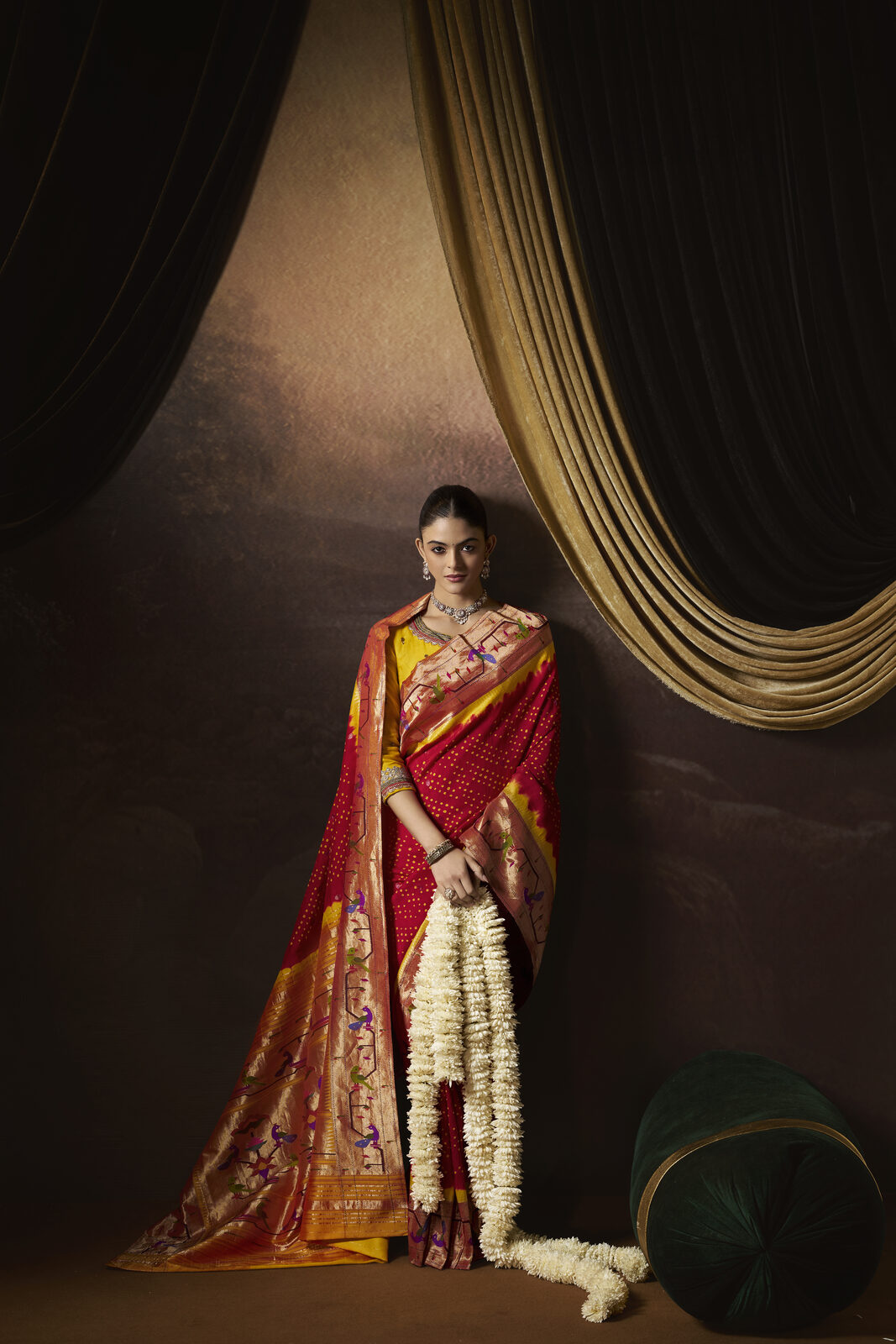
The Complete Bridal Trousseau Saree Checklist
How many sarees should a bridal trousseau actually have? The full atelier-tested checklist, by ceremony and by climate.
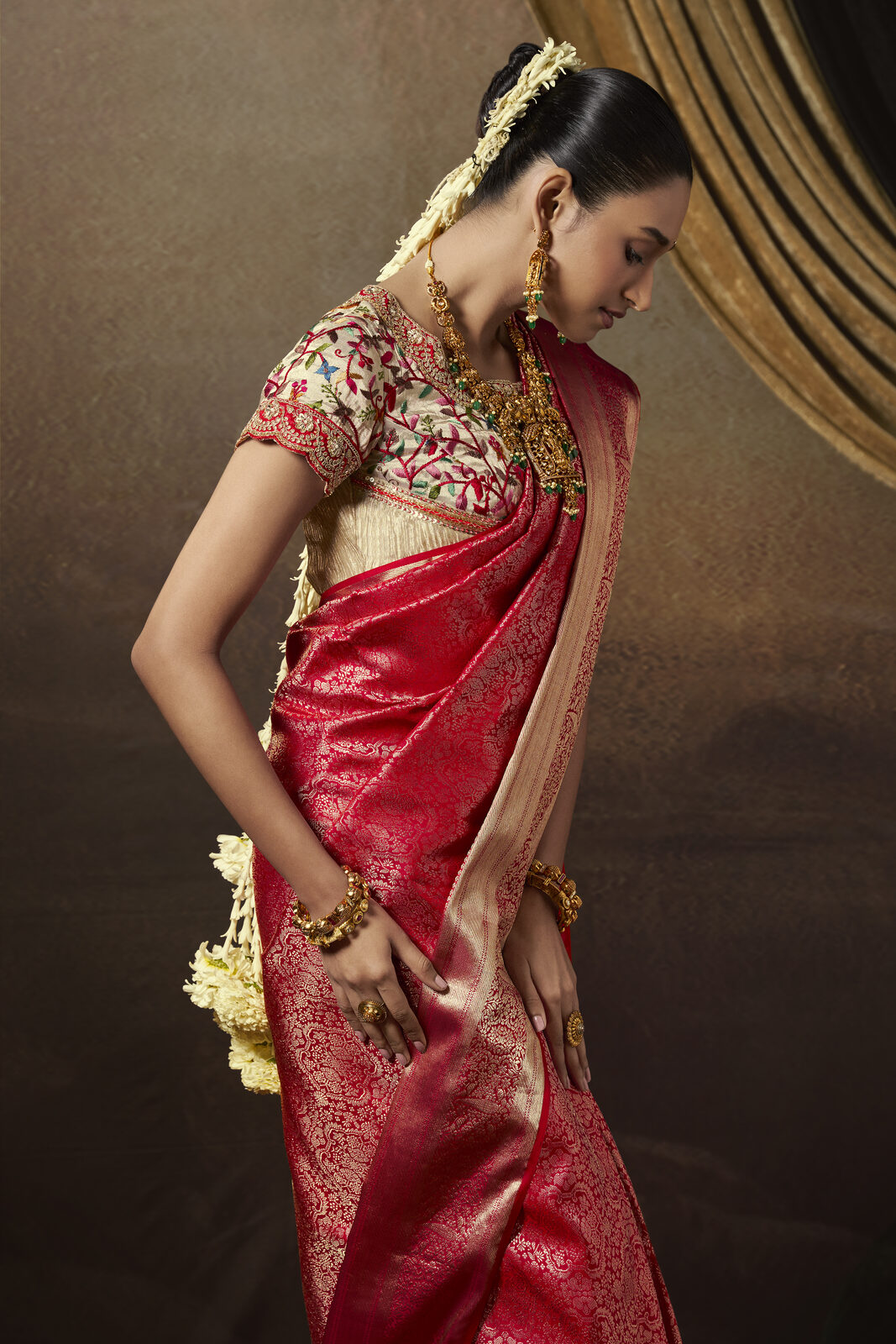
The Red Banarasi Bridal Saree, A Complete Guide
Red Banarasi is the most enduring bridal silk in India. Here is how to choose one that will be worn by your daughter decades from now.