
Choosing a Reception Saree, Mumbai, Jaipur, Hyderabad, London
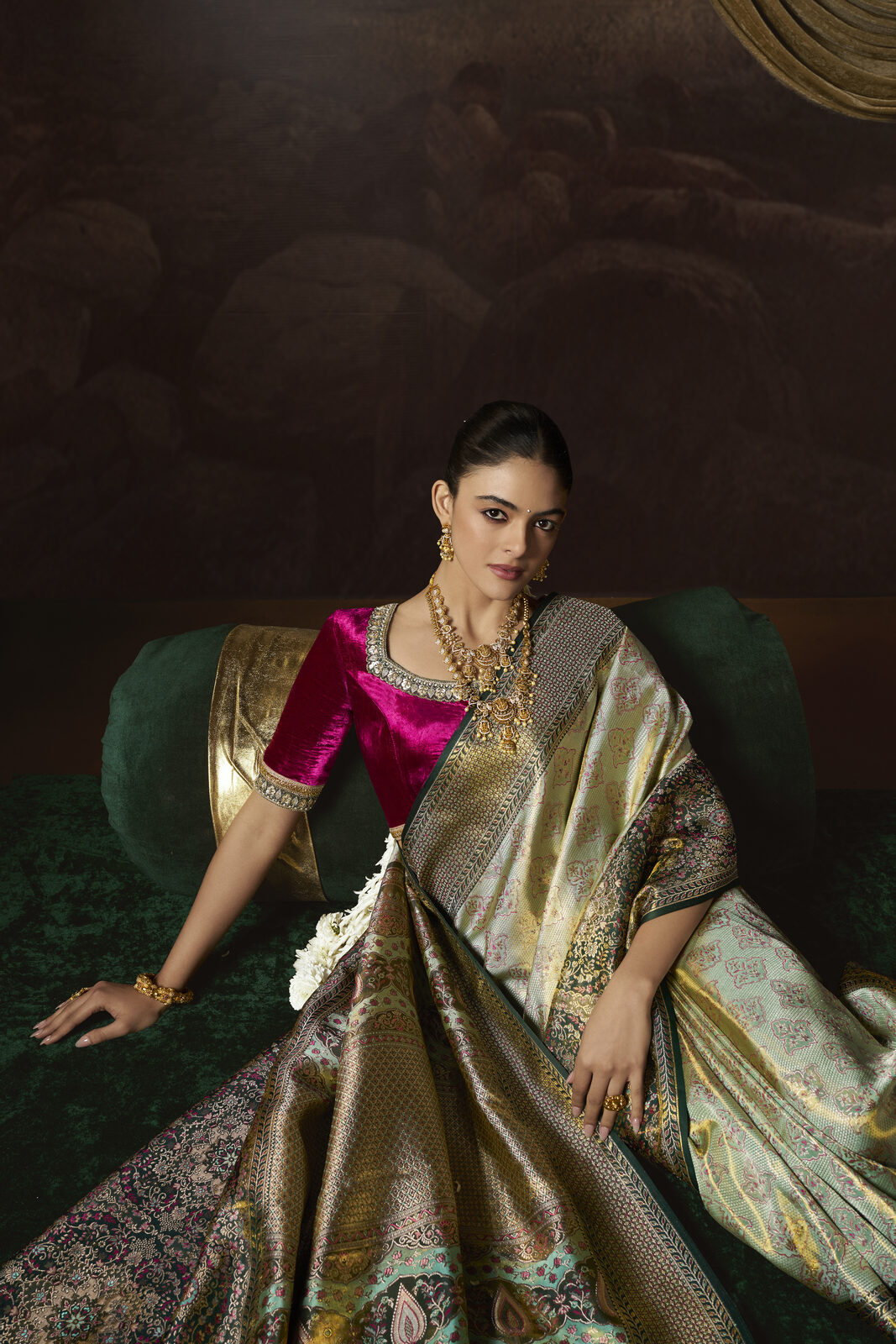
Most bridal trousseau guides treat the reception saree as a single archetype. It is not. The city of your reception, its climate, its dress code, the lighting in its five-star ballrooms, should drive your choice as much as your colour preference does. Here is how we counsel brides receiving in four very different cities.
We have shipped reception sarees to receptions in 31 countries. The most common mistake is choosing for the photograph and not the room.
Mumbai, monsoon, sea air, marble ballrooms
Mumbai monsoon receptions run May to September in heavily air-conditioned five-star halls with marble floors. The sea humidity is real even inside. Choose: organza Banarasi or tissue silk with hand-zardozi (under 500 g), in oxblood, emerald or champagne. Avoid: heavy Kimkhwab (you will not survive the humidity) and pure white or pale pastel (marble floor reflections wash you out). Best venues to dress for: the Taj Mahal Palace Crystal Room, the Oberoi Trident grand ballroom, the Four Seasons Worli rooftop.
Jaipur, winter palace receptions
Jaipur receptions are mostly October to February in palace venues with high ceilings, soft chandelier lighting, and outdoor courtyards that turn cold after 9 PM. Choose: heavy bridal Banarasi or pure Kanjivaram with korvai border, 0.9 to 1.2 kg, in deep wine, royal maroon, peacock blue or imperial gold. Carry an embroidered shawl or pashmina for the courtyard cocktail. Avoid: organza (too cold) and silvers (read flat in chandelier light). Best venues to dress for: Rambagh Palace, Samode Haveli, the City Palace, Jaipur Tents at the Leela.
Hyderabad, spring palace gardens and ballrooms
Hyderabad receptions run year-round but peak November to March. The city's signature venues mix Mughal-era stonework with bright LED lighting that flattens delicate weaves. Choose: kadhua Banarasi or pure Kanjivaram with strong contrast borders that hold under bright light, 0.8 to 1.1 kg, in deep red, peacock, royal blue or pista green. Avoid: subtle tonal embroidery (lost under venue lighting) and beige or champagne (visually disappears against the typical cream venue palette). Best venues to dress for: Falaknuma Palace, Taj Krishna ballroom, ITC Kohenur, Park Hyatt Banjara.
London, autumn registry plus reception
London receptions are almost always indoors in heritage venues with low warm tungsten lighting, October to March. Heating runs hot inside; outside is cold and damp. Choose: medium-weight Banarasi or pure Kanjivaram in ruby red, royal blue, deep emerald, or wine, 0.7 to 1.0 kg, with hand zardozi that catches warm light. Bring a velvet wrap. Avoid: pastels (lost in tungsten), and any saree under 500 g (you will feel exposed in a London ballroom). Best venues to dress for: Claridge's ballroom, The Savoy Lancaster Room, Hampton Court Palace, The Dorchester.
See these weaves in person.
The Trisha Silks flagship at Jubilee Hills, Hyderabad welcomes private viewings. Patrons abroad, we host video viewings worldwide.
Frequently asked
What is the best reception saree for a Mumbai monsoon wedding?+
Organza Banarasi or tissue silk with hand zardozi, under 500 g, in oxblood, emerald or champagne. Heavy Kimkhwab is unwearable in Mumbai humidity even inside an air-conditioned ballroom.
Which saree photographs best under warm tungsten lighting in London venues?+
A medium-weight Banarasi or pure Kanjivaram in ruby red, royal blue, deep emerald or wine, with hand zardozi rather than pure silver zari. Warm tungsten flatters warm colours; silver and pastels read flat.
Should the reception saree be lighter than the muhurtham saree?+
Yes, almost always. The muhurtham saree (Kimkhwab or bridal Kanjivaram) is worn for 3 to 5 hours seated. The reception saree is worn for 2 to 3 hours mostly standing, photographing and greeting guests. 0.6 to 1.0 kg is the sweet spot.
From the Journal
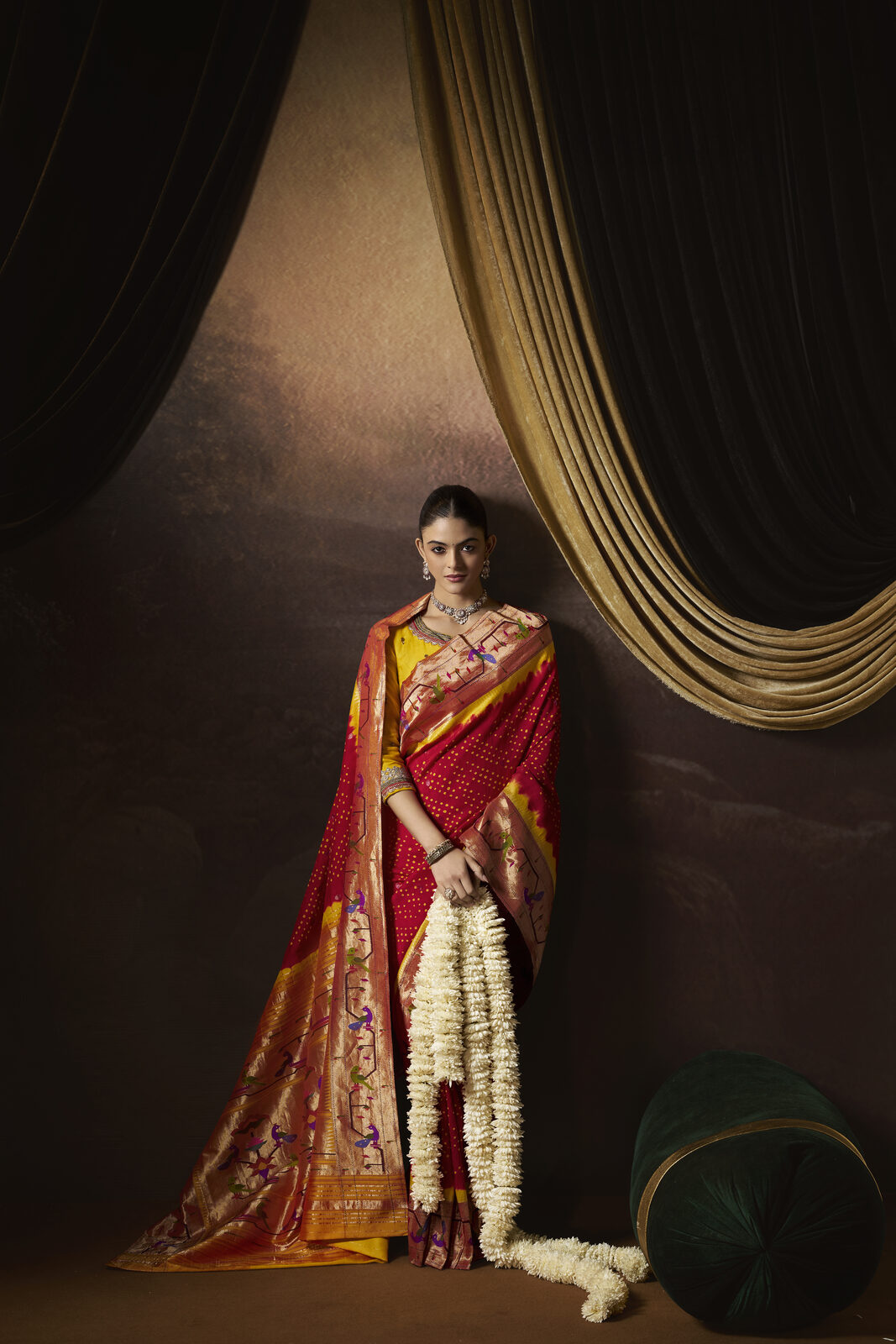
The Complete Bridal Trousseau Saree Checklist
How many sarees should a bridal trousseau actually have? The full atelier-tested checklist, by ceremony and by climate.
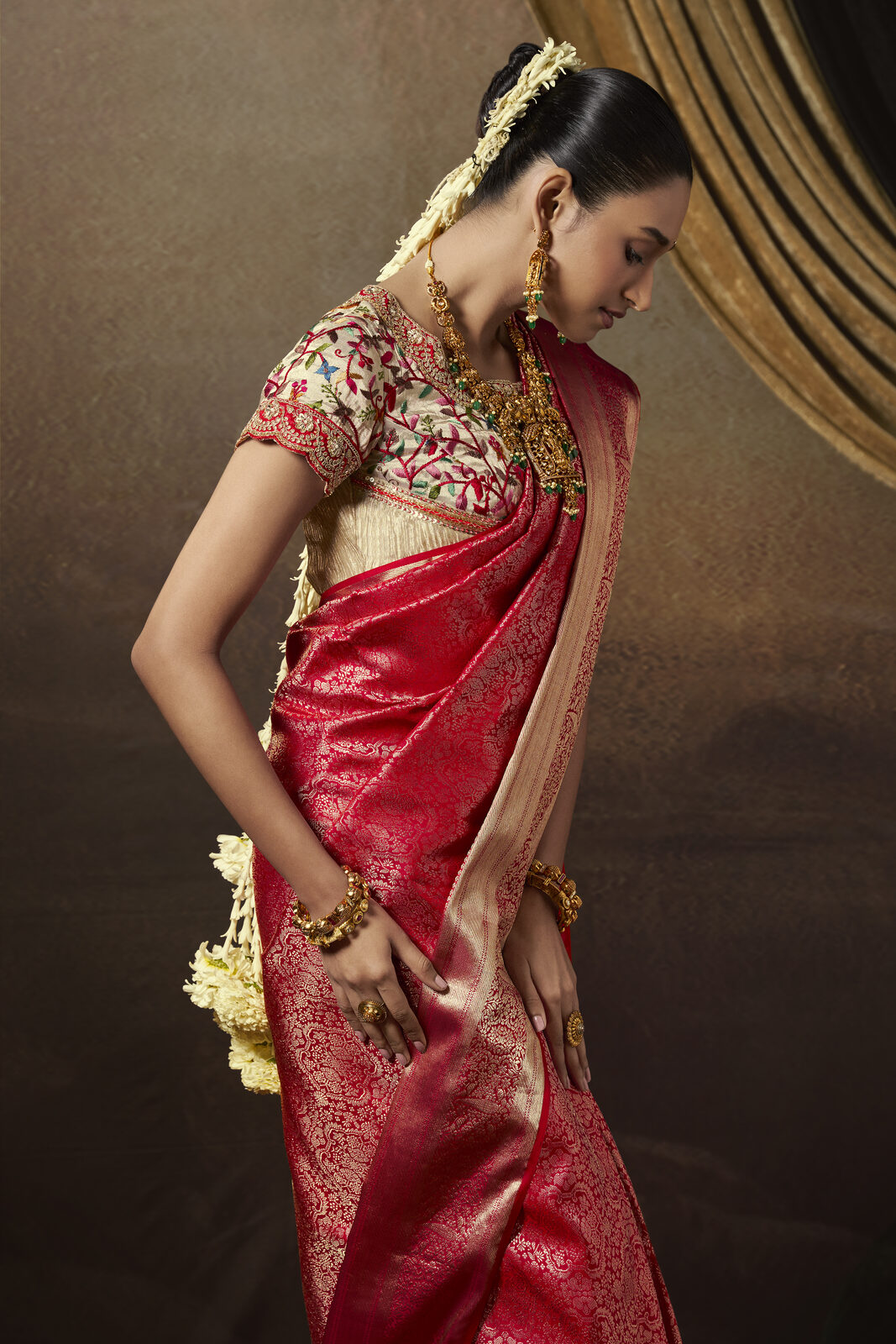
The Red Banarasi Bridal Saree, A Complete Guide
Red Banarasi is the most enduring bridal silk in India. Here is how to choose one that will be worn by your daughter decades from now.