
How a Bridal Saree Viewing Actually Works at Trisha Silks
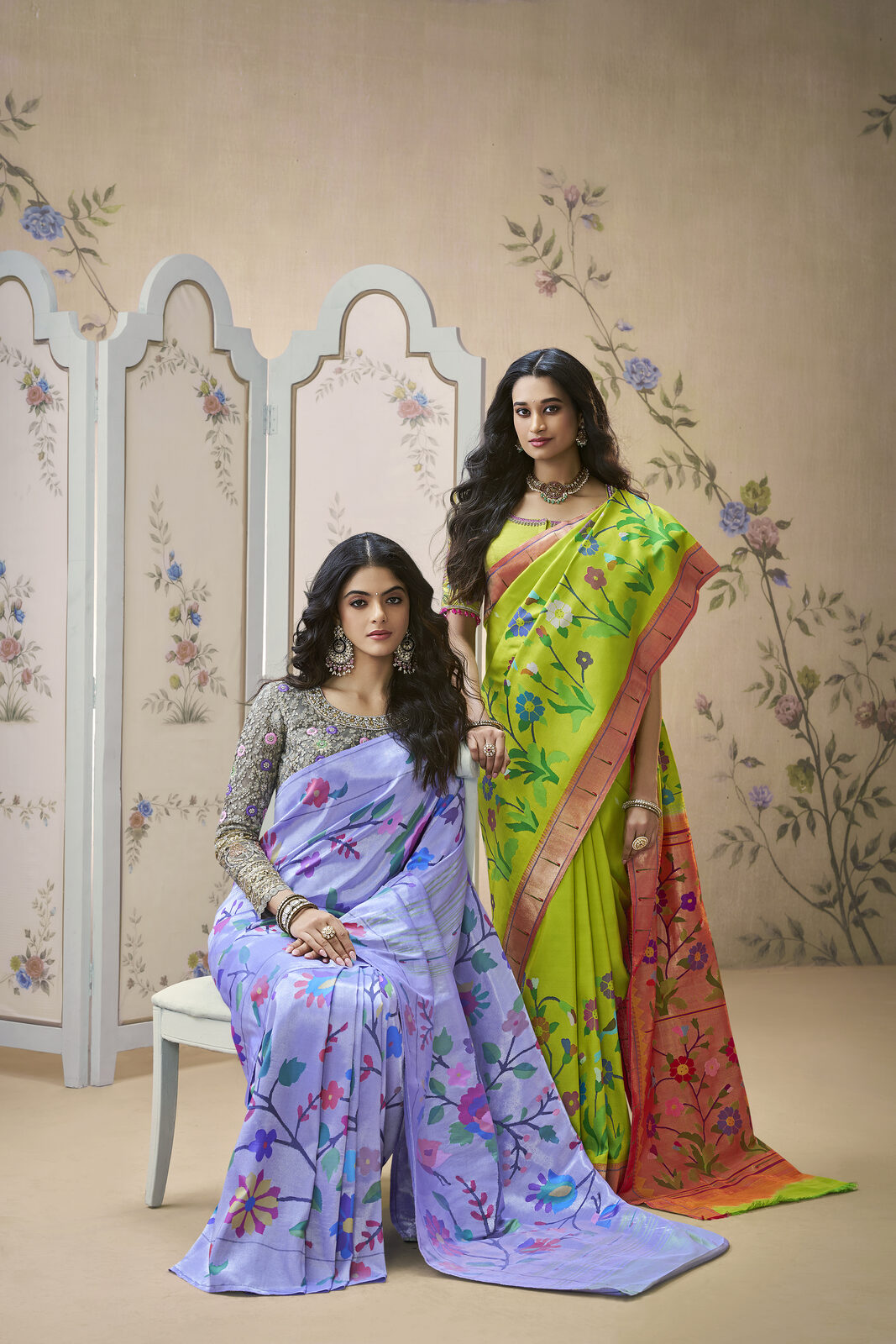
If you have never been to a private bridal viewing before, the format can feel mysterious. You message a number, someone replies, you turn up on a Saturday afternoon and what happens next is unclear. This guide is meant to take the mystery out. We will walk you through exactly what happens, from the first WhatsApp message to the day you carry your bridal trunk home.
Our private bridal salon hosts around forty viewings a month between the wedding seasons of November and February, and again from May to July. The format below is the same one we follow for every patron, whether the budget is 1 lakh or 15 lakh.
Step one, the first message
Almost every bridal viewing begins on WhatsApp. Patrons message +91 91123 91239 with three things, a rough wedding date, a rough budget, and the city of the ceremony. That is enough for us to begin.
Within a day, a senior consultant replies with a few clarifying questions. Are you the bride or are you booking on behalf of the bride. Is this a Telugu wedding, a Tamil wedding, an inter community wedding. Is there a colour you already have in mind. There is no script. The questions are simply to help us begin curating before you arrive.
Step two, the pre viewing curation
Once we have a sense of the wedding, our floor team begins pulling pieces. For a typical bridal viewing we set aside between thirty and fifty sarees from the active floor and the archive room. These include the muhurtham options, three or four reception possibilities, and a smaller curation for sangeet and haldi if the patron wants the full trousseau done in one sitting.
The pieces are kept aside in a marked tray in the salon. They are not put back on the shop floor until the viewing is done. This is the part patrons rarely see and it is the part that makes the viewing actually work.
Step three, the viewing itself
Bridal viewings run two to three hours. They are held in our private salon on the first floor, away from the main shop floor. The room seats five comfortably and we encourage you to bring your mother, your fiance if he wants to come, and one trusted friend. Beyond five people the room becomes a focus group and the bride stops being able to hear her own opinion.
We begin by laying out the muhurtham options. The bride drapes the shortlisted pieces over her shoulder, one by one, in front of a full length mirror in natural light. We then narrow to three, then to one. Reception, sangeet and haldi follow the same format. Chai and snacks are served through the afternoon. There is no rush.
Step four, the blouse conversation
Once the saree is chosen, our master tailor comes upstairs for measurements and a blouse design conversation. We show our blouse archive, around two hundred designs across zardozi, naqshi, cutdana, maggam, aari, mukaish and pearl dabka. The bride picks the design, the embroidery house begins work the next morning, and the first fitting is scheduled four weeks later.
Step five, the trousseau coordination
If the patron is buying a full trousseau, we coordinate the colour story across sarees so they read as one collection rather than five separate purchases. This includes unstitched silks for the close family, contrast blouse fabrics, and the small details, fall and edging colour, pico finish, hook placement, that make a trousseau feel complete.
Step six, fittings and final hand over
The first blouse fitting is at four weeks. The final fitting is at six weeks. The full bridal trunk is delivered seven days before the wedding, packed in muslin, with a printed care card, drape instructions, and the contact of the senior consultant who curated the trousseau in case anything is needed on the wedding day itself.
What you do not need to do
You do not need to dress up for a viewing. Come in jeans or a kurta. You do not need to bring reference photographs unless you want to. You do not need to know your size, we will measure you. You do not need to commit on the day. Patrons routinely sleep on a shortlist for a week before confirming, and that is welcomed.
See these weaves in person.
The Trisha Silks flagship at Jubilee Hills, Hyderabad welcomes private viewings. Patrons abroad, we host video viewings worldwide.
Frequently asked
How do I book a bridal saree viewing at Trisha Silks?+
WhatsApp +91 91123 91239 with your wedding date, rough budget and the city of the ceremony. A senior consultant replies within a day to confirm a slot and ask a few clarifying questions so we can curate before you arrive.
How long does a bridal viewing take?+
Plan for two to three hours. Bridal viewings run in our private salon on the first floor, away from the main shop floor, with chai and snacks served through the afternoon. There is no rush to decide on the day.
Who should I bring with me to a bridal viewing?+
We suggest your mother, your fiance if he wants to come, and one trusted friend. Beyond five people the room becomes a focus group and the bride stops being able to hear her own opinion clearly.
Do I need to commit at the viewing itself?+
No. Patrons routinely sleep on a shortlist for a week before confirming. Pieces from a bridal viewing are held aside in the salon for up to seven days while the bride decides.
Can a bridal viewing be done over video for NRI brides?+
Yes. We run the full process over video for brides in the US, UK, UAE, Singapore, Australia and Canada, including the blouse fitting via courier. See our NRI bridal trousseau guide for the full format.
From the Journal
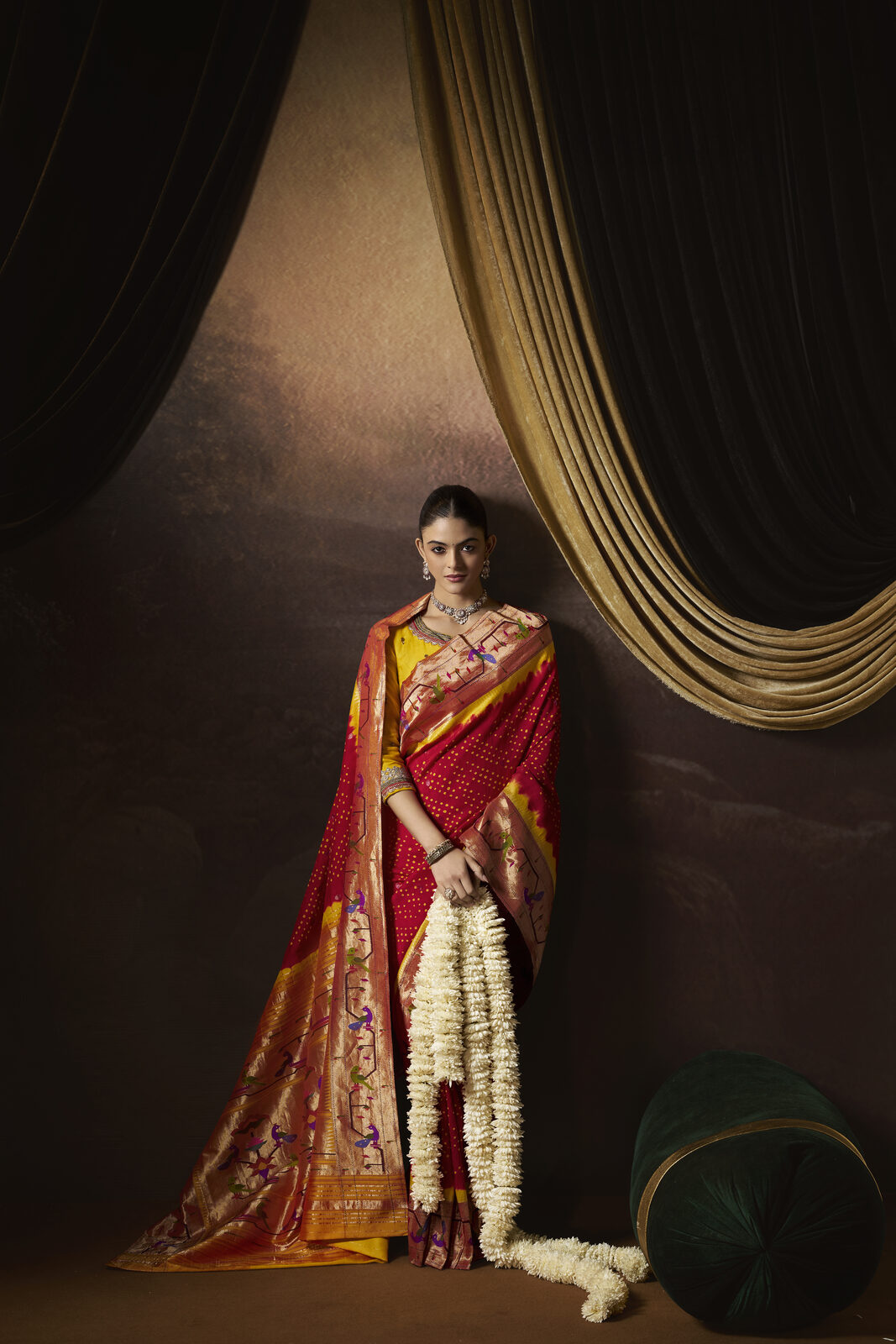
The Complete Bridal Trousseau Saree Checklist
How many sarees should a bridal trousseau actually have? The full atelier-tested checklist, by ceremony and by climate.
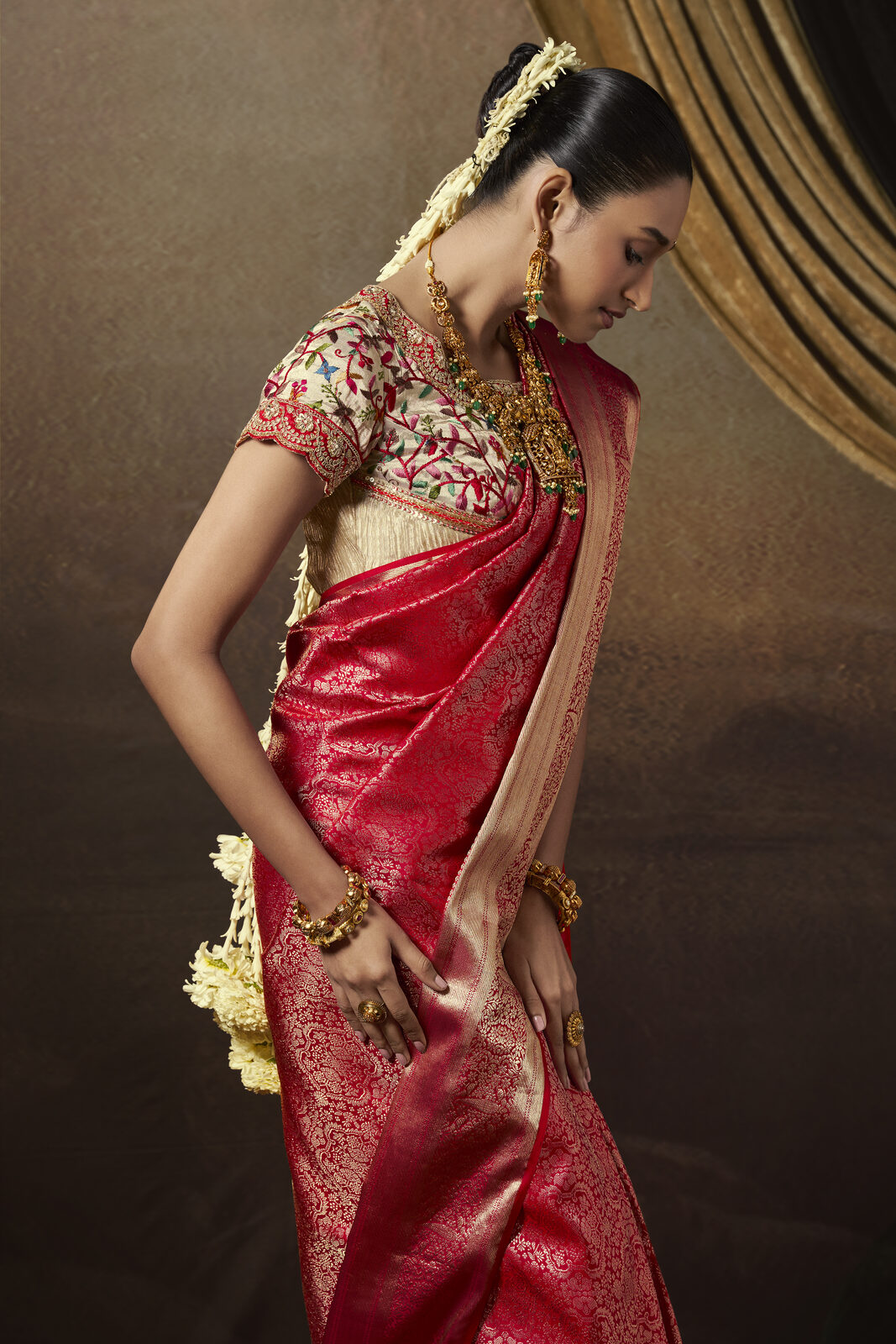
The Red Banarasi Bridal Saree, A Complete Guide
Red Banarasi is the most enduring bridal silk in India. Here is how to choose one that will be worn by your daughter decades from now.