
Heavy vs Heavier, Kimkhwab & the Bridal Weight Question
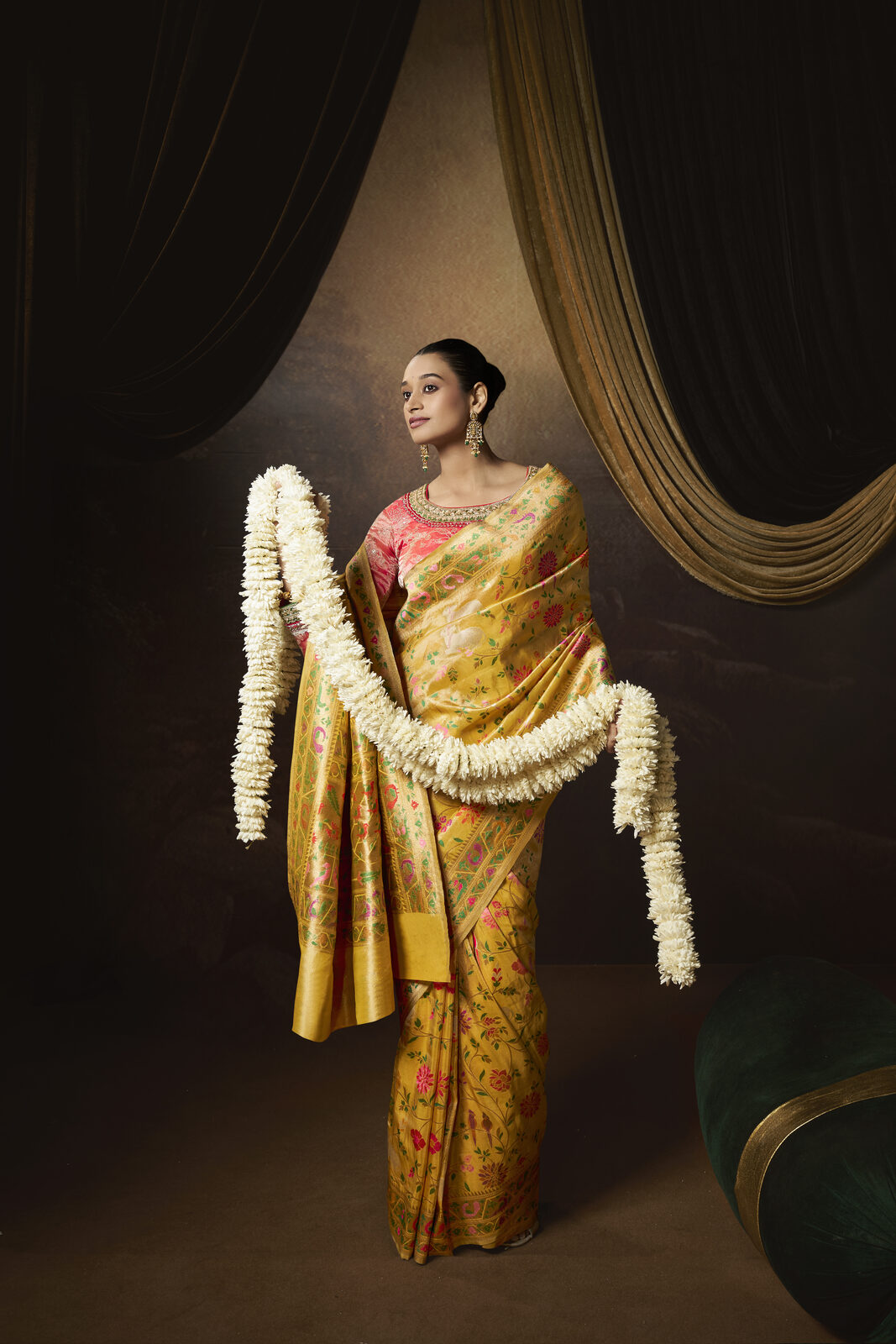
'Heavy' is a word brides and grandmothers use to mean very different things. A 1.4 kg Kimkhwab Banarasi is heavy. A 1.1 kg bridal Kanjivaram is heavy. A 900 g organza Banarasi loaded with crystal can also feel heavy. They wear differently across a five-hour ceremony, and the decision is not just about grams, it is about where the weight sits.
Every bridal piece we sell is weighed on arrival and tagged with its actual weight in grams. We will tell you, honestly, how it will sit on your body across a four-hour ceremony.
Kimkhwab, the heaviest pure-silk brocade
Kimkhwab is the heaviest of the Banarasi brocades, pure mulberry silk woven in such density of pure silver-and-gold zari that the saree reads as metal. A bridal Kimkhwab runs 1.3 to 1.5 kg and was historically the saree of Mughal court women and Rajput queens. It is the saree that survives generations because it is engineered to. The cost reflects the truth: a true bridal Kimkhwab begins around ₹3.5 lakh.
Kadhua Banarasi vs jangla Banarasi for bridal use
Kadhua is the inset-motif weave, each motif individually placed by hand, the heaviest and most prized for the wedding entrance and photographs. Jangla is the dense all-over jaal pattern, slightly lighter, faster on the loom, easier to sit in for hours. Many brides choose kadhua for the muhurtham photographs and a jangla for the equally important pheras and reception. Both are real, both are bridal.
Bridal Kanjivaram, why korvai matters under weight
A pure bridal Kanjivaram with korvai borders carries its weight in the border seam, meaning the saree drapes in sculptural folds that hold their shape across hours of sitting and standing. A bridal Kanjivaram without korvai (a 'bridal soft silk') will look beautiful for the first hour and then collapse. Korvai is structural.
How to choose for your ceremony
Muhurtham, 3 to 5 hours seated, traditional Hindu family: Kimkhwab or pure Kanjivaram with korvai, 1.0 to 1.4 kg. Reception, 2 to 3 hours mostly standing: kadhua Banarasi or organza Banarasi with hand-zardozi, 0.6 to 1.0 kg. Pheras outdoor, December evening: medium-weight Banarasi with shawl, 0.8 to 1.0 kg plus 200 g shawl. Summer destination wedding: organza Banarasi or tissue Banarasi, under 400 g.
See these weaves in person.
The Trisha Silks flagship at Jubilee Hills, Hyderabad welcomes private viewings. Patrons abroad, we host video viewings worldwide.
Frequently asked
How heavy is a bridal Banarasi or Kanjivaram saree?+
A bridal Kimkhwab Banarasi runs 1.3 to 1.5 kg. A kadhua bridal Banarasi runs 0.9 to 1.2 kg. A bridal Kanjivaram with pure-zari korvai borders runs 1.0 to 1.3 kg. Organza Banarasi bridal pieces sit at 300 to 500 g and are the modern reception choice.
What is Kimkhwab brocade?+
Kimkhwab is the heaviest of the Banarasi brocades, pure mulberry silk woven with pure silver-and-gold zari in such density the saree reads as metal. Historically commissioned by Mughal court women and Rajput queens. A true bridal Kimkhwab begins around ₹3.5 lakh.
Is kadhua heavier than jangla?+
Slightly, kadhua inset motifs add 100 to 200 g over a jangla all-over jaal of the same yardage. Kadhua reads more bridal in photographs; jangla is easier to wear seated for hours.
From the Journal
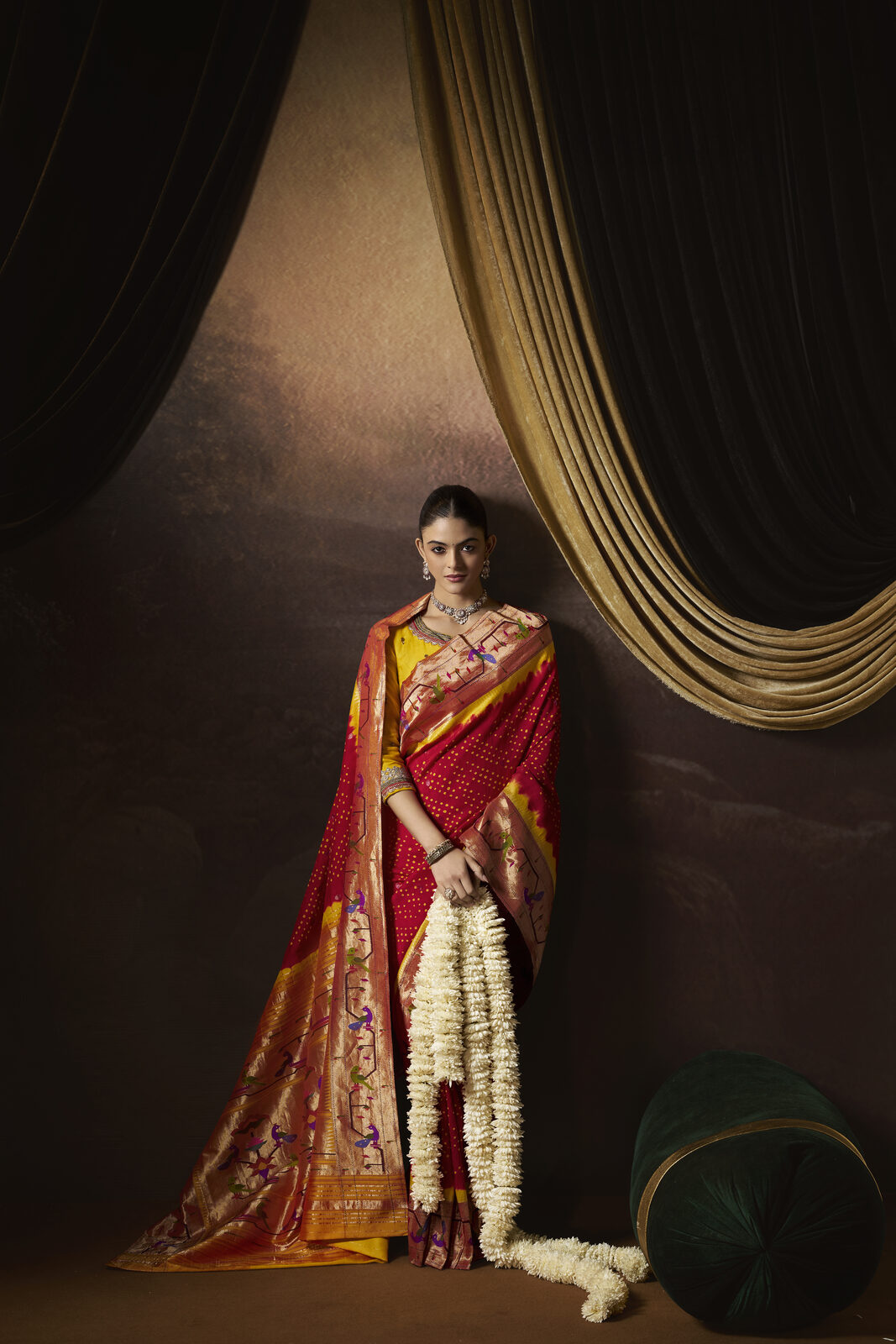
The Complete Bridal Trousseau Saree Checklist
How many sarees should a bridal trousseau actually have? The full atelier-tested checklist, by ceremony and by climate.
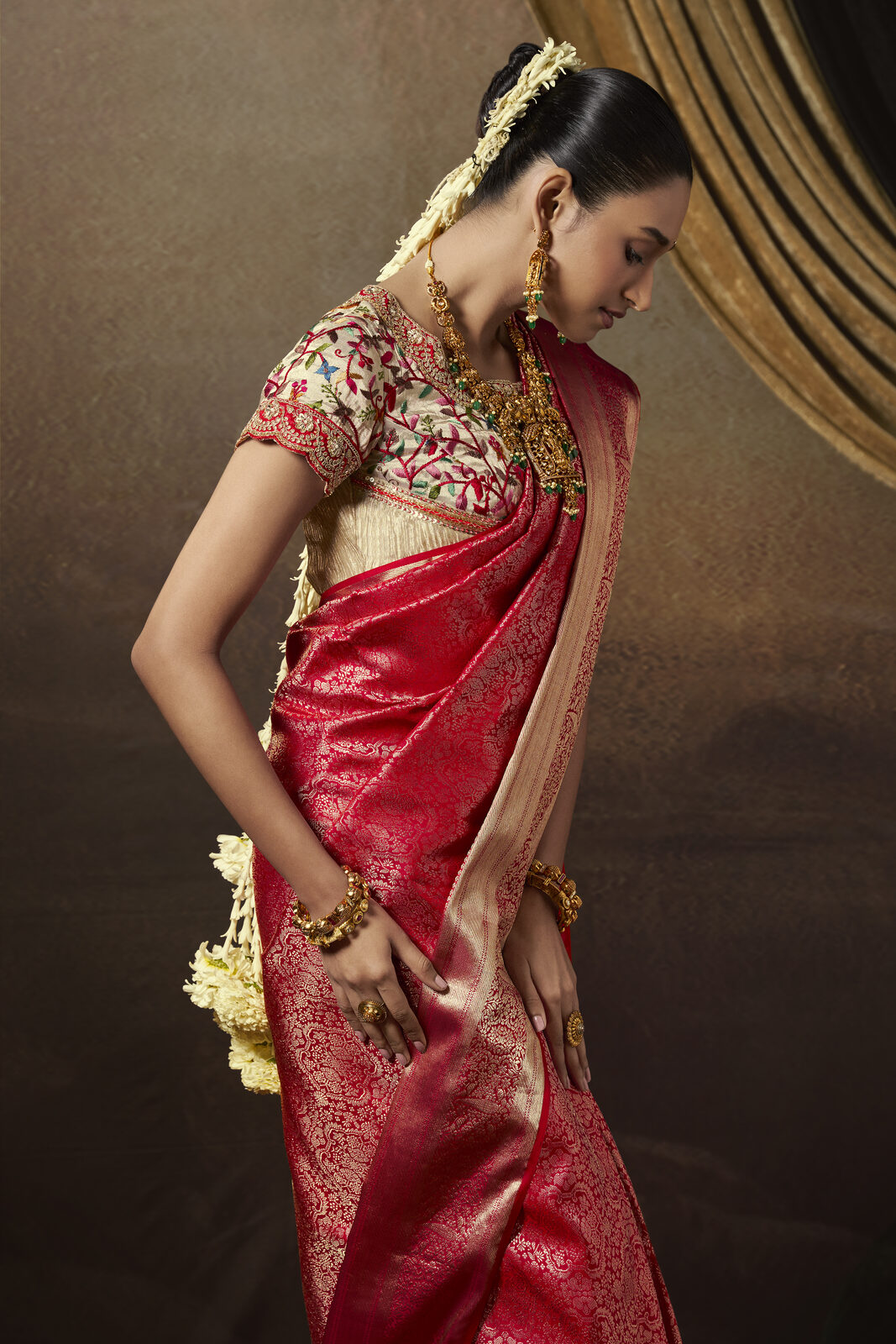
The Red Banarasi Bridal Saree, A Complete Guide
Red Banarasi is the most enduring bridal silk in India. Here is how to choose one that will be worn by your daughter decades from now.