
Patola Decoded, The Last Weaving Families of Patan
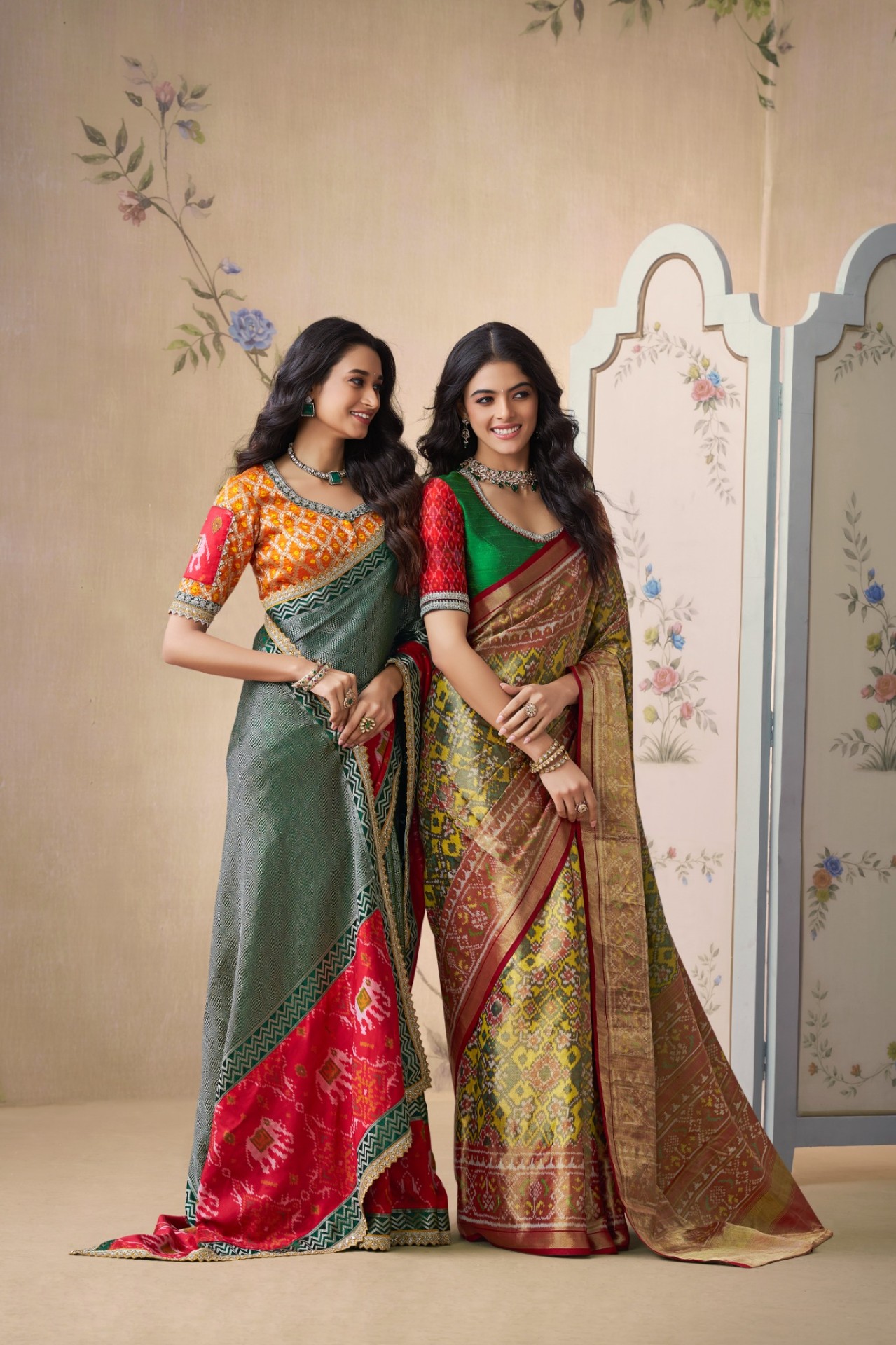
There are perhaps a dozen looms left in the world that weave true double-ikat Patan Patola, and they all sit in three Salvi family homes in Patan, Gujarat. Every other 'Patola' on the Indian market is single-ikat from Rajkot or Surat, a powerloom imitation, or a printed lookalike. The genuine article takes four hundred days on the loom and starts at five lakh rupees. This is why.
Our Patola pieces are sourced one at a time, by hand, from the Salvi families we have known. Each piece is signed on the reverse with the family name and the year the loom began.
What 'double-ikat' actually means
Ikat is the dye-before-weave technique, the warp and weft yarns are tied off and dyed in the exact pattern of the final saree, then woven so the pattern emerges as the threads cross. Single-ikat dyes only the warp or only the weft. Double-ikat dyes both, meaning every thread, in both directions, must align to the millimetre as the karigar weaves. There is no margin for error. There is no second chance.
Patan Patola is the only double-ikat silk saree in the world that is still woven entirely by hand on a traditional ground-pit loom. The Salvi family has held the secret of resist-dyeing the warp and weft together for over nine hundred years.
The four hundred days
Tying off the warp and weft threads with cotton resist takes between thirty and forty-five days. Each colour requires a separate dye bath, a separate drying cycle, and a separate retying of the resist where that colour must not reach. A six-yard Patola passes through eight to twelve dye baths before it is even mounted on the loom.
Weaving itself takes another six to nine months, with two weavers, usually a father and son, or two brothers, sitting opposite each other at the loom, pulling the shuttle by hand and adjusting every thread by feel so the pattern aligns. A bridal Patola has been known to take fourteen months end to end.
Reading the bhaat, the eight canonical patterns
Navratan bhaat carries nine jewelled motifs and is the most prized for bridal use. Pan bhaat carries the leaf motif and was historically commissioned for the Mughal court. Phulwadi bhaat is the floral garden pattern. Chaabdi bhaat carries the basket motif. Vohra Gaji bhaat is the geometric Bohra Muslim ceremonial pattern. Narikunj, Ratan Chowk and Chowkdi Bhaat round out the canon. A serious Patola buyer commissions by bhaat name, not by colour.
What you should pay, and what you should refuse to pay
A true single-piece Patan Patola from a Salvi family loom begins at ₹5 lakh for a non-bridal piece and reaches ₹15 to 20 lakh for a fully bridal Navratan in pure mulberry silk and natural dyes. A Rajkot single-ikat 'Patola' begins around ₹25,000 and is a beautiful saree in its own right, but it is not a Patan Patola, and no honest seller should call it one.
If you are quoted ₹40,000 for a 'pure Patan Patola', it is not pure and it is not Patan. If you are quoted ₹3 lakh and the seller cannot name the Salvi family, ask again. Real Patola comes with provenance.
See these weaves in person.
The Trisha Silks flagship at Jubilee Hills, Hyderabad welcomes private viewings. Patrons abroad, we host video viewings worldwide.
Frequently asked
How can I tell a real Patan Patola from a Rajkot Patola?+
On a true double-ikat Patan Patola, the pattern is identical on the front and the reverse, both warp and weft are dyed before weaving. On a single-ikat Rajkot Patola, the reverse pattern is fainter and slightly misaligned. The price is also a tell: Patan Patola begins at ₹5 lakh; Rajkot begins around ₹25,000.
How long does it take to weave one Patan Patola saree?+
Eight to fourteen months end to end, about 30 to 45 days to tie off and dye the warp and weft, then six to nine months on the ground-pit loom with two karigars weaving together. Bridal pieces with more colours take longer.
Why is Patan Patola so expensive?+
Three remaining Salvi families. Hand-tying and hand-dyeing of every thread before weaving. Two karigars on the loom for half a year. The result is the only double-ikat silk saree still woven entirely by hand in the world, and the price reflects exactly that.
From the Journal
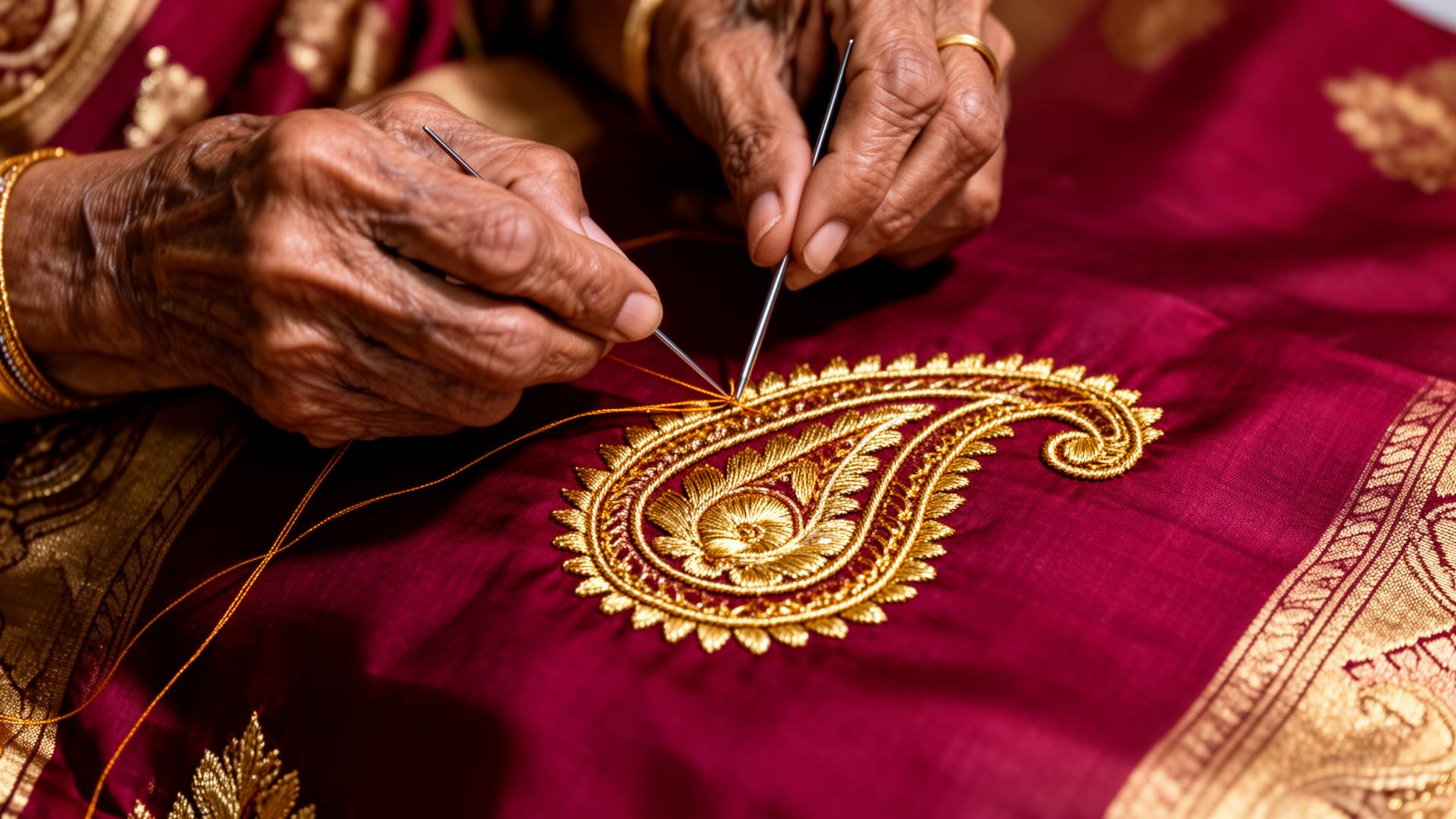
How to Care for and Store Pure Silk Sarees
Three things kill a pure silk saree: humidity, light, and the wrong cleaner. Here is exactly how to make a Kanjivaram last 60 years.
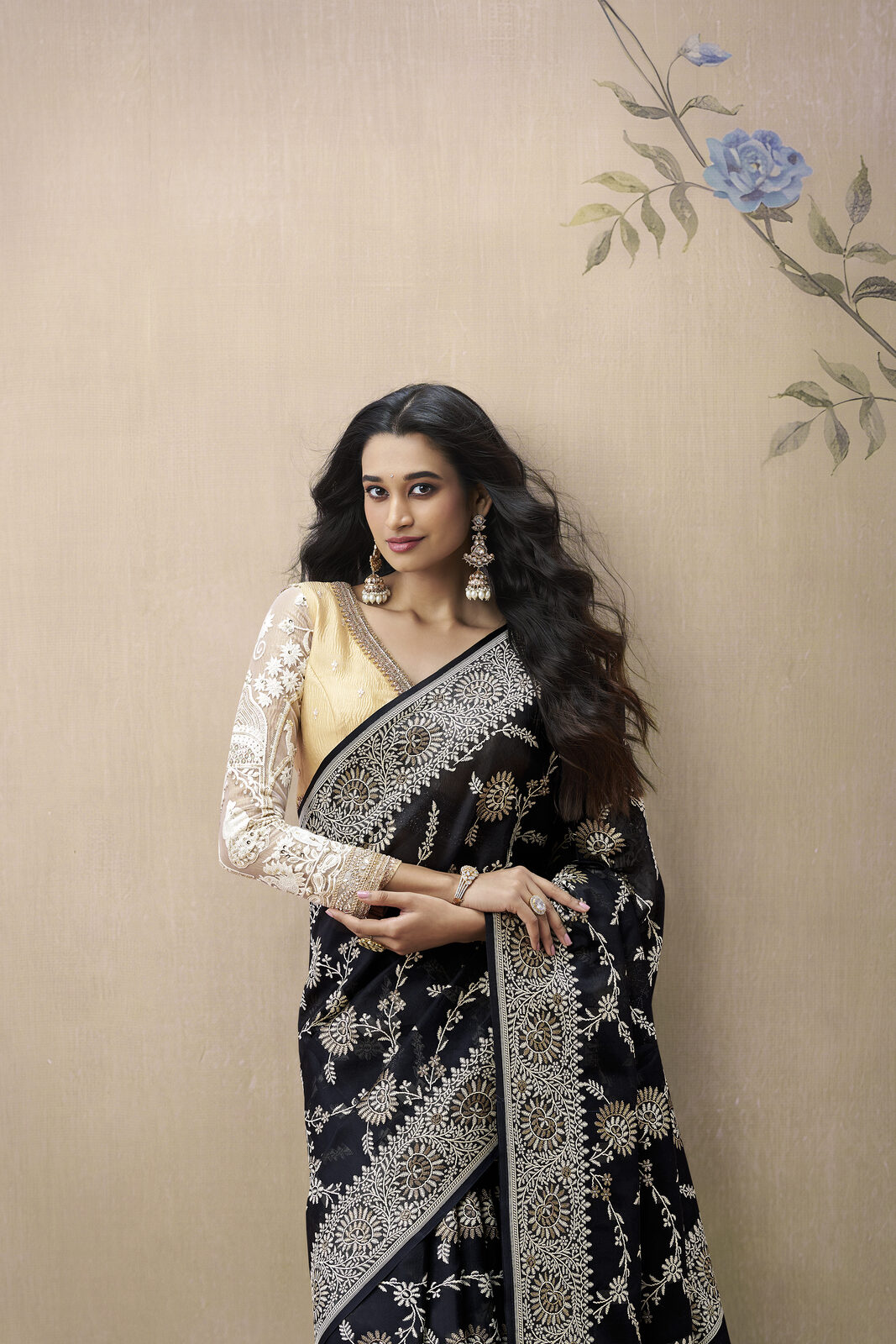
Restyling Your Mother's Saree: 7 Heirloom Ideas
Your mother's saree does not have to sit in the trunk. Seven atelier ways to give it a new life, without losing its soul.