
Pochampally Ikat: The Telangana Weave Every Bride Should Know
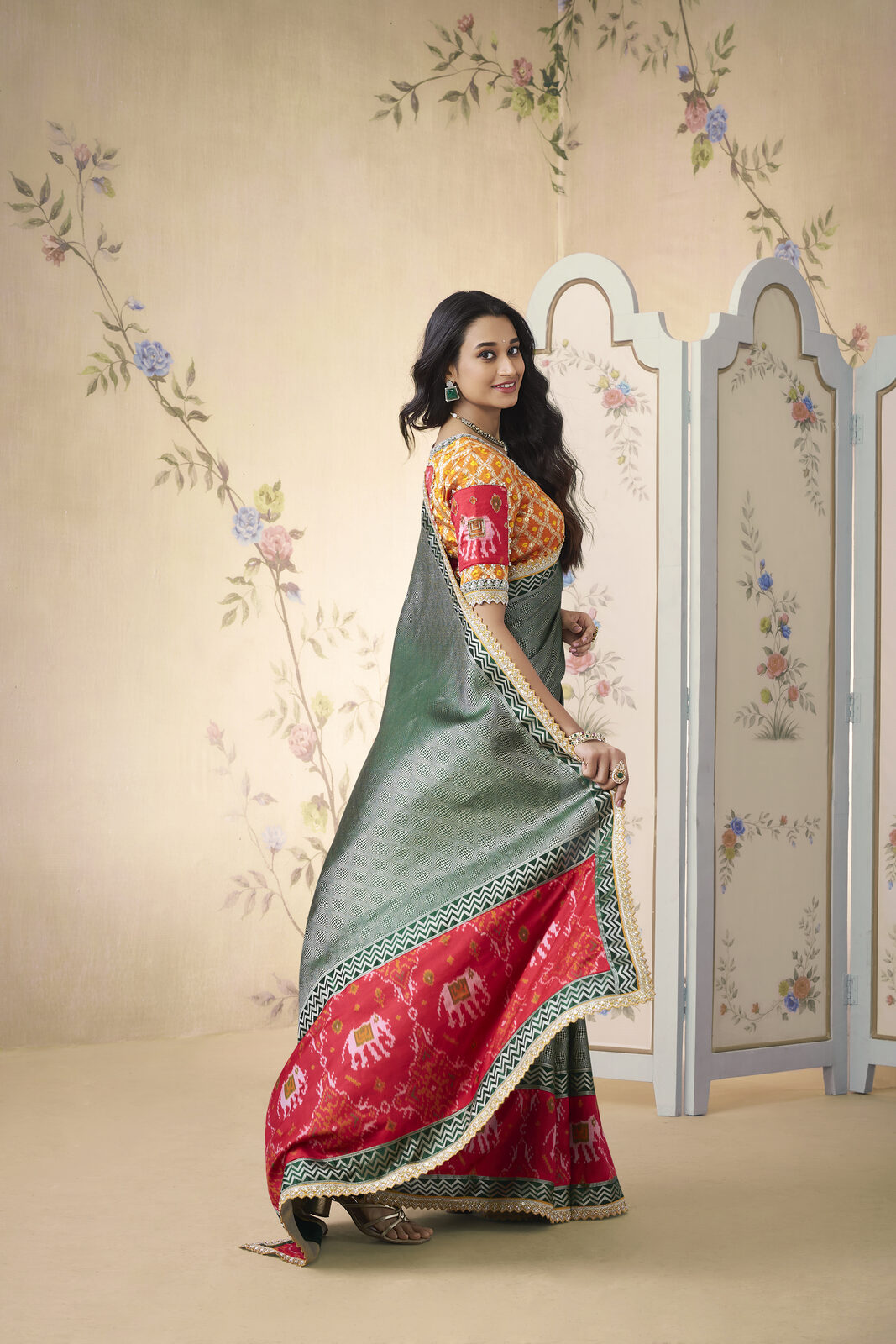
Pochampally sits 50 kilometres east of Hyderabad — a cluster of about a hundred villages where roughly ten thousand weavers still tie and dye the warp before a single thread touches the loom. The result is a saree where the pattern emerges from the yarn itself, not from a print roller. It is the only Indian weave that holds a Geographical Indication and a UNESCO craft village tag, and it is, quietly, the weave that belongs to us in Hyderabad more than any other.
Amrita drives out to Bhoodan Pochampally three or four times a year. Most of our Pochampally pieces are tied at the looms of master weaver Gajam Govardhana's family, who have been at it since the 1960s. We never buy through middlemen for this weave; it would feel wrong, given how close it is.
What Pochampally actually is, and what it isn't
Pochampally is a resist-dye weave, not a print and not an embroidery. Before weaving begins, the weaver wraps short sections of the warp yarn in plastic film, dips the bundle in dye, dries it, unwraps, re-wraps a different section, dips again. Each colour you eventually see in the saree was tied by hand in the yarn, before the loom was even threaded. That is what 'ikat' means.
Pochampally is single-ikat — only the warp is tie-dyed; the weft is plain. Patan Patola from Gujarat is double-ikat (both warp and weft), which is why a Patola is four times the price and takes five times as long. Pochampally is the more wearable cousin; it drapes lighter, costs less, and shows the same diamond, chowka, and chevron geometry that has made the village famous.
If the pattern on the saree feels sharply printed at the edges, or if the design is identical on both faces with no soft bleed, it is not Pochampally. It is a printed copy from a powerloom, and you should not pay more than two thousand rupees for it.
Reading a real Pochampally in thirty seconds
Hold the saree against a window. On a real Pochampally Ikat the motif edges will be slightly feathered — never razor-sharp — because the dye seeps a millimetre or two beyond the tie. That blur is the signature; a printed saree will have crisp, ruler-straight edges.
Turn the saree over. A true ikat is reversible: the pattern, the colour intensity and the alignment all read identically on the back. A print fades to grey on the reverse.
Pull a single warp thread from a corner. On a real Pochampally the thread itself will change colour along its length — red for two centimetres, then white, then deep indigo. The colour is in the yarn, not on the surface.
Finally, look for the GI Pochampally tag — a small printed label sewn into the fall — and ideally the Telangana Handloom mark. Neither is foolproof, but their absence on a saree priced over six thousand rupees should make you ask the next question.
Cotton, silk, or silk-cotton — which Pochampally to start with
For Hyderabad summers, ask for a pure cotton Pochampally in chowka (diamond grid) or telia rumal (oil-treated, deeper-dyed) construction. They are weightless, six-yard long, and almost impossible to overdress.
For festive wear and the office in equal measure, the silk-cotton blend is the most-bought Pochampally in our atelier. It holds the pleats better than pure cotton, takes deeper dyes, and still breathes through a long day.
For a wedding-guest occasion or a sangeet of your own, the pure silk Pochampally is the one to commission. We have woven indigo-and-ivory silk Pochampally for brides who wanted something rooted in Telangana for their sangeet — not the obvious Kanjivaram, not the obvious Banarasi, but the saree the bride's own city makes. They are the easiest second-trousseau saree we sell.
Colour palettes that age well
Pochampally is at its most photogenic in the canonical palettes the weavers have repeated for fifty years: deep indigo with off-white, oxblood maroon with mustard, black with kumkum red, emerald with ivory. These read as heritage in any room, and they will not date.
The pastel Pochampally trend of the last three or four years (powder blue, dusty pink, sage) is wearable and lovely, but it is fashion, not heirloom. If you are buying one saree, choose a canonical palette. If you already own three, then the pastels are where you play.
One genuinely modern direction worth knowing about: the contemporary geometric Pochampally being woven for younger Hyderabad brides in olive, charcoal, and burnt-orange. They suit pre-wedding photoshoots beautifully and pair with statement Polki ear-cuffs in a way the older diamond grids do not.
What to pair it with
For a cotton Pochampally: a plain raw-silk blouse in a contrast colour from the warp, oxidised silver jhumkas, and a simple gajra at the bun. Nothing more.
For a silk-cotton Pochampally: a small zardozi or aari blouse picks up the weight of the saree without competing with the ikat pattern. Keep jewellery to a single statement — temple choker or jhumkas, never both.
For a pure silk Pochampally at a sangeet: pair with antique gold or uncut Polki, and ask for a blouse with a deep V back or a single zari border that mirrors the saree palette. The temptation is to over-style; resist it. Pochampally photographs best when the saree is allowed to do all the talking.
Caring for a Pochampally so it ages well
Do not dry-clean a Pochampally in the first six months. The natural dye is still setting, and chemical solvents will bleed the indigo into the ivory faster than you can imagine.
For light marks, dab with cold water and a pinch of rock salt; let it air-dry flat, never in direct sun. For a serious clean, send it to a hand-finish silk specialist — most of Hyderabad has two or three, and we maintain a short list for our patrons.
Fold along a different line every six months. Store in unbleached muslin with cloves or dried neem; never in plastic. A Pochampally cared for this way will outlast three blouses and at least one daughter.
See these weaves in person.
The Trisha Silks flagship at Jubilee Hills, Hyderabad welcomes private viewings. Patrons abroad, we host video viewings worldwide.
Frequently asked
What is the difference between Pochampally Ikat and Patola?+
Pochampally is single-ikat — only the warp is tie-dyed before weaving — and is woven in Telangana. Patola is double-ikat (both warp and weft are pre-dyed) and is woven by the Salvi family of Patan, Gujarat. A real Patola takes four to six months to weave and costs four to five times a comparable Pochampally.
How do I know if a Pochampally saree is real?+
Hold the saree to the light: real Pochampally motifs have slightly feathered edges from dye seep. The reverse should read identical to the front. A single warp thread, pulled out, should change colour along its length. Look for the GI Pochampally tag sewn into the fall.
What is the price range of a genuine Pochampally Ikat saree?+
Pure cotton Pochampally starts around ₹3,500. Silk-cotton blends sit between ₹8,000 and ₹18,000. Pure silk Pochampally for sangeets and bridal trousseaux runs ₹25,000 to ₹85,000 depending on yarn weight and pattern density.
Can a Pochampally saree be worn for a sangeet or wedding?+
Yes — a pure silk Pochampally in an indigo-and-ivory or oxblood-and-mustard palette has become the choice of younger Hyderabad brides for the sangeet, especially when the bride wants a saree rooted in Telangana rather than the more obvious Kanjivaram or Banarasi.
Where can I buy authentic Pochampally Ikat sarees in Hyderabad?+
Trisha Silks in Jubilee Hills sources Pochampally directly from the looms in Bhoodan Pochampally village, 50 kilometres from Hyderabad, including from the Gajam family of master weavers. Each piece carries a GI tag and is woven without middlemen.
From the Journal
Best Bridal Saree Shops in Hyderabad, A Local's Guide
What separates a true bridal saree atelier from a 'designer showroom' in Hyderabad, and how to shop without being upsold.
Where to Buy a Pure Kanjivaram Silk Saree in Hyderabad
A pure Kanjivaram in Hyderabad will pass five tests. Here is how to run them in any shop.