
What Saree to Wear at a South Indian Wedding
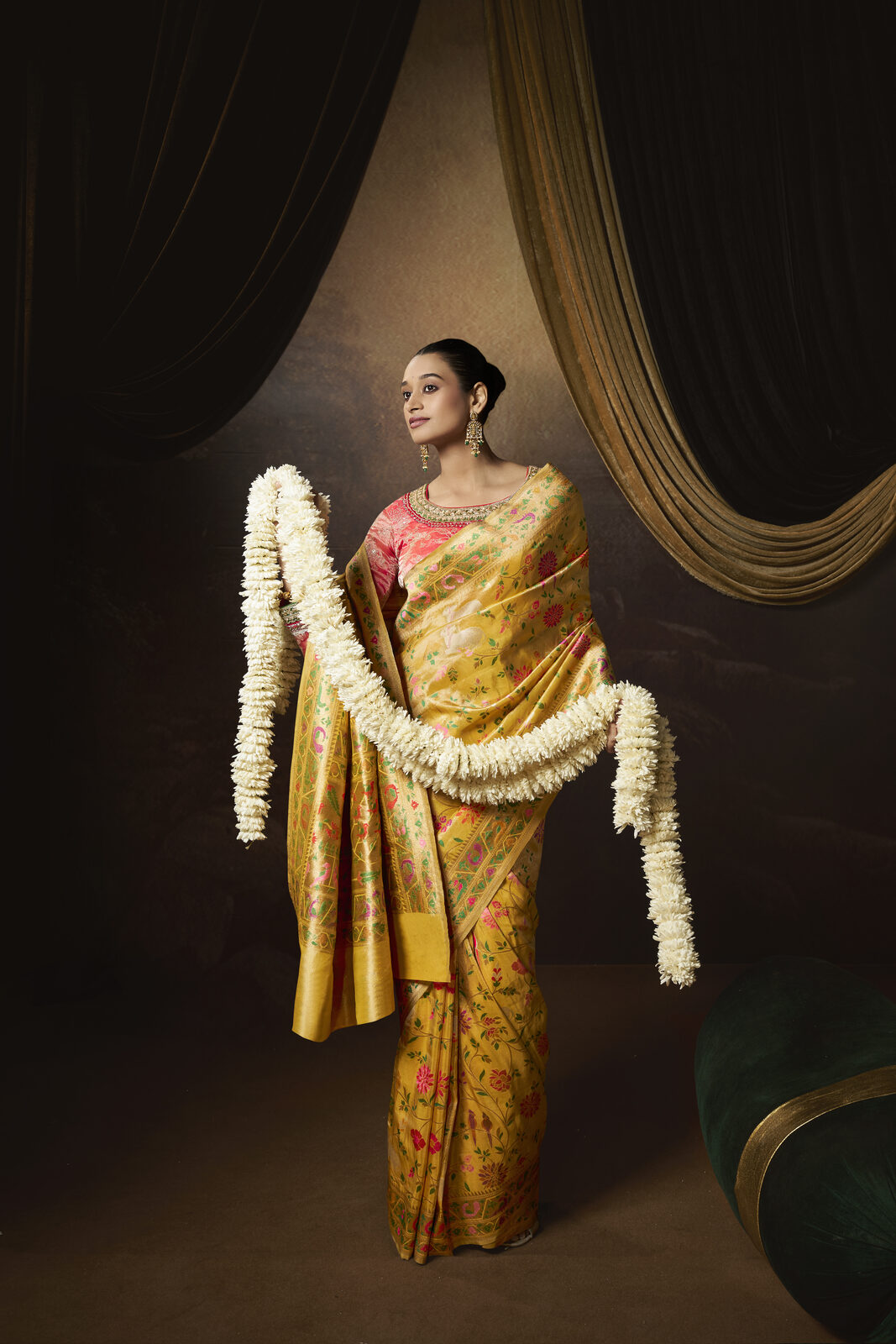
There is a small panic that arrives the week before a South Indian wedding. The card is on the fridge, four functions are pencilled in, and you have a cupboard full of sarees that all suddenly look wrong. This guide is for that week. We will take it one function at a time, with the kind of advice we give patrons over chai at the atelier.
At Trisha Silks we dress over four hundred families a year for weddings across Telangana, Andhra and Tamil Nadu. The advice here is the same we give in person, written down so you can plan calmly at home.
Start with the role you are playing
Before colour and weave, ask one question. Are you the bride, immediate family, extended family, or a friend of the family. The answer changes everything else. Immediate family is expected to wear pure silk for the muhurtham. Friends of the family can wear a lighter silk or a rich cotton silk and still look beautifully turned out.
If you are the mother of the bride or the groom, the convention is a heavyweight Kanjivaram in a jewel tone, paired with temple jewellery. If you are the sister, a softer Kanjivaram or a Banarasi in a contrasting colour to the bride works best so the photographs read clearly.
The muhurtham, the morning ceremony
This is the most formal function of the wedding. A pure mulberry silk Kanjivaram is the canonical choice. Reds, maroons, mustard and temple gold dominate the mandapam. If the bride is in red, a maroon or mustard saree photographs beautifully alongside her without competing.
Avoid pastels for muhurtham unless the wedding card specifically says so. The light in a mandapam at dawn is yellow and warm, and pastels can wash out completely in the wedding album. A korvai contrast border, where the body and border are two different colours woven together, always reads sharply on camera.
The reception, the evening of dressing up
The reception is where you can play. A handloom Banarasi, a Patola, a soft tissue Kanjivaram, or a designer couture piece all sit comfortably here. Evening light is cooler and kinder, so jewel tones and pastels both work. Emerald, sapphire, wine, dusty rose, ivory with gold zari, all photograph well under hall lighting.
If the reception is at a hotel ballroom, lean a little more dressy than you think you need to. If it is at a farmhouse or open lawn, you can wear a lighter weight saree without looking underdressed.
The sangeet, the night of music and dancing
You will be on your feet for four hours. Comfort matters more than people admit. A lighter weight silk, a Chanderi, a Maheshwari, a soft Banarasi tissue, or a contemporary designer drape all let you actually dance. Keep the pallu pleated and pinned so you are not constantly adjusting it.
Sangeet is the one function where pastels and contemporary colour stories shine. Mint, peach, lilac, dusty blue, ivory with sequin work, all read beautifully under fairy lights and stage lighting.
The haldi and mehendi, the daytime functions
Yellow for haldi and green for mehendi is the safe convention, but it is not a rule. A pale gold tissue, a turmeric cotton silk, a leaf green Mangalagiri, or a fresh ivory with a green border are all in keeping. These are daytime functions in the sun, so cotton silk and Chanderi sit better on the skin than a heavy Kanjivaram.
Avoid white for these two functions. Avoid black entirely across the wedding week. Both still read as inauspicious to most South Indian families, even when the younger generation has moved on.
Blouse first, saree second
A well stitched blouse can make a simple saree look like couture. A badly stitched blouse can sink a Kanjivaram. If you have one week, get the blouse done before you finalise the saree. If you have three weeks, get a custom blouse with hand embroidery on the sleeves and back. It will be the piece guests notice in your photographs.
A short rule on jewellery
Heavy zari saree, lighter jewellery. Lighter saree, heavier jewellery. Temple jewellery for the muhurtham, polki or diamond for the reception, contemporary or oxidised for sangeet, fresh flowers and minimal gold for haldi and mehendi. This one principle will save you an hour of indecision every morning of the wedding week.
See these weaves in person.
The Trisha Silks flagship at Jubilee Hills, Hyderabad welcomes private viewings. Patrons abroad, we host video viewings worldwide.
Frequently asked
What is the best saree for a South Indian wedding muhurtham?+
A pure mulberry silk Kanjivaram in red, maroon, mustard or temple gold, with a korvai contrast border and traditional zari pallu. This is the canonical muhurtham choice for both the bride and immediate family.
Can I wear pastel colours to a South Indian wedding?+
Yes, but reserve pastels for the reception, sangeet and the daytime functions. The muhurtham still calls for warm jewel tones because the morning mandapam light is yellow and pastels wash out in photographs.
Is it acceptable to wear black to a South Indian wedding?+
No. Even with younger generations moving on from the convention, most South Indian families still read black as inauspicious for weddings. Stick to jewel tones, pastels, ivory, gold and traditional reds.
How do I dress for a sangeet I will be dancing at?+
Choose a lighter weight silk, a Chanderi, a Maheshwari or a soft Banarasi tissue, pleat and pin the pallu securely, and avoid heavy zari that will weigh you down. Comfort decides whether you enjoy the evening or spend it adjusting your saree.
What should I avoid wearing as a guest at the muhurtham?+
Avoid white, black, plain printed silks and any saree that competes directly with the bride's red. A jewel toned Kanjivaram or a handloom Banarasi in a contrasting colour is always safe.
From the Journal
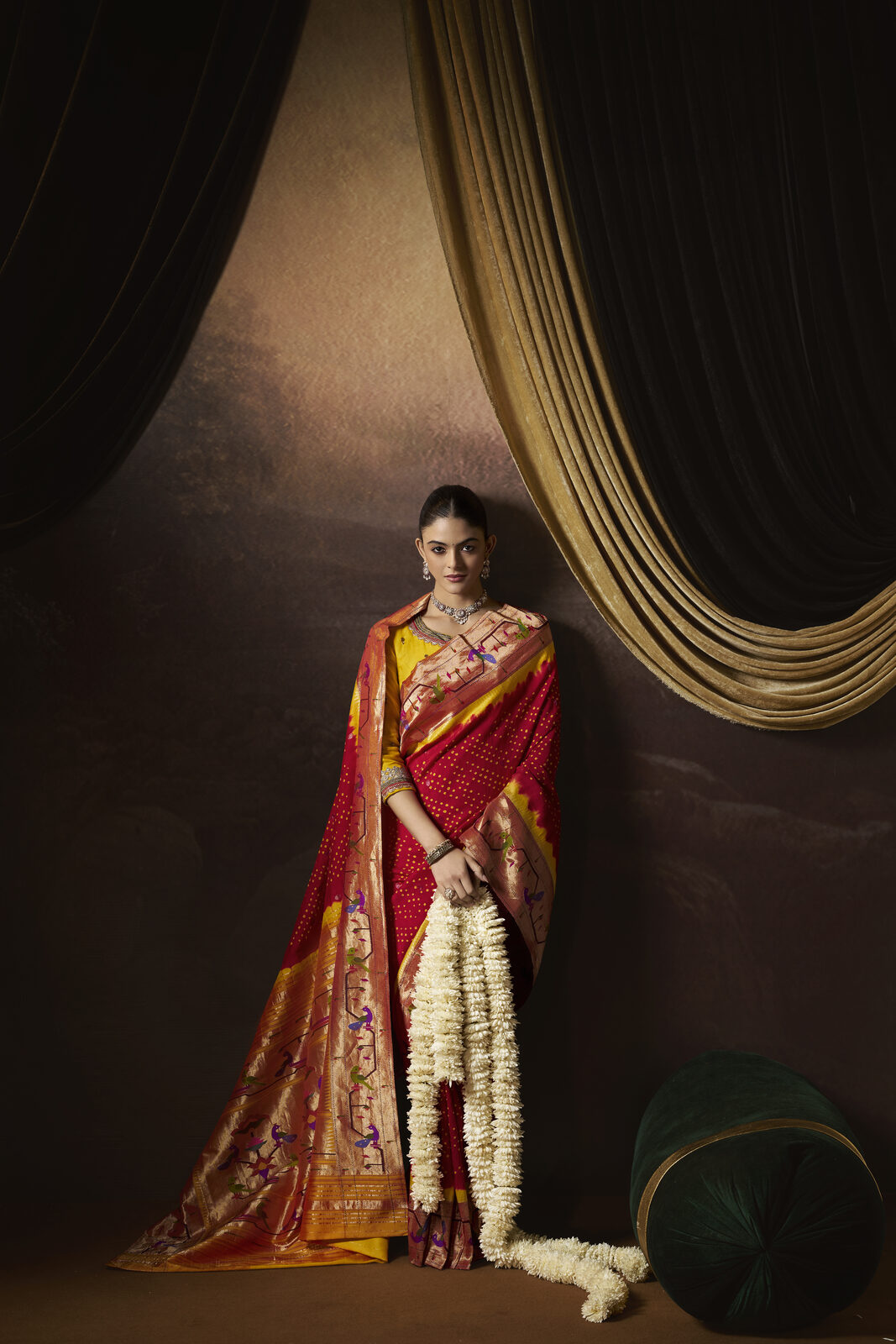
The Complete Bridal Trousseau Saree Checklist
How many sarees should a bridal trousseau actually have? The full atelier-tested checklist, by ceremony and by climate.
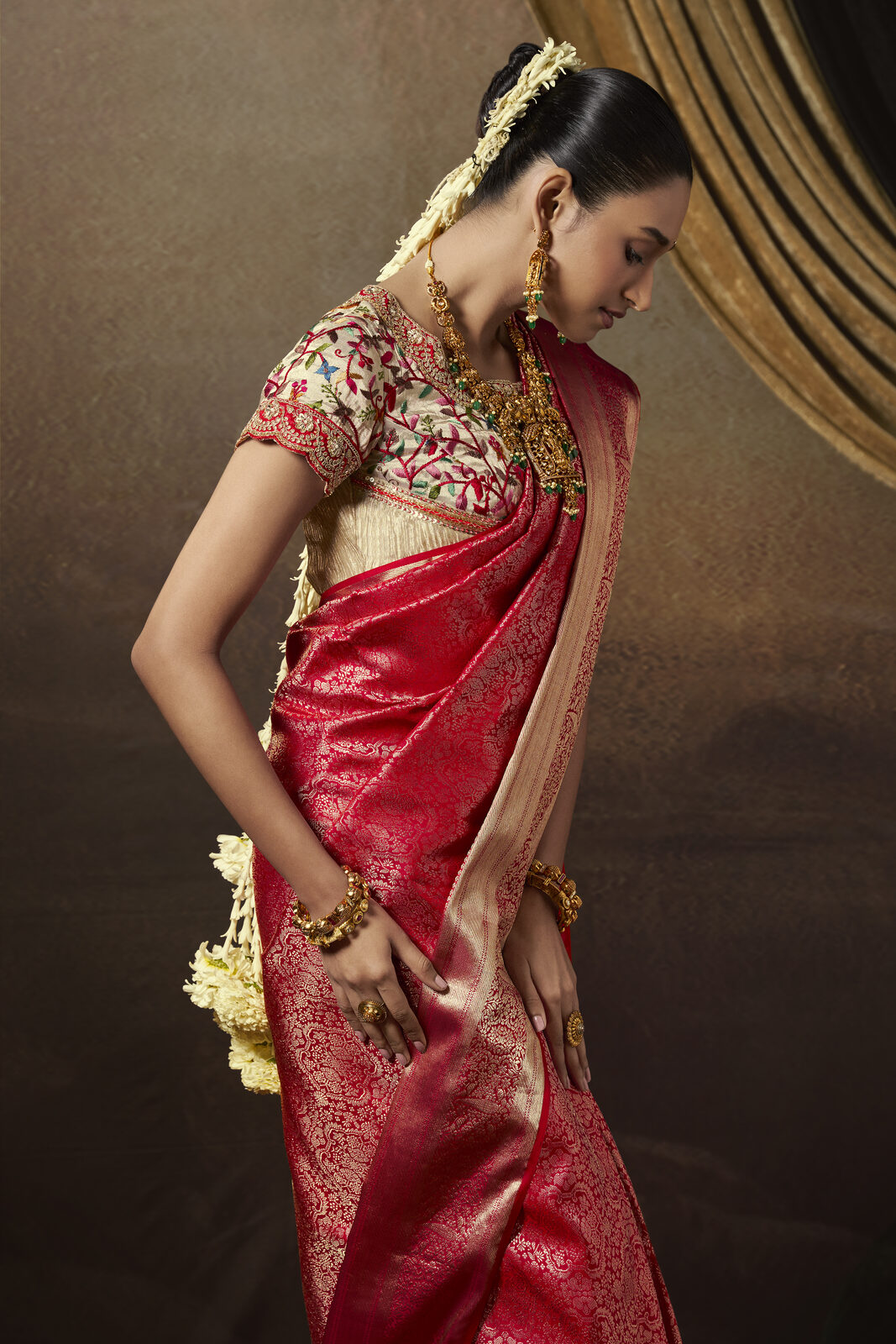
The Red Banarasi Bridal Saree, A Complete Guide
Red Banarasi is the most enduring bridal silk in India. Here is how to choose one that will be worn by your daughter decades from now.