
Storing Silk in Humid Cities, Mumbai, Chennai, Singapore, Dubai

A bridal Banarasi or Kanjivaram is engineered to survive a hundred years of careful ownership. It will not survive five years of careless storage in a humid coastal city. The killers are predictable, humidity, sunlight, plastic, perfume, and direct contact with synthetic fabrics, and the cures are simple. Here are the six rules our patrons in Mumbai, Chennai, Singapore and Dubai have followed for decades.
Every saree we ship leaves the atelier wrapped in a 200-gsm cotton muslin sheet with a single cedar sachet. We replace the muslin and cedar on request, free, for life.
Rule 1 to muslin, always muslin
Wrap every silk saree individually in unbleached cotton muslin, never in plastic, never in newspaper (the ink transfers), never in a polythene cover. Muslin breathes; plastic suffocates silk and traps the moisture that breeds fungus in coastal humidity. Replace the muslin every two years; it is cheap.
Rule 2 to cedar, not naphthalene
Naphthalene mothballs are toxic to silk and discolour zari. Use cedar blocks or lavender sachets instead. One cedar block per saree, refreshed by sandpapering the surface once a year. Pure silk does not actually attract clothes moths the way wool does, but cedar keeps the storage trunk smelling clean and absorbs faint humidity.
Rule 3 to air every six months
Twice a year, once before and once after monsoon, unfold each silk saree, spread it on a clean cotton sheet in indirect sunlight or shaded fresh air for 30 minutes, refold it along a new line. The new fold line prevents permanent creases from setting along the same seam (the most common cause of long-term wear on a stored bridal saree).
Rule 4 to silica gel in tropical apartments
Mumbai, Chennai, Singapore, Dubai indoor humidity ranges 60 to 85% even with air-conditioning. Place two large silica gel packets in the saree trunk and replace or oven-dry them every three months. This single step prevents 90% of mildew complaints we hear from coastal patrons.
Rule 5 to never perfume, never lotion, never on the saree
Apply perfume, deodorant and body lotion fully, let them dry, dress in your blouse and underskirt, and only then drape the saree. Direct perfume contact stains zari black over time. Direct lotion contact attracts dust that bonds to the silk and cannot be removed without damaging the weave.
Rule 6 to dry-clean rarely, store immediately
Pure silk sarees should be dry-cleaned only once every 3 to 5 wears, and only by a specialist silk dry-cleaner. After dry-cleaning, do not return the saree to its plastic cover, unwrap it, air it for two hours, then re-wrap in fresh muslin and store. The plastic dry-cleaner cover is the single most common cause of fungus in stored silk.
See these weaves in person.
The Trisha Silks flagship at Jubilee Hills, Hyderabad welcomes private viewings. Patrons abroad, we host video viewings worldwide.
Frequently asked
How do I store a pure silk saree in a humid city like Mumbai or Singapore?+
Wrap in unbleached cotton muslin, store in a wooden trunk with cedar blocks and two large silica gel packets, air twice a year (before and after monsoon), and refold along a new line each time. Never use plastic covers or naphthalene mothballs.
How often should I dry-clean a bridal Banarasi or Kanjivaram?+
Once every 3 to 5 wears, at a specialist silk dry-cleaner only. After dry-cleaning, unwrap from the plastic cover, air for two hours, then store in fresh cotton muslin. The plastic dry-cleaner cover causes more fungus damage than any other single factor.
Are mothballs safe for silk sarees?+
No. Naphthalene mothballs are toxic to silk fibres and discolour gold zari over time. Use cedar blocks, dried lavender sachets, or vetiver root instead, they protect the trunk and smell clean without damaging the fabric.
From the Journal
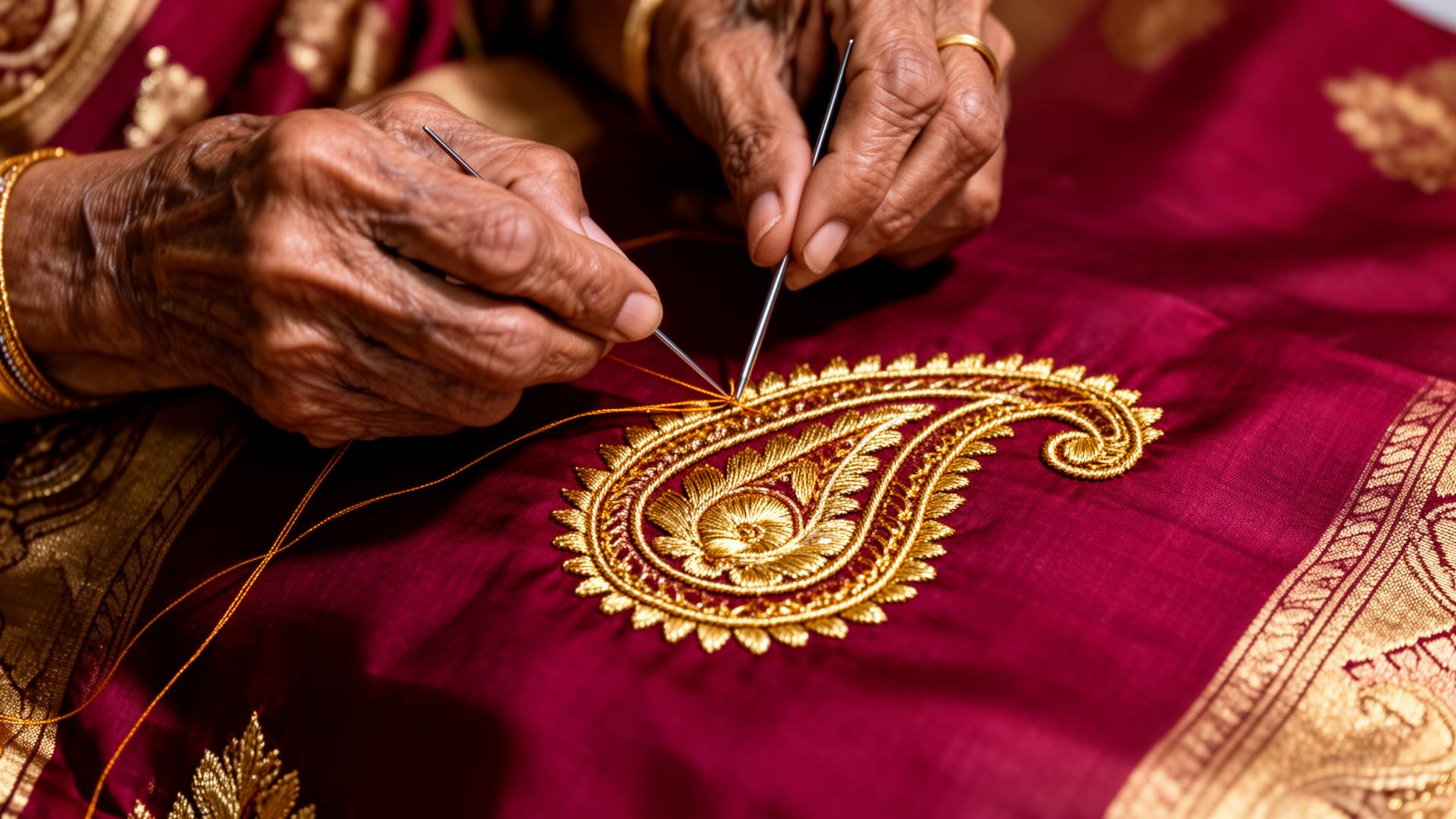
How to Care for and Store Pure Silk Sarees
Three things kill a pure silk saree: humidity, light, and the wrong cleaner. Here is exactly how to make a Kanjivaram last 60 years.

Restyling Your Mother's Saree: 7 Heirloom Ideas
Your mother's saree does not have to sit in the trunk. Seven atelier ways to give it a new life, without losing its soul.