
How to Identify a Pure Kanjivaram Silk Saree
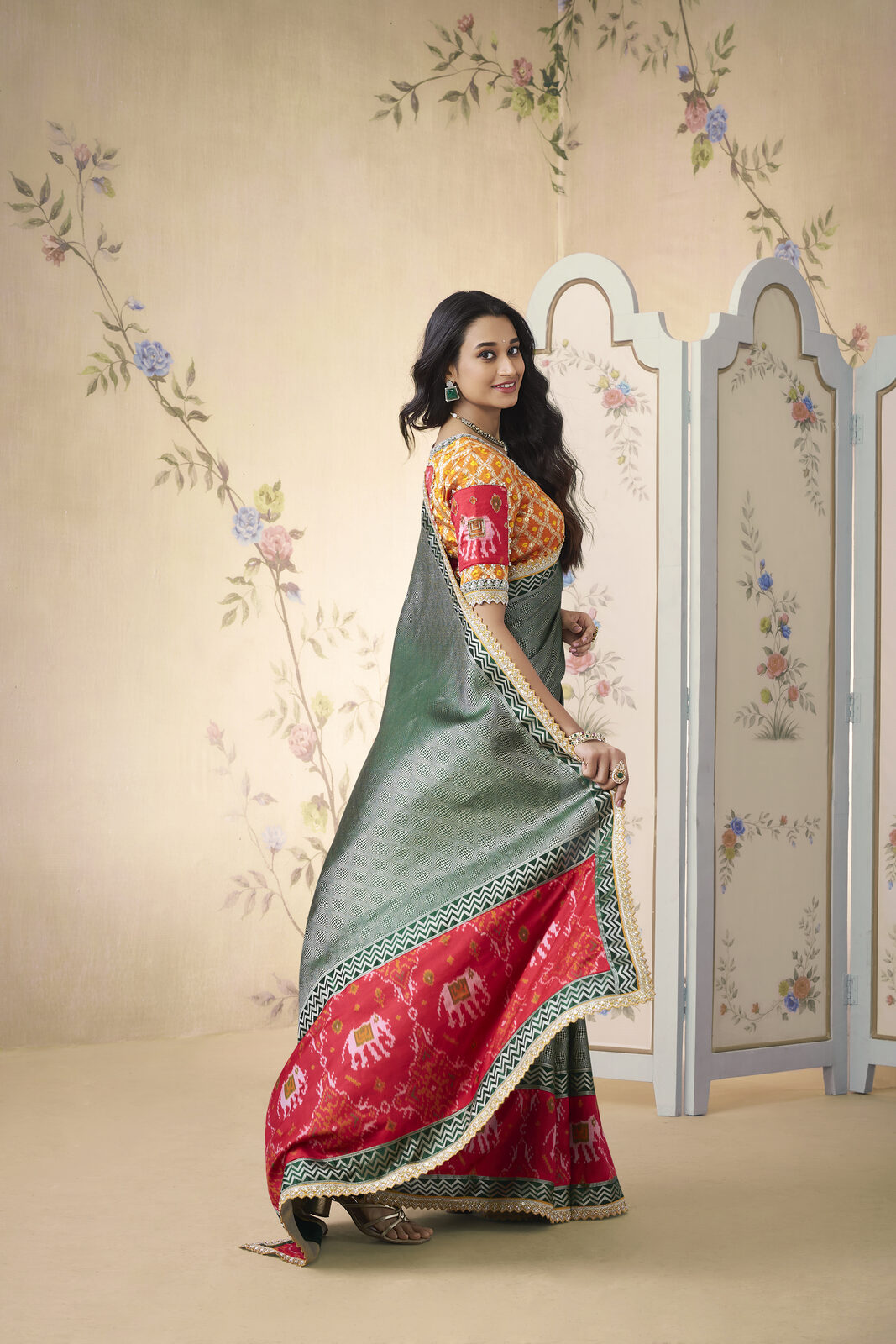
A pure Kanjivaram silk saree is identified by five things in this order: the korvai border join (the contrast border is woven on a separate loom and joined to the body), three-shuttle weaving, real zari with a silk core, mulberry silk's distinctive hand, and the Silk Mark or GI Kanchipuram tag. If even one of these is missing, you are looking at a soft silk or art silk imitation.
Every Kanjivaram at Trisha Silks comes from looms in Kanchipuram and the surrounding villages we visit twice a year. We weigh and silk-mark each saree on arrival, pure mulberry silk and tested zari, never blended.
1. The korvai border, the one test that matters most
Open the saree along the border. On a pure Kanjivaram, the border is a completely different colour from the body, and if you look very closely at the seam where the two meet, you will see a tiny interlocking ridge of threads. This is the korvai technique: the border is woven on a separate loom by a second weaver, and the two are physically interlocked thread by thread.
An imitation Kanjivaram will have the border woven into the body in one piece, the contrast colour will show through on the reverse, and there will be no ridge.
2. Three-shuttle weaving
A pure Kanjivaram is typically woven with three shuttles, one for the body, one for the border, and one for the pallu. The pallu is woven separately and then joined to the body with such precision that the join is almost invisible from the front but clearly visible as a darker line on the reverse. This is called the 'pittani' join.
3. Real zari has a silk core
Pull out one zari thread from a discreet corner. Real Kanjivaram zari is a red silk thread (the core) wrapped first in silver and then dipped in gold. Pull it apart gently and you will see the red silk inside. Fake zari is a flat metallised polyester strip with no core, or a white cotton core if it is a cheaper South Indian variant.
4. The hand of mulberry silk
Pure mulberry silk Kanjivaram has a particular weight and drape, it falls in heavy, sculptural folds, not slippery cascades. It is warm to touch (silk absorbs body heat instantly), and when you crush it in your fist, it leaves only the faintest creases that fall out on their own.
5. The Silk Mark and GI tag
Every genuine Kanjivaram should carry a Silk Mark (a small silver hologram from the Silk Mark Organisation of India) and ideally a Geographical Indication (GI) tag confirming it was woven in the Kanchipuram cluster. These are not foolproof, but their absence on an expensive saree is a red flag.
See these weaves in person.
The Trisha Silks flagship at Jubilee Hills, Hyderabad welcomes private viewings. Patrons abroad, we host video viewings worldwide.
Frequently asked
What is the korvai technique in a Kanjivaram saree?+
Korvai is the traditional Kanjivaram method where the contrast border is woven on a separate loom by a second weaver and then interlocked thread by thread with the body of the saree. Only pure Kanjivarams have a true korvai join.
How heavy is a real Kanjivaram saree?+
A traditional bridal Kanjivaram weighs between 800 grams and 2 kilograms, depending on the density of the zari work. Lightweight Kanjivarams (450 to 700 grams) also exist and are equally pure, modern brides often prefer them.
Does every Kanjivaram come with a Silk Mark?+
Not every weaver registers their pieces, but any reputable atelier will silk-mark its Kanjivarams. If a seller cannot show you a Silk Mark on a high-value piece, ask for the weaver's name and cluster.
From the Journal
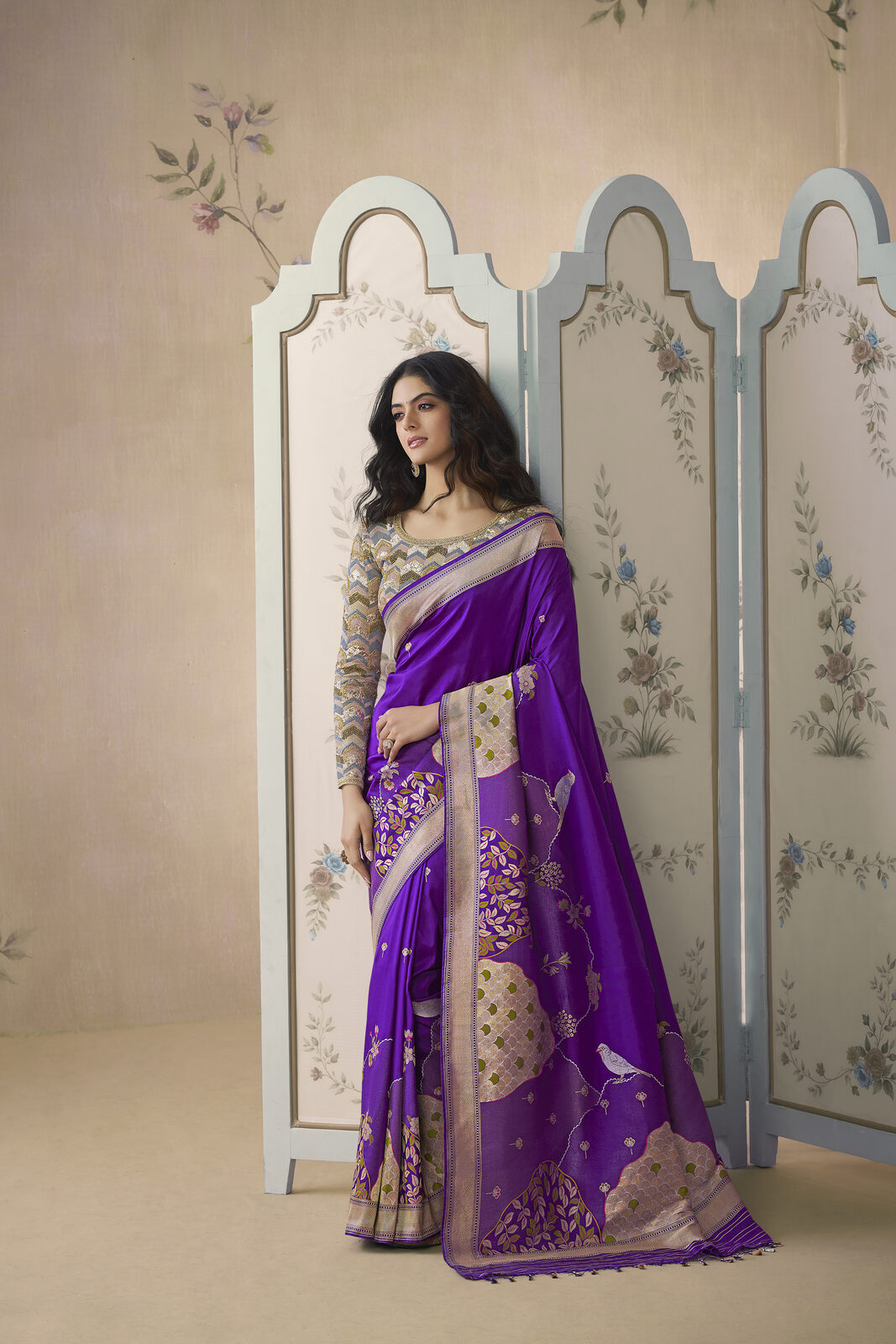
How to Identify an Original Banarasi Saree
Six tells the karigars use to separate a true handloom Banarasi from a powerloom copy, in plain language.
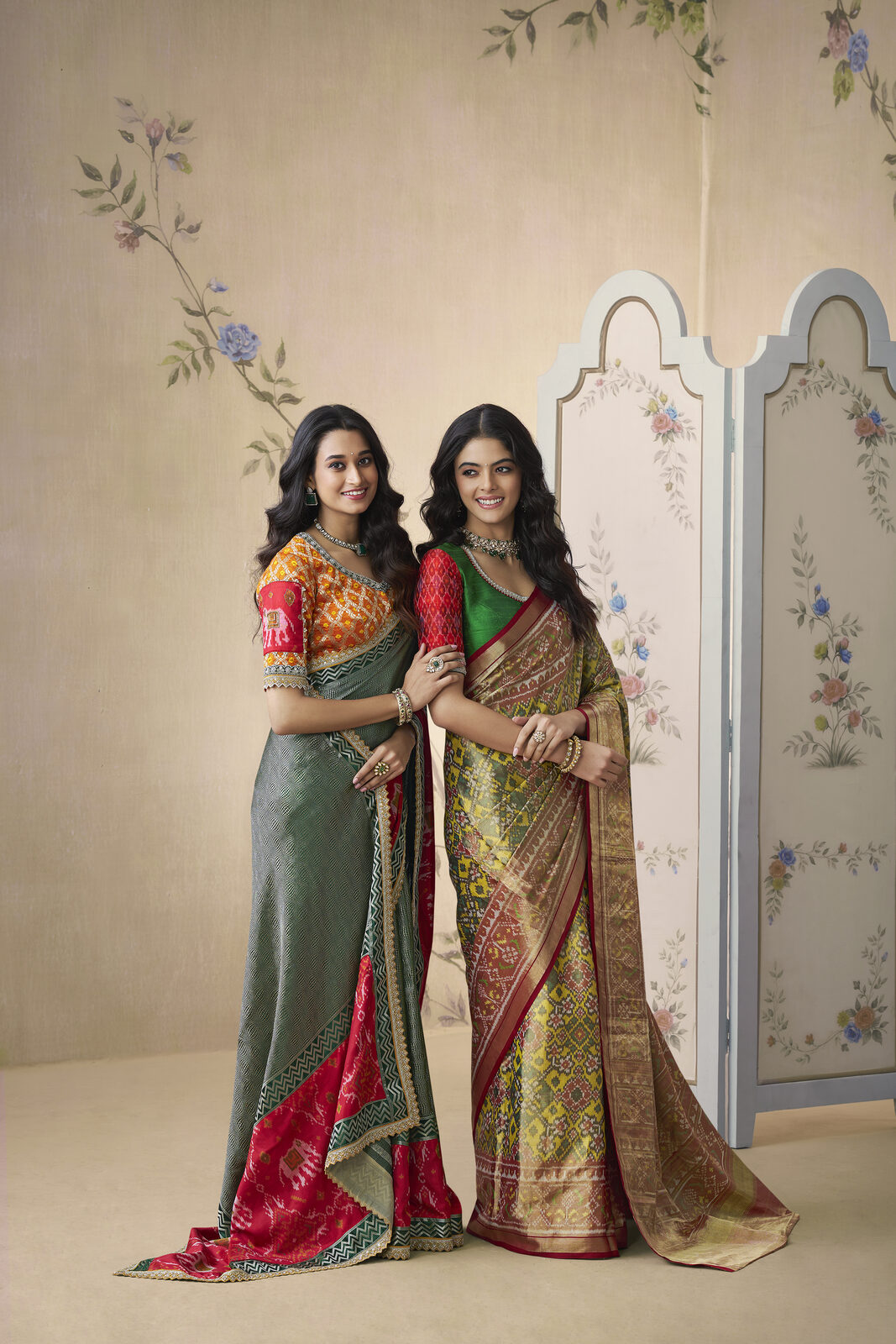
Patola Sarees Explained: Single vs Double Ikat
Single ikat or double ikat? The difference is six months on the loom and the only saree in the world that has no reverse side.