
Patola Sarees Explained: Single vs Double Ikat

A Patola saree is woven from threads that are tie-dyed before they ever touch the loom. In single ikat (Rajkot Patola) only the weft is dyed; in double ikat (Patan Patola from the Salvi family) both the warp and the weft are dyed in resist patterns that must align perfectly when woven. A Patan Patola takes six months to two years to make and costs upward of two lakh rupees for a reason.
The Salvi family of Patan has woven Patolas for over 800 years. Trisha Silks works with one of the three remaining families and with the Rajkot single-ikat weavers, every Patola we carry is registered to its loom.
Single ikat (Rajkot Patola)
In single ikat, only the weft threads are tie-dyed before weaving. The warp is plain silk. The pattern emerges only when the dyed weft is woven across the loom. A Rajkot Patola takes 4 to 6 weeks to weave and is the more accessible entry point, pieces start around ₹40,000.
Tell-tale sign: a slight blur at the edge of each motif, because the weaver is aligning only one set of dyed threads.
Double ikat (Patan Patola)
In double ikat, both the warp and the weft are tie-dyed separately in resist patterns. The weaver must align two pre-dyed thread sets thread by thread on the loom so the geometric motifs meet exactly at every intersection. There is no margin for error.
Because the pattern is built into both warp and weft, a Patan Patola looks identical on the front and the reverse, it is the only saree in the world with no 'wrong side'. This is the definitive test.
Reading the motifs
Classic Patola motifs include the popat-kunjar bhat (parrots and elephants), nari-kunjar (women and elephants), pan bhat (peepal leaves), and the geometric chowkdi bhat. Each motif belongs to a specific community or occasion, brides in Gujarat traditionally wear the nari-kunjar for the wedding.
Why a Patan Patola costs what it does
A single Patan Patola takes 6 months for a simple design and up to 2 years for an heirloom commission. Two weavers must sit at the loom together, calling out warp positions thread by thread. The Salvi family produces fewer than 50 sarees in a year.
See these weaves in person.
The Trisha Silks flagship at Jubilee Hills, Hyderabad welcomes private viewings. Patrons abroad, we host video viewings worldwide.
Frequently asked
What is the difference between Rajkot and Patan Patola?+
Rajkot Patola is single ikat, only the weft is tie-dyed before weaving, and takes 4 to 6 weeks. Patan Patola is double ikat, both warp and weft are tie-dyed, looks identical on both sides, and takes 6 months to 2 years.
How do I check if my Patola is double ikat?+
Turn the saree over. If the front and the reverse look identical with the motifs aligning perfectly, it is a true double-ikat Patan Patola. If the reverse is faded or blurred, it is single ikat.
Why is Patan Patola so expensive?+
Each saree requires two weavers, six months to two years of labour, and centuries-old natural dyeing techniques. The Salvi family of Patan weaves fewer than 50 sarees a year, which is why prices start around ₹2 lakh and climb to ₹25 lakh.
From the Journal

How to Identify an Original Banarasi Saree
Six tells the karigars use to separate a true handloom Banarasi from a powerloom copy, in plain language.
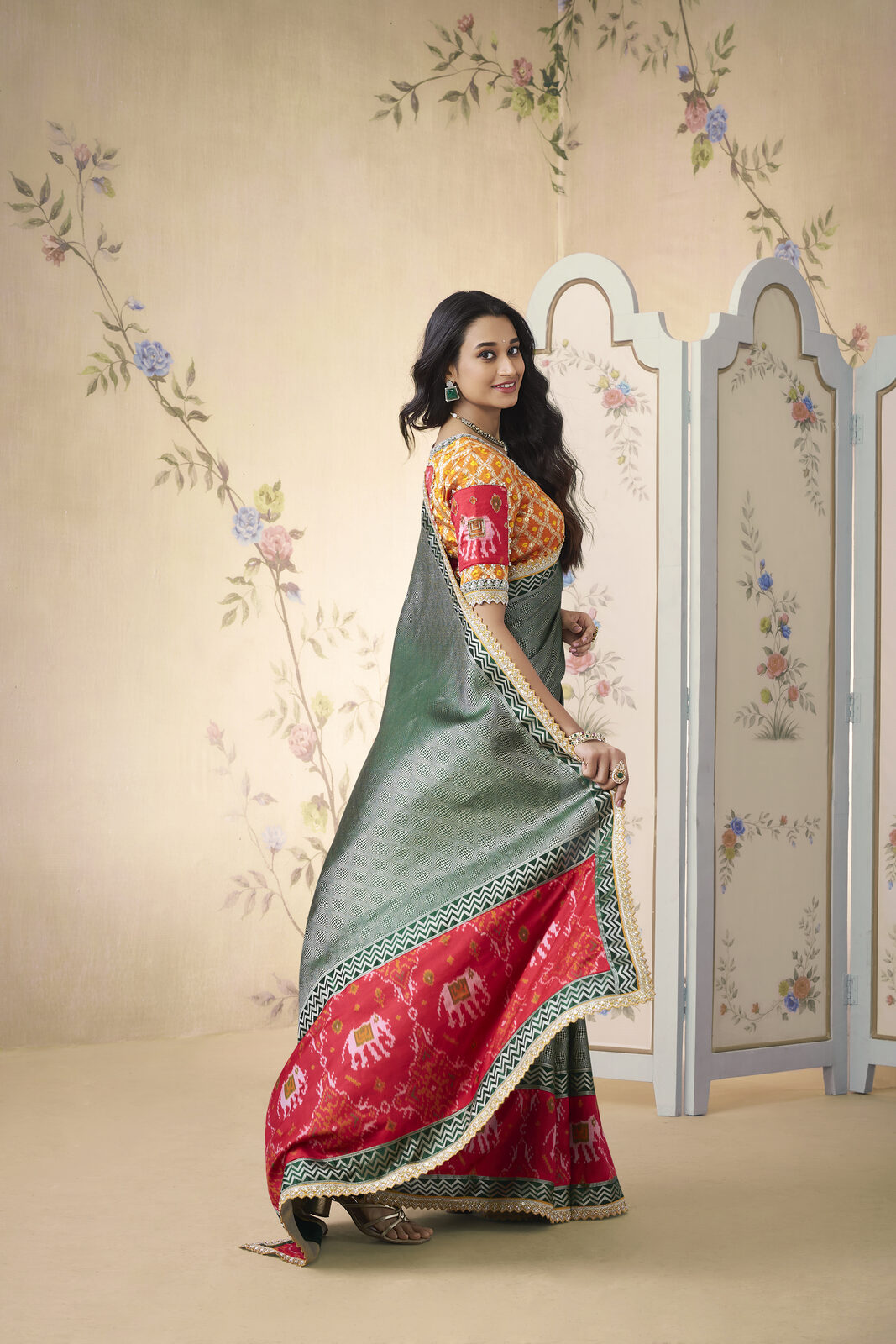
How to Identify a Pure Kanjivaram Silk Saree
A pure Kanjivaram has a contrast border woven separately and then joined, a tell no powerloom can fake. Here is the full test.